
色氨酸分解代谢途径中的阿尔茨海默病特异性转录组学和表观基因组学变化。
Alzheimer's disease-specific transcriptomic and epigenomic changes in the tryptophan catabolic pathway.
机构信息
Department of Psychiatry and Neuropsychology, Faculty of Health, Medicine and Life Sciences (FHML), Mental Health and Neuroscience Research Institute (MHeNs) and European Graduate School of Neuroscience (EURON), Maastricht University, Maastricht, 6211 LK, the Netherlands.
Computational Biology Group, Centre for System Biomedicine (LCSB), University of Luxembourg, Belvaux, Luxembourg.
出版信息
Alzheimers Res Ther. 2024 Nov 30;16(1):259. doi: 10.1186/s13195-024-01623-4.
BACKGROUND
Neurodegenerative disorders, including Alzheimer's disease (AD), have been linked to alterations in tryptophan (TRP) metabolism. However, no studies to date have systematically explored changes in the TRP pathway at both transcriptional and epigenetic levels. This study aimed to investigate transcriptomic, DNA methylomic (5mC) and hydroxymethylomic (5hmC) changes within genes involved in the TRP and nicotinamide adenine dinucleotide (NAD) pathways in AD, using three independent cohorts.
METHODS
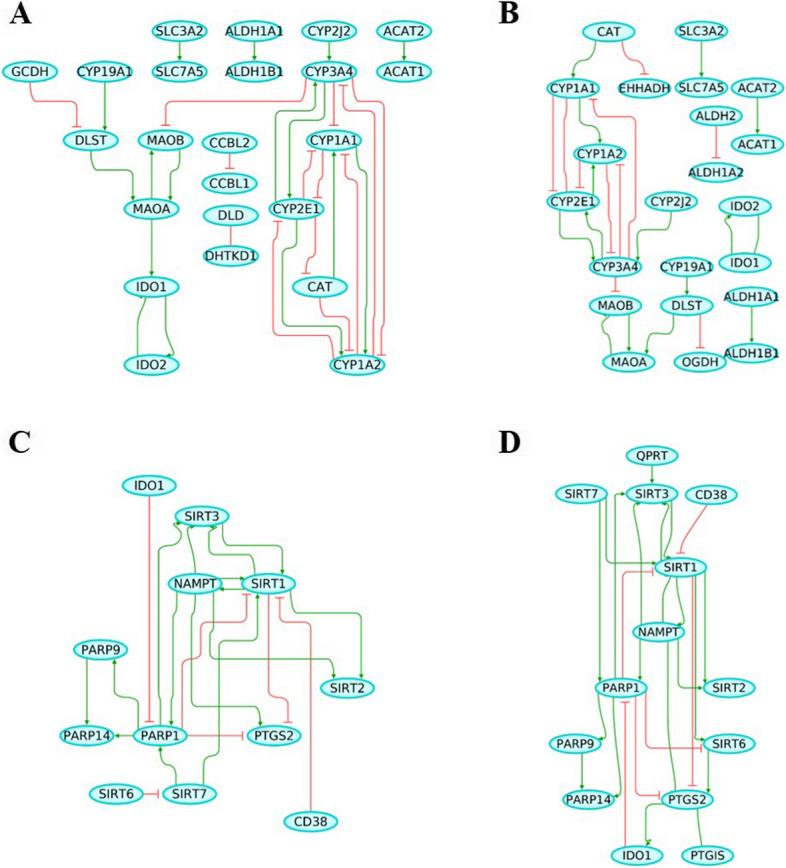
DNA derived from post-mortem middle temporal gyrus (MTG) tissue from AD patients (n = 45) and age-matched controls (n = 35) was analyzed, along with DNA derived from blood samples from two independent cohorts: the German Study on Ageing, Cognition, and Dementia in Primary Care Patients (AgeCoDe) cohort (n = 96) and the Dutch BioBank Alzheimer Center Limburg (BBACL) cohort (n = 262). Molecular profiling, including assessing mRNA expression and DNA (hydroxy)methylation levels, was conducted using HumanHT-12 v4 Expression BeadChip and HM 450 K BeadChip arrays, respectively. Functional interactions between genes and identification of common phenotype-specific positive and negative elementary circuits were conducted using computational modeling, i.e. gene regulatory network (GRN) and network perturbational analysis. DNA methylation of IDO2 (cg11251498) was analyzed using pyrosequencing.
RESULTS
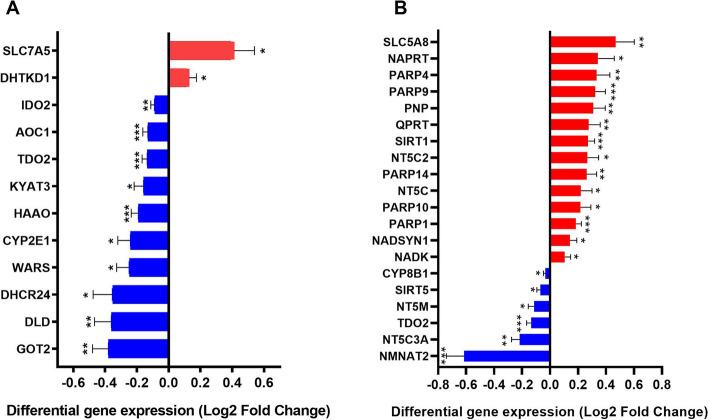
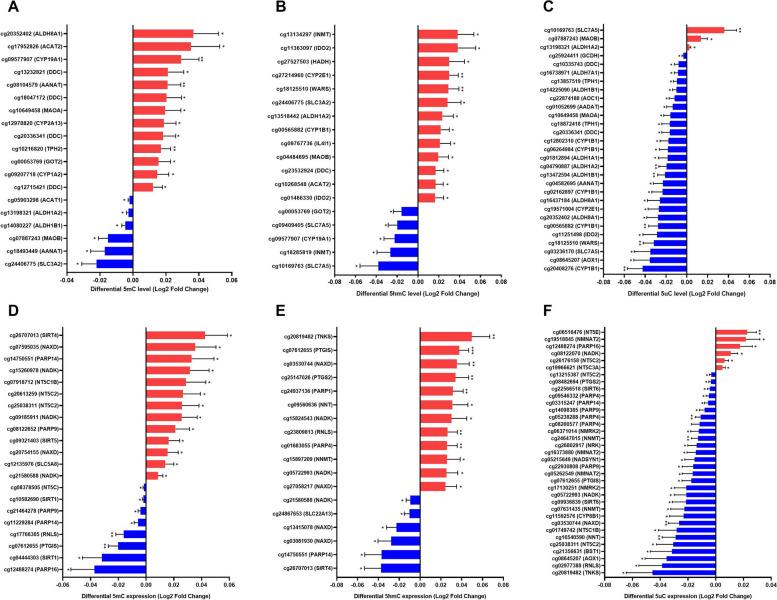
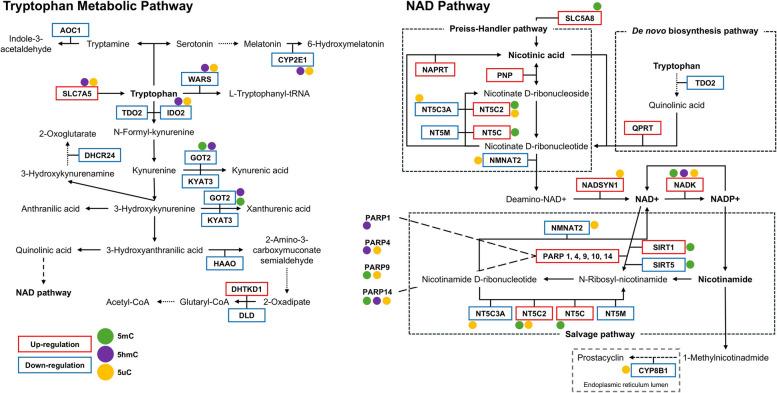
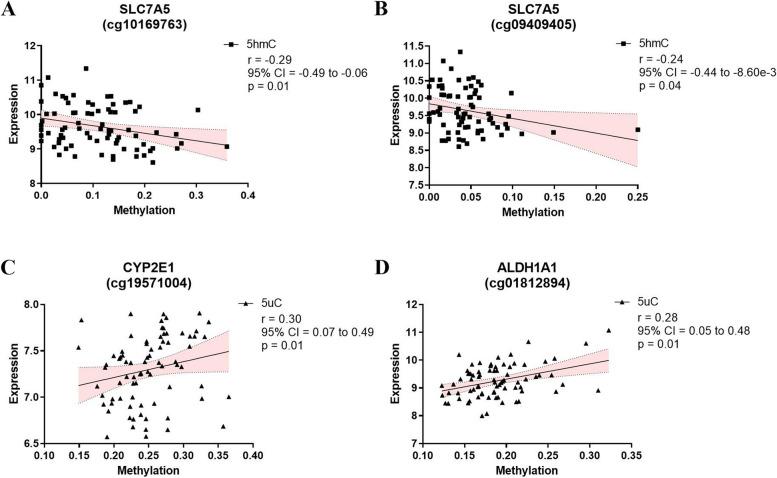
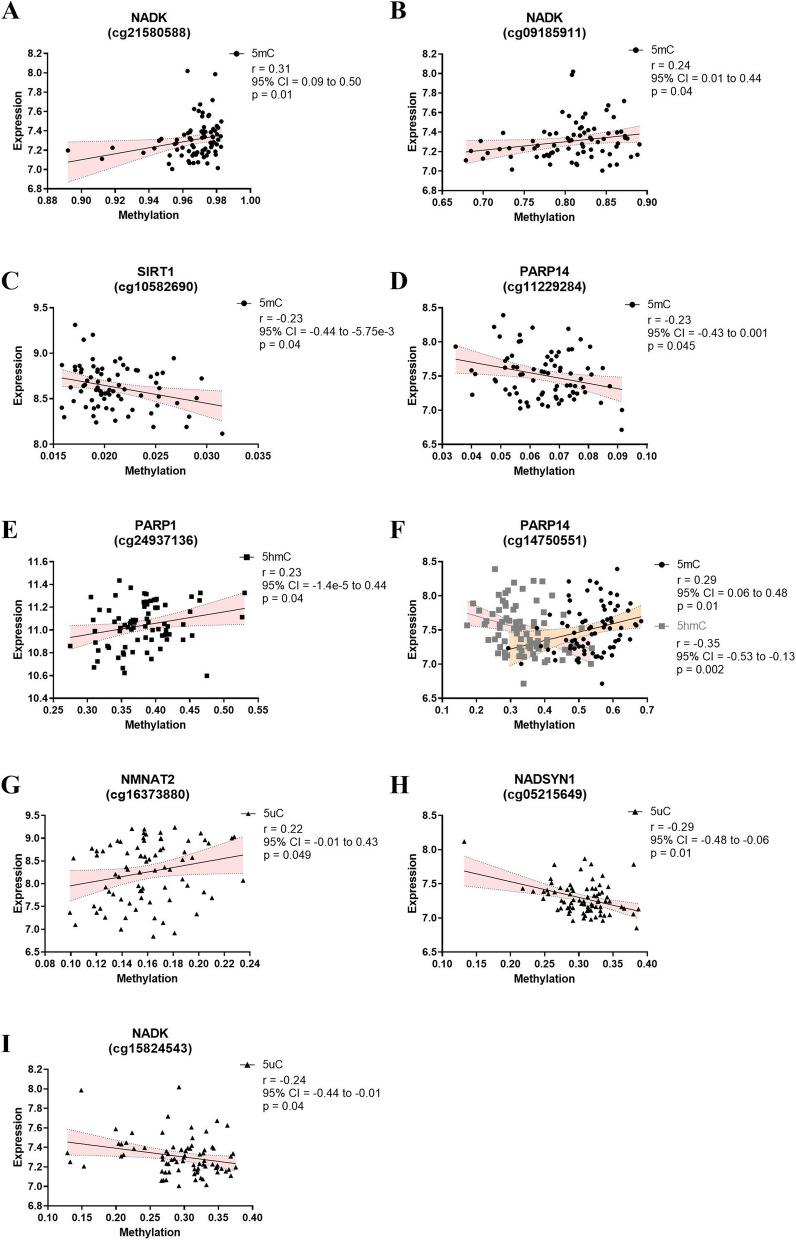
Twelve TRP- and twenty NAD-associated genes were found to be differentially expressed in the MTG of AD patients. Gene sets associated in the kynurenine pathway, the most common TRP pathway, and NAD pathway, showed enrichment at the mRNA expression level. Downstream analyses integrating data on gene expression, DNA (hydroxy)methylation, and AD pathology, as well as GRN and network perturbation analyses, identified IDO2, an immune regulatory gene, as a key candidate in AD. Notably, one CpG site in IDO2 (cg11251498) exhibited significant methylation differences between AD converters and non-converters in the AgeCoDe cohort.
CONCLUSION
These findings reveal substantial transcriptional and epigenetic alterations in TRP- and NAD-pathway-associated genes in AD, highlighting IDO2 as a key candidate gene for further investigation. These genes and their encoded proteins hold potential as novel biomarkers and therapeutic targets for AD.
背景
神经退行性疾病,包括阿尔茨海默病(AD),与色氨酸(TRP)代谢的改变有关。然而,迄今为止,尚无研究系统地探索 TRP 途径在转录和表观遗传水平上的变化。本研究旨在使用三个独立的队列,研究 AD 患者和年龄匹配的对照者的颞中回(MTG)组织来源的 DNA 中涉及 TRP 和烟酰胺腺嘌呤二核苷酸(NAD)途径的基因的转录组、DNA 甲基化组(5mC)和羟甲基化组(5hmC)变化。
方法
分析了 AD 患者(n=45)和年龄匹配的对照者(n=35)死后 MTG 组织来源的 DNA,以及两个独立队列的血液样本来源的 DNA:德国初级保健患者衰老、认知和痴呆研究(AgeCoDe)队列(n=96)和荷兰生物银行阿尔茨海默病中心林堡(BBACL)队列(n=262)。使用 HumanHT-12 v4 Expression BeadChip 和 HM 450 K BeadChip 阵列分别进行分子谱分析,包括评估 mRNA 表达和 DNA(羟)甲基化水平。使用计算建模(即基因调控网络(GRN)和网络扰动分析)进行基因之间的功能相互作用和常见表型特异性阳性和阴性基本电路的识别。使用焦磷酸测序分析 IDO2(cg11251498)的 DNA 甲基化。
结果
在 AD 患者的 MTG 中发现了 12 个 TRP 和 20 个 NAD 相关基因的差异表达。与犬尿氨酸途径、最常见的 TRP 途径和 NAD 途径相关的基因集在 mRNA 表达水平上显示出富集。整合 AD 病理学、基因表达、DNA(羟)甲基化、GRN 和网络扰动分析数据的下游分析确定 IDO2(一种免疫调节基因)是 AD 的关键候选基因。值得注意的是,AgeCoDe 队列中 AD 转化者和非转化者之间的 IDO2 中的一个 CpG 位点(cg11251498)表现出显著的甲基化差异。
结论
这些发现揭示了 AD 中 TRP 和 NAD 途径相关基因的大量转录和表观遗传改变,突出了 IDO2 作为进一步研究的关键候选基因。这些基因及其编码的蛋白质可能成为 AD 的新型生物标志物和治疗靶点。
 Zotero 插件