
基于外泌体的策略治疗结肠癌:使用负载小干扰RNA的囊泡靶向可溶性增殖诱导配体
Exosome-based strategy against colon cancer using small interfering RNA-loaded vesicles targeting soluble a proliferation-inducing ligand.
作者信息
Kim Hyung-Jin, Lee Do Sang, Park Jung Hyun, Hong Ha-Eun, Choi Ho Joong, Kim Ok-Hee, Kim Say-June
机构信息
Department of Surgery, Eunpyeong St. Mary's Hospital, College of Medicine, The Catholic University of Korea, Seoul 03312, South Korea.
Department of Surgery, Seoul St. Mary's Hospital, College of Medicine, The Catholic University of Korea, Seoul 06591, South Korea.
出版信息
World J Stem Cells. 2024 Nov 26;16(11):956-973. doi: 10.4252/wjsc.v16.i11.956.
BACKGROUND
Recent advancements in nanomedicine have highlighted the potential of exosome (Ex)-based therapies, utilizing naturally derived nanoparticles, as a novel approach to targeted cancer treatment.
AIM
To explore the targetability and anticancer effectiveness of small interfering peptidyl-prolyl cis-trans isomerase NIMA-interacting 1 RNA (siPIN1)-loaded soluble a proliferation-inducing ligand (sAPRIL)-targeted Exs (designated as tEx[p]) in the treatment of colon cancer models.
METHODS
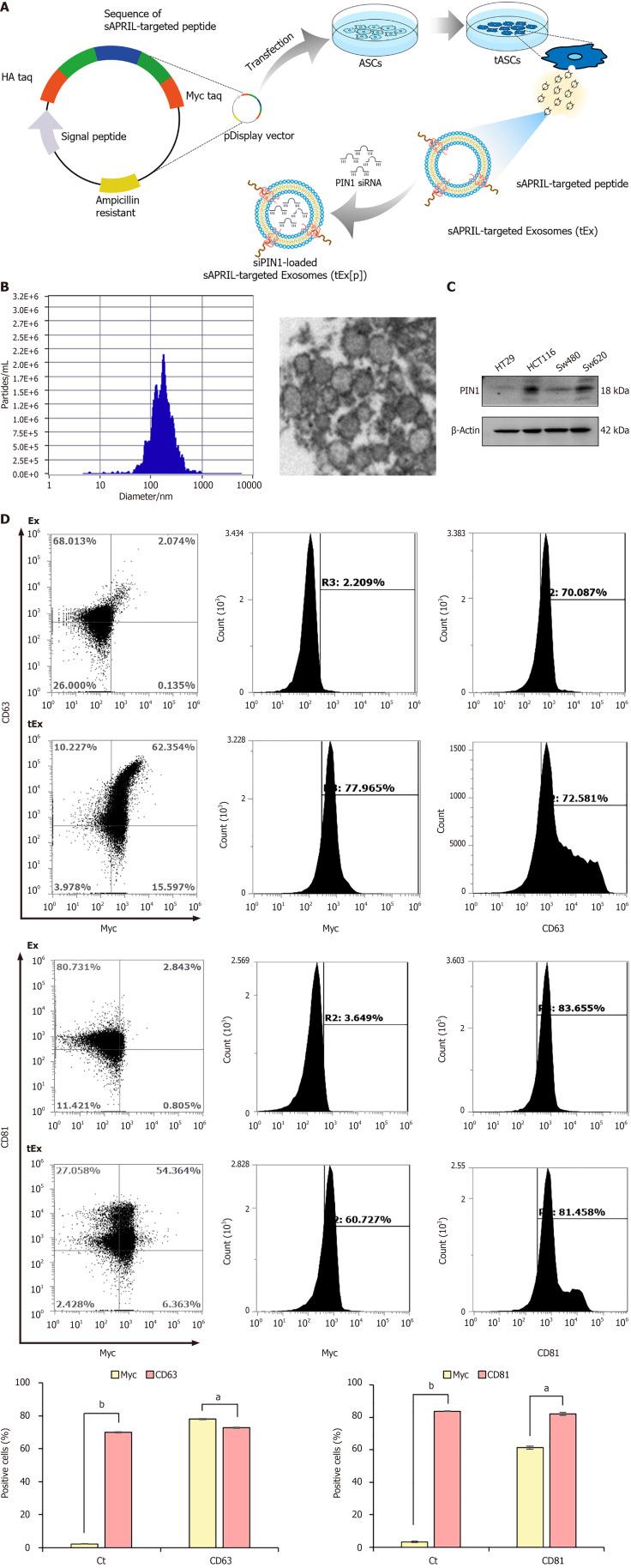
tEx was generated by harvesting conditioned media from adipose-derived stem cells that had undergone transformation using pDisplay vectors encoding sAPRIL-binding peptide sequences. Subsequently, tEx[p] were created by incorporating PIN1 siRNA into the tEx using the Exofect kit. The therapeutic efficacy of these Exs was evaluated using both and models of colon cancer.
RESULTS
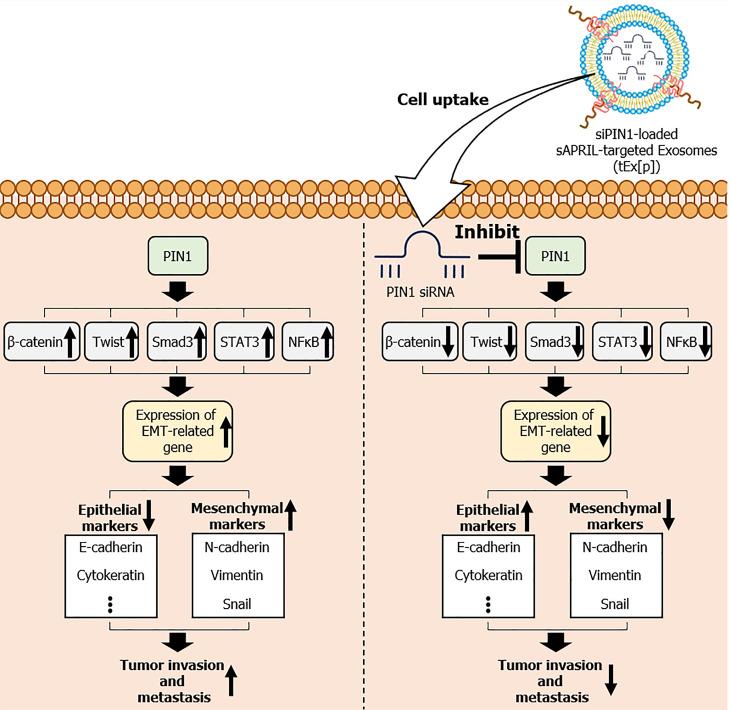
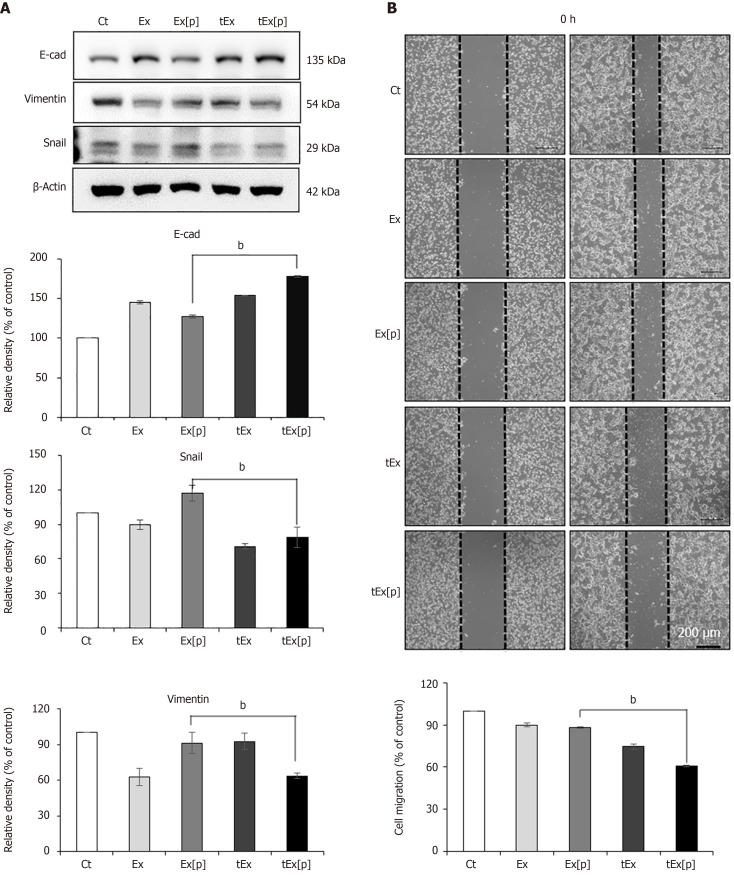
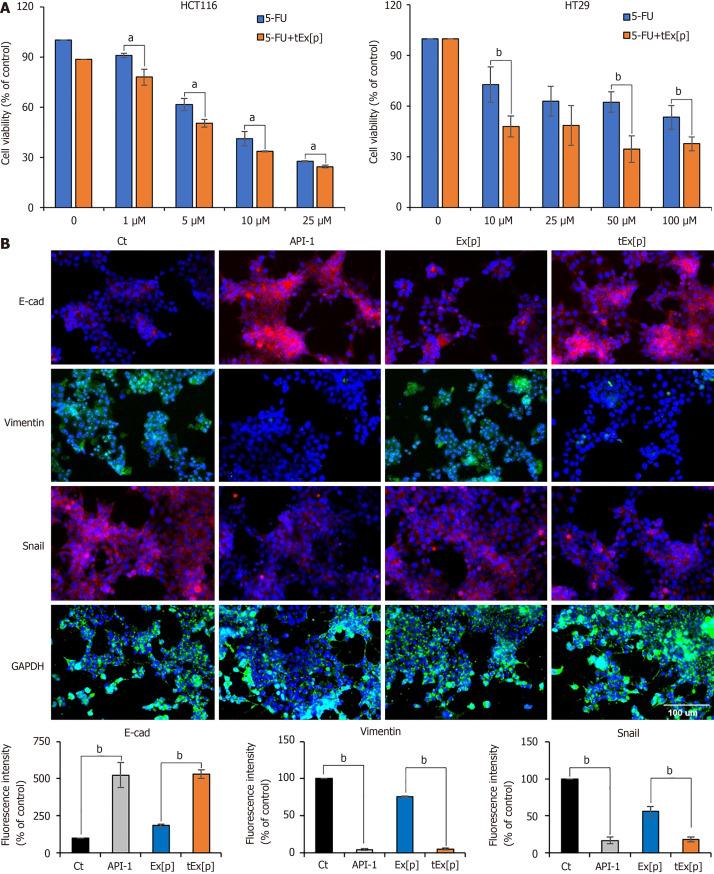
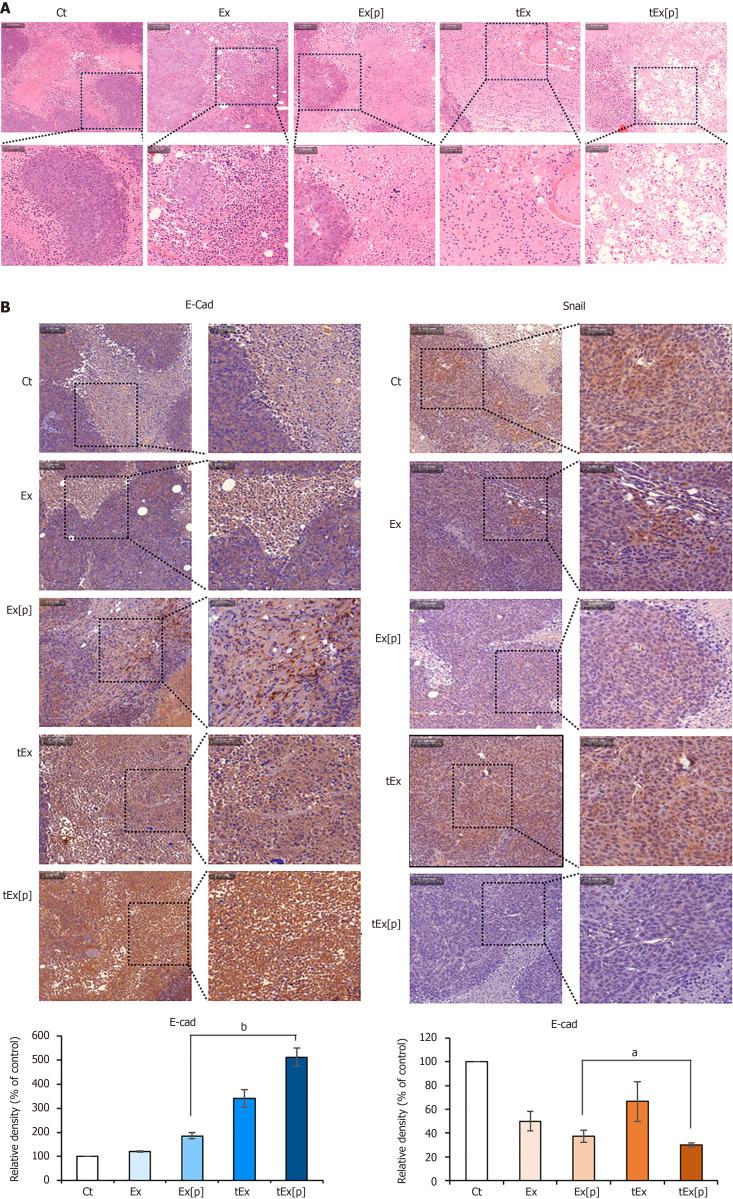
The tEx[p] group exhibited superior anticancer effects in comparison to other groups, including tEx, Ex[p], and Ex, demonstrated by the smallest tumor size, the slowest tumor growth rate, and the lightest weight of the excised tumors observed in the tEx[p] group ( < 0.05). Moreover, analyses of the excised tumor tissues, using western blot analysis and immunohistochemical staining, revealed that tEx[p] treatment resulted in the highest increase in E-cadherin expression and the most significant reduction in the mesenchymal markers Vimentin and Snail ( < 0.05), suggesting a more effective inhibition of epithelial-mesenchymal transition tEx[p], likely due to the enhanced delivery of siPIN1.
CONCLUSION
The use of bioengineered Exs targeting sAPRIL and containing siPIN1 demonstrated superior efficacy in inhibiting tumor growth and epithelial-mesenchymal transition, highlighting their potential as a therapeutic strategy for colon cancer.
背景
纳米医学的最新进展凸显了基于外泌体(Ex)疗法的潜力,即利用天然来源的纳米颗粒作为靶向癌症治疗的新方法。
目的
探讨负载小干扰肽基脯氨酰顺反异构酶NIMA相互作用1 RNA(siPIN1)的可溶性增殖诱导配体(sAPRIL)靶向外泌体(命名为tEx[p])在结肠癌模型治疗中的靶向性和抗癌效果。
方法
通过收集经编码sAPRIL结合肽序列的pDisplay载体转化的脂肪来源干细胞的条件培养基来生成tEx。随后,使用Exofect试剂盒将PIN1 siRNA掺入tEx中,从而制备tEx[p]。使用结肠癌的体内和体外模型评估这些外泌体的治疗效果。
结果
与其他组(包括tEx、Ex[p]和Ex)相比,tEx[p]组表现出更优的抗癌效果,这体现在tEx[p]组观察到的肿瘤尺寸最小、肿瘤生长速率最慢以及切除肿瘤的重量最轻(<0.05)。此外,通过蛋白质免疫印迹分析和免疫组织化学染色对切除的肿瘤组织进行分析,结果显示tEx[p]治疗导致E-钙黏蛋白表达增加最多,间充质标志物波形蛋白和Snail的减少最为显著(<0.05),这表明tEx[p]对上皮-间质转化的抑制作用更有效,这可能是由于siPIN1的递送增强所致。
结论
使用靶向sAPRIL并含有siPIN1的生物工程外泌体在抑制肿瘤生长和上皮-间质转化方面显示出更优的疗效,凸显了它们作为结肠癌治疗策略的潜力。


 Zotero 插件