
吡格列酮对黏菌素诱导的肾毒性的改善作用是通过抑制NF-κB和恢复Nrf2信号传导介导的:一项综合生物信息学预测指导的体外研究。
The ameliorative effect of pioglitazone against colistin-induced nephrotoxicity is mediated by inhibition of NF-κB and restoration of Nrf2 signaling: An integrative bioinformatics prediction-guided in vitro study.
作者信息
Alharbi Metab, Mahmoud Mohamed A, Alshammari Abdulrahman, Almutairi Mashal M, Al-Ghamdi Jihan M, Alsabhan Jawza F, Shabanah Othman Al, Alshalawi Norah A, Alzarea Sami I, Alasmari Abdullah F
机构信息
Department of Pharmacology and Toxicology, College of Pharmacy, King Saud University, Riyadh, Saudi Arabia.
Biochemistry Department, College of Science, King Saud University, Riyadh, Saudi Arabia.
出版信息
PLoS One. 2024 Dec 2;19(12):e0314092. doi: 10.1371/journal.pone.0314092. eCollection 2024.
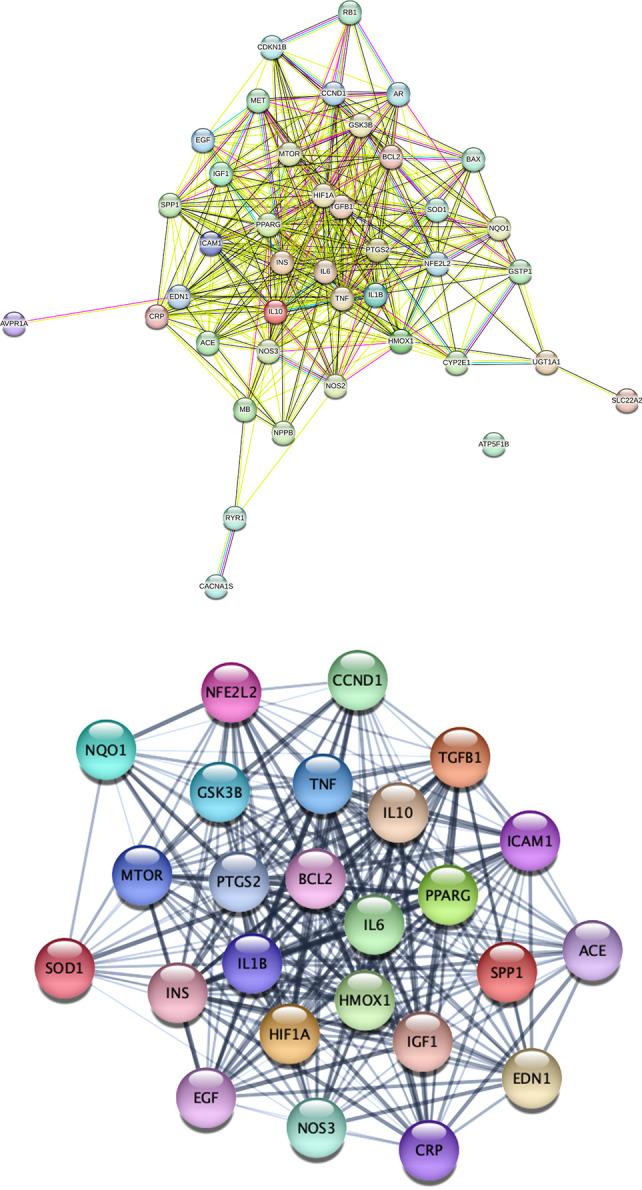
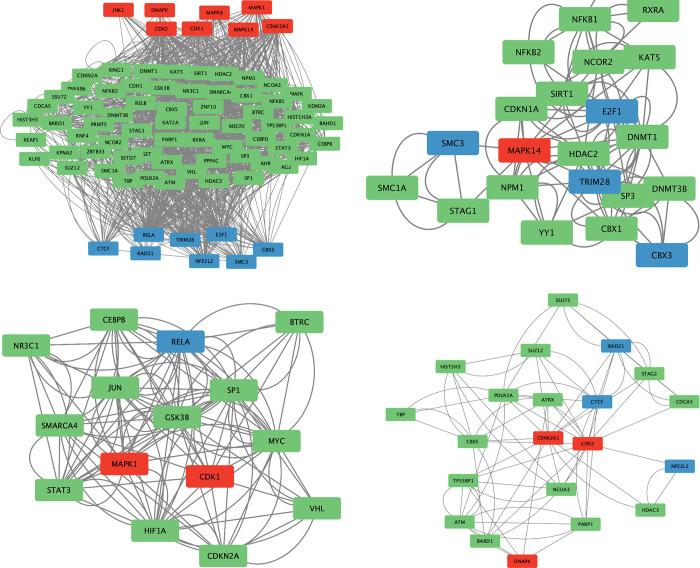
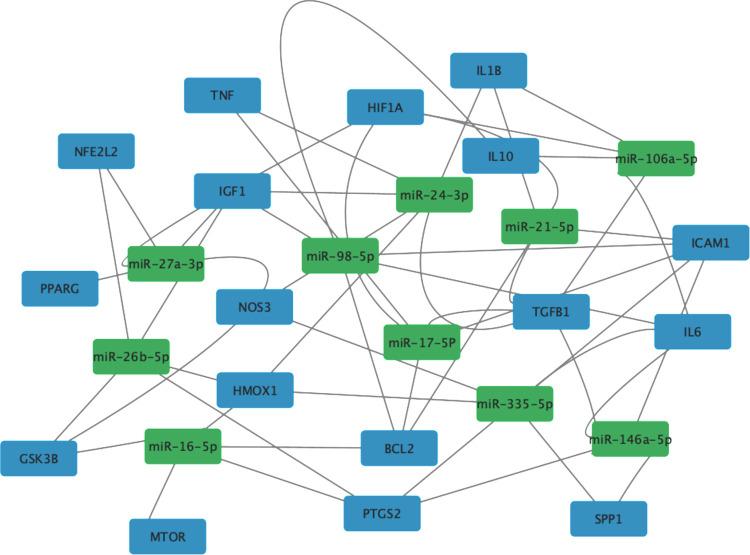
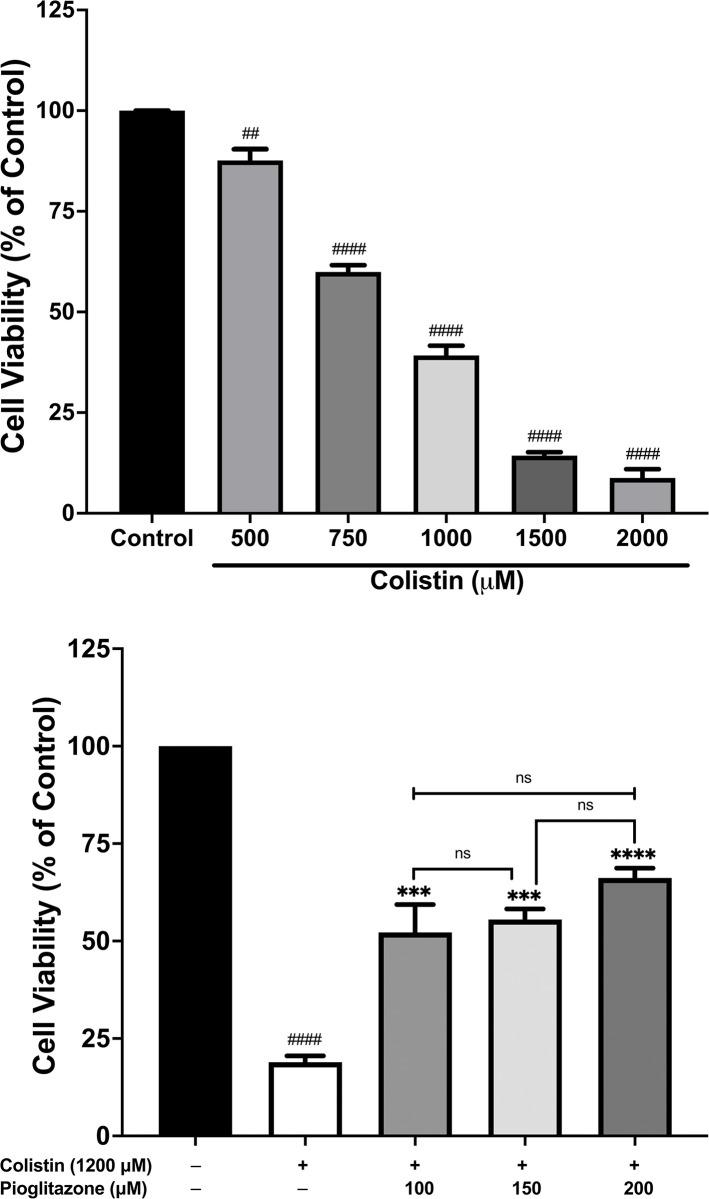
Pioglitazone, an anti-diabetic drug, has been previously shown to ameliorate kidney damage through anti-inflammatory and antioxidant effects. In this study, we employed an integrative bioinformatics approach to study the possible mechanisms involved in the mitigative effect of pioglitazone against colistin-induced nephrotoxicity. Next, we validated the results obtained from the bioinformatics study by pre-treating human kidney-2 (HK-2) cell line with pioglitazone 100 μM for 30 minutes and then treating the cells with colistin sulfate 1200 μM for 24 hours. Inflammatory signaling by cytokines and the nuclear factor erythroid 2 related factor 2 (Nrf2) signaling pathways were predicted to be involved in the ameliorative effect of pioglitazone against colistin-induced nephrotoxicity. The nuclear factor kappa B subunit p65 (NF-κB p65) and Nrf2 were among the predicted transcription factors regulating the hub genes. Moreover, miR-24, miR-16, and miR-21 were identified as potential pathogenic miRNAs regulating the hub genes. In contrast, miR-17, miR-27a, and miR-146a were identified as potential protective miRNAs. The in vitro study indicated that pioglitazone pre-treatment increased cell viability in HK-2 cells exposed to colistin. Pioglitazone pre-treatment reduced the expression of pro-inflammatory cytokine genes (IL6 and TNF). Moreover, pioglitazone reduced the protein expression of NF-κB p65 and increased the protein expression of Nrf2. The protective effect of pioglitazone against colistin-induced toxicity in HK-2 cells is related to its anti-inflammatory and antioxidant activity through modulating NF-κB-mediated inflammatory signaling and Nrf2-mediated antioxidative stress signaling.
吡格列酮是一种抗糖尿病药物,先前已被证明可通过抗炎和抗氧化作用改善肾脏损伤。在本研究中,我们采用综合生物信息学方法来研究吡格列酮对黏菌素诱导的肾毒性的减轻作用所涉及的可能机制。接下来,我们通过用100μM吡格列酮预处理人肾-2(HK-2)细胞系30分钟,然后用1200μM硫酸黏菌素处理细胞24小时,验证了从生物信息学研究中获得的结果。细胞因子介导的炎症信号和核因子红细胞2相关因子2(Nrf2)信号通路被预测参与吡格列酮对黏菌素诱导的肾毒性的改善作用。核因子κB亚基p65(NF-κB p65)和Nrf2是预测的调节枢纽基因的转录因子。此外,miR-24、miR-16和miR-21被鉴定为调节枢纽基因的潜在致病miRNA。相比之下,miR-17、miR-27a和miR-146a被鉴定为潜在的保护性miRNA。体外研究表明,吡格列酮预处理可提高暴露于黏菌素的HK-2细胞的活力。吡格列酮预处理降低了促炎细胞因子基因(IL6和TNF)的表达。此外,吡格列酮降低了NF-κB p65的蛋白表达并增加了Nrf2的蛋白表达。吡格列酮对HK-2细胞中黏菌素诱导的毒性的保护作用与其通过调节NF-κB介导的炎症信号和Nrf2介导的抗氧化应激信号的抗炎和抗氧化活性有关。




 Zotero 插件