
一种用于预测纳米结构表面杀菌效率的监督式机器学习工具。
A supervised machine learning tool to predict the bactericidal efficiency of nanostructured surface.
作者信息
Chen Yaxi, Chen Hongyi, Harker Anthony, Liu Yuanchang, Huang Jie
机构信息
Department of Mechanical Engineering, University College London, London, UK.
Department of Computer Science, University College London, London, UK.
出版信息
J Nanobiotechnology. 2024 Dec 3;22(1):748. doi: 10.1186/s12951-024-02974-8.
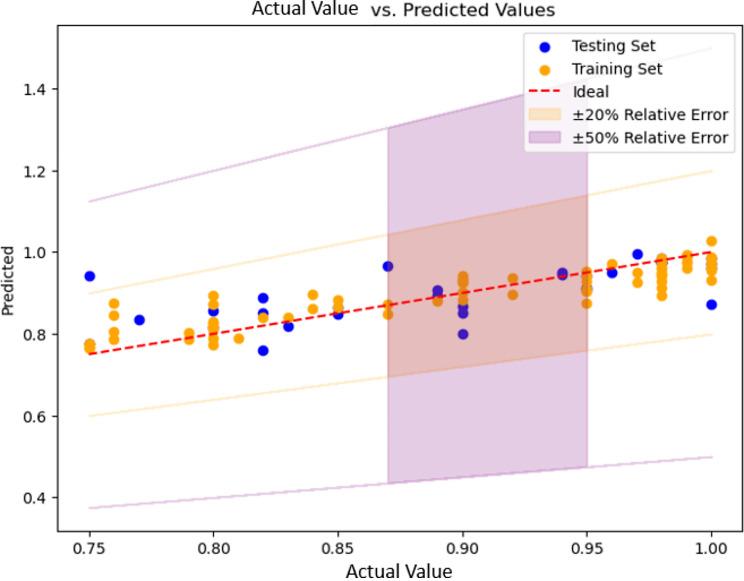
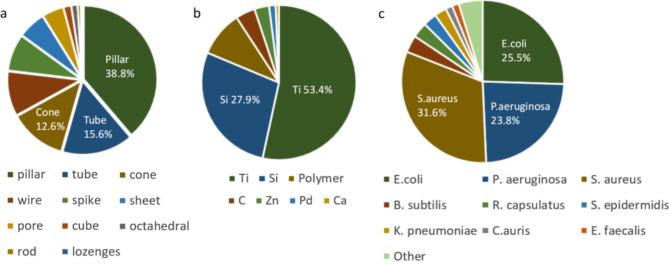
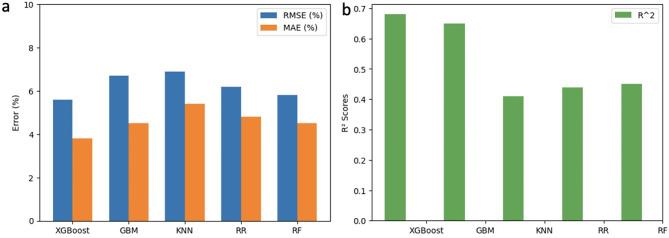
The emergence and rapid spread of multidrug-resistant bacterial strains is a growing concern of public health. Inspired by the natural bactericidal surfaces of lotus leaves and shark skin, increasing attention has been focused on the use of mechano-bactericidal methods to create surfaces with antibacterial and/or bactericidal effects. There have been several studies exploring the bactericidal effect of nanostructured surfaces under various combinations of parameters. However, the correlation and synergies between these factors still need to be clarified. Recently machine learning (ML), which enables prediction or decision-making based on data, has been used in the field of biomaterials with promising results. In this study, we explored ML in nanotechnology to investigate the antimicrobial potential of nanostructured surfaces. A dataset of nanostructured surfaces and their antimicrobial properties was built by extracting the published literature. Based on the literature review and the distribution of our dataset, 70% bactericidal efficiency was selected as a practical benchmark for our classification model that balances stringent bactericidal performance with achievable targets in diverse conditions. Subsequently, we developed an ML classification model, which demonstrated an 81% accuracy in its predictive capability. A regression model was further developed to predict the value of bactericidal efficiency for nanostructured surfaces. Feature importance analysis of the ML models suggested that nanotopographical features have a greater influence on bactericidal properties than material properties, thus providing insight into the principles of the mechano-bactericidal effect of nanostructured surfaces. Overall, this ML model tool could help researchers to effectively select and design the parameters of the surface structure prior to experimentation, thereby improving the timeliness and reducing the number of experiments and the associated costs.
多重耐药细菌菌株的出现和迅速传播日益引起公共卫生领域的关注。受荷叶和鲨鱼皮天然杀菌表面的启发,利用机械杀菌方法来制造具有抗菌和/或杀菌效果的表面受到了越来越多的关注。已有多项研究探讨了纳米结构表面在各种参数组合下的杀菌效果。然而,这些因素之间的相关性和协同作用仍有待阐明。近年来,机器学习(ML)能够基于数据进行预测或决策,已在生物材料领域得到应用并取得了有前景的成果。在本研究中,我们在纳米技术领域探索了机器学习,以研究纳米结构表面的抗菌潜力。通过提取已发表的文献,建立了一个纳米结构表面及其抗菌性能的数据集。基于文献综述和我们数据集的分布情况,我们选择70%的杀菌效率作为分类模型的实际基准,该模型在不同条件下兼顾了严格的杀菌性能和可实现的目标。随后,我们开发了一个机器学习分类模型,其预测能力的准确率达到了81%。进一步开发了一个回归模型来预测纳米结构表面的杀菌效率值。机器学习模型的特征重要性分析表明,纳米拓扑特征对杀菌性能的影响比材料属性更大,从而为纳米结构表面机械杀菌效果的原理提供了见解。总体而言,这种机器学习模型工具可以帮助研究人员在实验之前有效地选择和设计表面结构参数,从而提高及时性,减少实验次数及相关成本。


 Zotero 插件