
将诱导多能干细胞(iPSC)技术与基于嵌合抗原受体(CAR)的免疫疗法相结合:最新进展、挑战与未来前景。
Combining the induced pluripotent stem cell (iPSC) technology with chimeric antigen receptor (CAR)-based immunotherapy: recent advances, challenges, and future prospects.
作者信息
Alidadi Mehdi, Barzgar Haniyeh, Zaman Mohammad, Paevskaya Olga A, Metanat Yekta, Khodabandehloo Elnaz, Moradi Vahid
机构信息
Department of Anatomy, School of Medicine, Tehran University of Medical Sciences, Tehran, Iran.
Department of Anatomical Sciences, School of Medicine, Zahedan University of Medical Sciences, Zahedan, Iran.
出版信息
Front Cell Dev Biol. 2024 Nov 18;12:1491282. doi: 10.3389/fcell.2024.1491282. eCollection 2024.
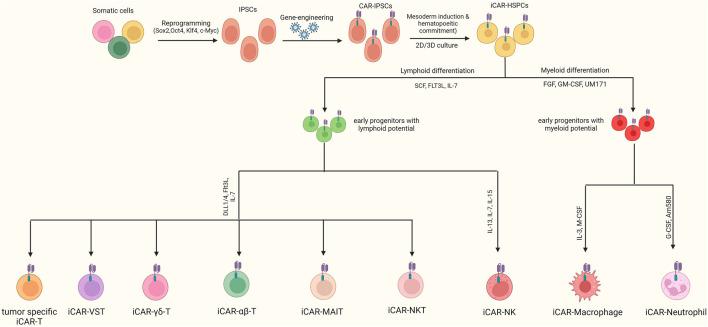
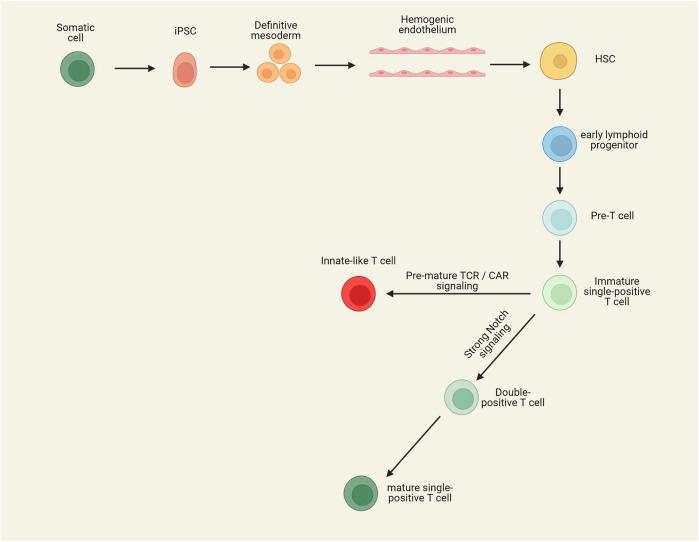
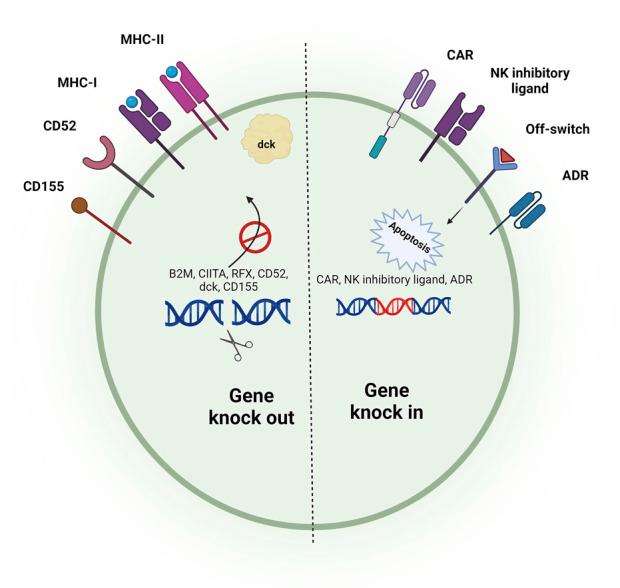
After experiencing many ups and downs, chimeric antigen receptor (CAR)-T cell therapy has reached a milestone as an anti-cancer method, as evidenced by the increasing number of clinical trials and approved products. Nonetheless, there is a real need to optimize CAR-T cell therapy and overcome its existing limitations. The importance of cellular starting material for generating CAR-T cells is undeniable, as the current personalized manufacturing approach is the main roadblock to providing a fast, affordable, and standard treatment for patients. Thus, developing an off-the-shelf CAR-T product is a leading focus in adoptive cell therapy. Several biotech companies worldwide are focused on developing an off-the-shelf CAR-T product from allogeneic sources. Induced pluripotent stem cells (iPSCs) have unique characteristics, making them highly attractive among various allogeneic sources. IPSCs can be modified with CAR, undergo other intended gene manipulations, and then be differentiated into functional hematopoietic lineages with anti-cancer activity. Moreover, iPSCs provide an unlimited cell source, simplifying the setting of a standard treatment protocol by generating a homogenous population of resulting cells and reducing batch-to-batch inconsistency. In this review, we delve into the manufacturing of iPSC-derived CAR-T (iCAR-T) cells and discuss the path and challenges of their clinical translation. We also introduce some iPSC-derived cellular alternatives to conventional iCAR-αβ-T cells, including iCAR-T cells with a limited TCR diversity, iCAR-NK, iCAR-macrophages, and iCAR-neutrophils and discuss their relative advantages and disadvantages as well as their differentiation from iPSCs in compliance with cGMP. Finally, we reviewed iPSC-derived CAR-engineered cells being evaluated in clinical trials.
在经历了诸多起伏之后,嵌合抗原受体(CAR)-T细胞疗法作为一种抗癌方法已达到一个里程碑,越来越多的临床试验和获批产品就是明证。尽管如此,确实有必要优化CAR-T细胞疗法并克服其现有局限性。用于生成CAR-T细胞的细胞起始材料的重要性不可否认,因为当前的个性化制造方法是为患者提供快速、经济且标准化治疗的主要障碍。因此,开发现成可用的CAR-T产品是过继性细胞疗法的一个主要重点。全球几家生物技术公司都专注于从异基因来源开发现成可用的CAR-T产品。诱导多能干细胞(iPSC)具有独特的特性,使其在各种异基因来源中极具吸引力。iPSC可以用CAR进行修饰,进行其他预期的基因操作,然后分化为具有抗癌活性的功能性造血谱系。此外,iPSC提供了无限的细胞来源,通过生成均匀的细胞群体并减少批次间的不一致性,简化了标准治疗方案的制定。在这篇综述中,我们深入探讨了iPSC衍生的CAR-T(iCAR-T)细胞的制造,并讨论了它们临床转化的途径和挑战。我们还介绍了一些传统iCAR-αβ-T细胞的iPSC衍生的细胞替代物,包括TCR多样性有限的iCAR-T细胞、iCAR-NK、iCAR-巨噬细胞和iCAR-中性粒细胞,并讨论了它们的相对优缺点以及它们在符合cGMP的情况下从iPSC的分化。最后,我们回顾了正在临床试验中评估的iPSC衍生的CAR工程细胞。
 Zotero 插件