
源自瓜籽壳的二氧化硅纳米颗粒可改善镍/铝混合物介导的大鼠认知障碍。
Silica nanoparticles (SiNPs) derived from melon seed husk ameliorate Ni/Al mixture-mediated cognitive impairment in rats.
作者信息
Anyachor Chidinma Promise, Orish Chinna Nneka, Ezejiofor Anthonet Ndidi, Cirovic Ana, Cirovic Aleksandar, Dooka Baridoo Donatus, Ezealisiji Kenneth, Orisakwe Orish Ebere
机构信息
African Centre of Excellence for Public Health and Toxicological Research (ACE-PUTOR), University of Port Harcourt, Choba, Port Harcourt, Nigeria.
Department of Anatomy, Faculty of Basic Medical Sciences, College of Health Sciences, University of Port Harcourt, Choba, Port Harcourt, Nigeria.
出版信息
J Med Life. 2024 Sep;17(9):856-867. doi: 10.25122/jml-2024-0019.
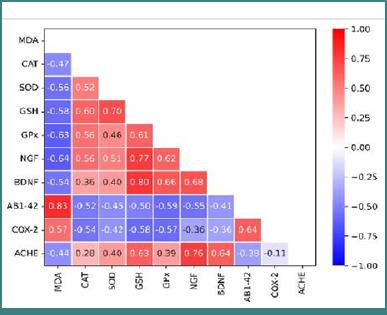
This study evaluated the protective effects of silica nanoparticles (SiNPs) derived from melon seed husk ash against the neurotoxic effects of common environmental pollutants, aluminum (Al), nickel (Ni), and their combination in Wistar rats. Ninety-one male Sprague Dawley rats (220-250 g; 6-8 weeks old) were divided into 13 experimental groups. Key findings revealed that exposure to nickel, aluminum, or their combination significantly impaired spatial learning and memory, as evidenced by prolonged latency periods in treated rats. Treatment with SiNPs from melon seed husks reduced these latency periods. Increased Ni and Al levels in the frontal cortex after Ni/Al mixture exposure were mitigated by SiNPs. SiNPs also countered the reduction in iron levels caused by exposure to nickel, aluminum, and the mixture of nickel and aluminum. Moreover, SiNPs ameliorated oxidative stress by reducing MDA levels and increasing antioxidant enzyme activities. SiNPs treatment caused improved nerve growth factor (NGF) and brain-derived neurotrophic factor (BDNF) levels and reversed elevated Aβ-42 and cyclooxygenase-2 levels, highlighting their potential neuroprotective effects. Our results demonstrated the neuroprotective effects of SiNPs from melon seed husks by attenuating metal-induced oxidative stress and inflammation, though they did not enhance cortical cholinergic activity in rats.
本研究评估了源自瓜子壳灰的二氧化硅纳米颗粒(SiNPs)对常见环境污染物铝(Al)、镍(Ni)及其组合在Wistar大鼠中神经毒性作用的保护效果。91只雄性Sprague Dawley大鼠(220 - 250克;6 - 8周龄)被分为13个实验组。主要研究结果表明,暴露于镍、铝或它们的组合会显著损害空间学习和记忆能力,这在处理过的大鼠中表现为潜伏期延长。用瓜子壳中的SiNPs进行处理可缩短这些潜伏期。SiNPs减轻了镍/铝混合物暴露后额叶皮质中镍和铝水平的升高。SiNPs还对抗了因暴露于镍、铝以及镍和铝的混合物而导致的铁水平降低。此外,SiNPs通过降低丙二醛(MDA)水平和增加抗氧化酶活性来改善氧化应激。SiNPs处理导致神经生长因子(NGF)和脑源性神经营养因子(BDNF)水平提高,并逆转了β淀粉样蛋白42(Aβ - 42)和环氧化酶 - 2水平的升高,突出了它们潜在的神经保护作用。我们的结果证明了瓜子壳中的SiNPs通过减轻金属诱导的氧化应激和炎症而具有神经保护作用,尽管它们并未增强大鼠皮质胆碱能活性。
 Zotero 插件