
光动力疗法光敏剂和光活化化疗药物表现出独特的生物能量特征以影响ATP代谢。
Photodynamic therapy photosensitizers and photoactivated chemotherapeutics exhibit distinct bioenergetic profiles to impact ATP metabolism.
作者信息
Mitchell Richard J, Havrylyuk Dmytro, Hachey Austin C, Heidary David K, Glazer Edith C
机构信息
National Cancer Institute Frederick USA.
North Carolina State University at Raleigh USA
出版信息
Chem Sci. 2024 Nov 21;16(2):721-734. doi: 10.1039/d4sc05393a. eCollection 2025 Jan 2.
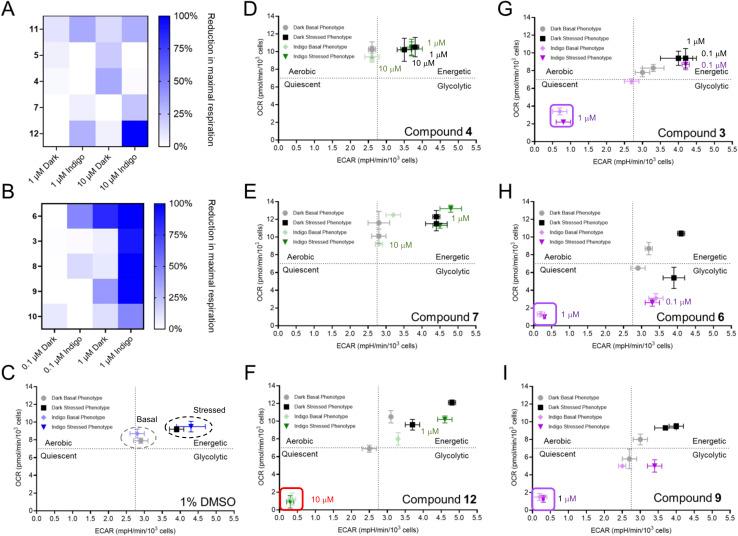
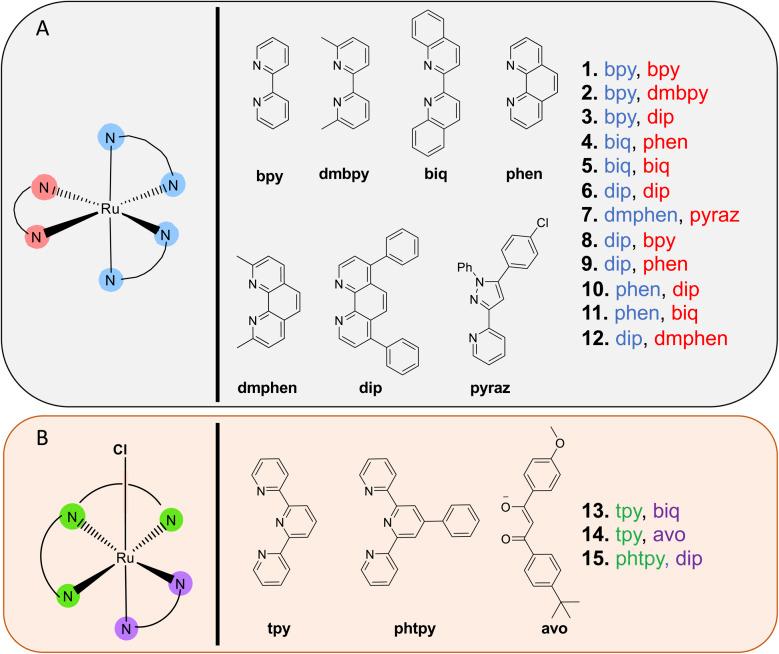
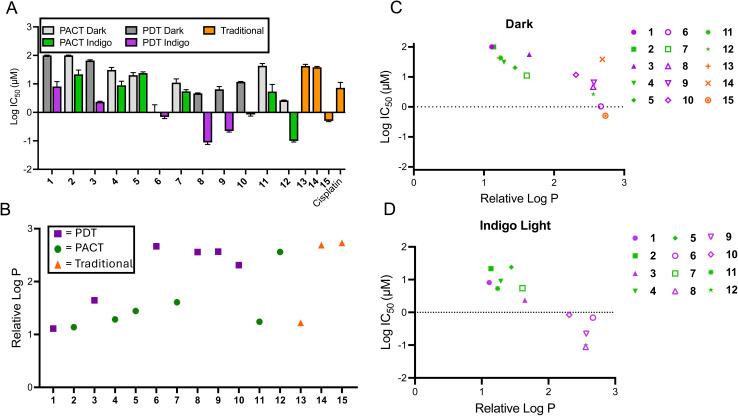
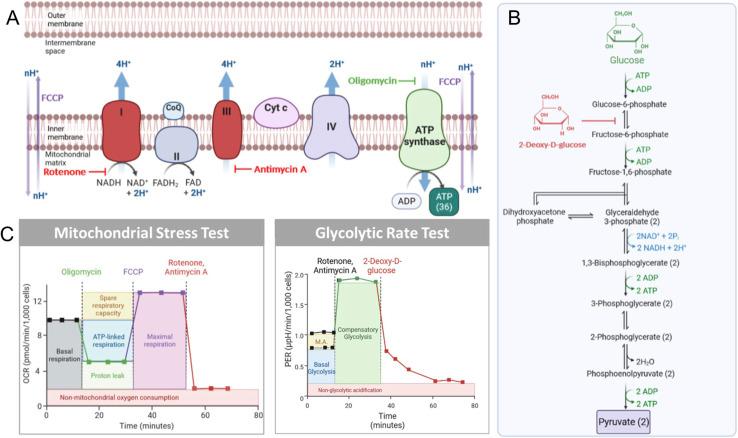
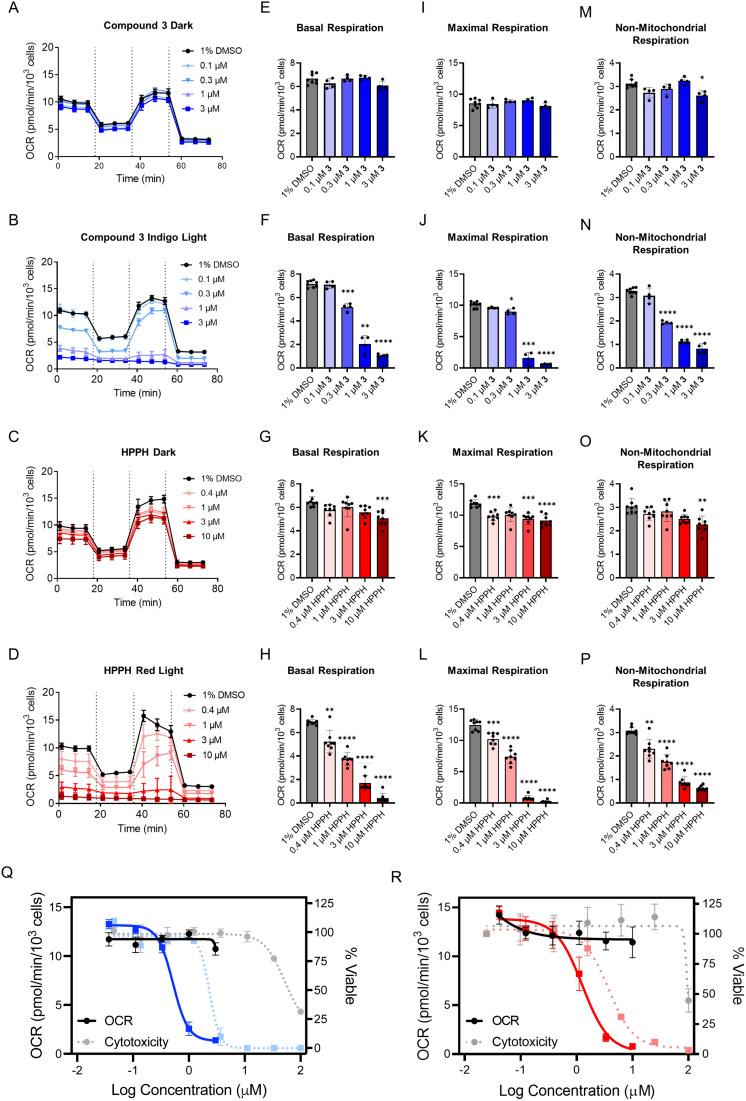
Energy is essential for all life, and mammalian cells generate and store energy in the form of ATP by mitochondrial (oxidative phosphorylation) and non-mitochondrial (glycolysis) metabolism. These processes can now be evaluated by extracellular flux analysis (EFA), which has proven to be an indispensable tool in cell biology, providing previously inaccessible information regarding the bioenergetic landscape of cell lines, complex tissues, and models. Recently, EFA demonstrated its utility as a screening tool in drug development, both by providing insights into small molecule-organelle interactions, and by revealing the peripheral and potentially undesired off-target effects small molecules have within cells. Surprisingly, technologies to quantify cellular bioenergetics have not been systematically applied in phototherapy development, leaving open several questions about how the mechanism of action of a compound can impact essential cellular functions. Here, we utilized the Seahorse analyzer to address this question for photosensitizers (PSs) for photodynamic therapy (PDT) and contrast these systems to molecules that photo-release a ligand and thus act as photocages or photoactivated chemotherapeutics (PACT), intending to understand the influence these two classes of compounds have on cellular bioenergetics. EFA results show that acute treatment of A549 lung adenocarcinoma cells with PDT agents induces a quiescent bioenergetic response as a result of mitochondrial respiration shutdown. The loss of oxidative phosphorylation is followed by disruption of glycolysis, which occurs after an initial increase in glycolytic respiration is unable to compensate for the interruption of the electron transport chain (ETC). In contrast, the PACT agents tested had little impact on cellular respiration, and the minor inhibition of these metabolic processes was not related to the mechanism of action, as reflected by a lack of correlation with photoejection efficiency. Notably, a system capable of both generating O and photo-releasing a ligand exhibited the dominant profile of a PDT agent and induced the quiescent bioenergetic state, indicating potential implications on cellular bioenergetics for so-called dual-action agents. These findings are presented with the aim to provide the necessary groundwork for expanding the application and utility of EFA to phototherapeutics and to highlight the role of metabolic alterations in PDT.
能量对所有生命都至关重要,哺乳动物细胞通过线粒体(氧化磷酸化)和非线粒体(糖酵解)代谢以ATP的形式产生和储存能量。现在可以通过细胞外通量分析(EFA)来评估这些过程,事实证明,EFA是细胞生物学中不可或缺的工具,它能提供有关细胞系、复杂组织和模型的生物能量格局的此前无法获得的信息。最近,EFA通过深入了解小分子与细胞器的相互作用,以及揭示小分子在细胞内的外周和潜在的非靶向效应,证明了其作为药物开发筛选工具的效用。令人惊讶的是,量化细胞生物能量学的技术尚未系统地应用于光疗开发,这就留下了几个关于化合物作用机制如何影响基本细胞功能的问题。在这里,我们利用海马分析仪来解决用于光动力疗法(PDT)的光敏剂(PSs)的这个问题,并将这些系统与光释放配体从而充当光笼或光激活化疗药物(PACT)的分子进行对比,旨在了解这两类化合物对细胞生物能量学的影响。EFA结果表明,用PDT药物急性处理A549肺腺癌细胞会由于线粒体呼吸停止而诱导静止的生物能量反应。氧化磷酸化的丧失之后是糖酵解的破坏,糖酵解的破坏发生在糖酵解呼吸最初增加无法补偿电子传递链(ETC)中断之后。相比之下,所测试的PACT药物对细胞呼吸影响很小,这些代谢过程的轻微抑制与作用机制无关,这一点从与光喷射效率缺乏相关性可以看出。值得注意的是,一个既能产生O又能光释放配体的系统表现出PDT药物的主要特征,并诱导静止的生物能量状态,这表明所谓的双功能药物对细胞生物能量学有潜在影响。提出这些发现的目的是为将EFA的应用和效用扩展到光疗提供必要的基础,并突出代谢改变在PDT中的作用。
 Zotero 插件