
在巴西南里奥格兰德州边境,SARS-CoV-2病毒的州际传播链比国际传播链更为频繁。
Higher frequency of interstate over international transmission chains of SARS-CoV-2 virus at the Rio Grande do Sul - Brazil state borders.
作者信息
Dezordi Filipe Zimmer, Júnior José Valter Joaquim Silva, Ruoso Terimar Facin, Batista Angela Giovana, Fonseca Pedro Mesquita, Bernardo Larissa Paim, Salvato Richard Steiner, Gregianini Tatiana Schäffer, Lopes Thaísa Regina Rocha, Flores Eduardo Furtado, Weiblen Rudi, Brites Patrícia Chaves, Silva Mônica de Medeiros, da Rocha João Batista Teixeira, Barbosa Gustavo de Lima, Machado Lais Ceschini, da Silva Alexandre Freitas, Paiva Marcelo Henrique Santos, Bezerra Matheus Filgueira, Campos Tulio de Lima, Gräf Tiago, Graichen Daniel Angelo Sganzerla, Loreto Elgion Lucio da Silva, Wallau Gabriel da Luz
机构信息
Departamento de Entomologia, Instituto Aggeu Magalhães (IAM)-Fundação Oswaldo Cruz-FIOCRUZ, Recife Pernambuco, 50670-420, Brazil; Núcleo de Bioinformática (NBI), Instituto Aggeu Magalhães (IAM), FIOCRUZ-Pernambuco, Recife, Pernambuco, 50670-420, Brazil.
Setor de Virologia, Departamento de Medicina Veterinária Preventiva, Universidade Federal de Santa Maria (UFSM), Santa Maria, Rio Grande do Sul, 97105-900, Brazil; Setor de Virologia, Instituto Keizo Asami, Universidade Federal de Pernambuco, Pernambuco, 50670-901, Brazil; Laboratório NB3 de Neuroimunologia, Universidade Federal de Santa Maria, Rio Grande do Sul, 97105-900, Brazil; Departamento de Microbiologia e Parasitologia, Universidade Federal de Santa Maria, Rio Grande do Sul, 97105-900, Brazil; Programa de Pós-graduação em Medicina Veterinária, Universidade Federal de Santa Maria, Rio Grande do Sul, 97105-900, Brazil; Programa de Pós-graduação em Farmacologia, Universidade Federal de Santa Maria, Rio Grande do Sul, Brazil.
出版信息
Virus Res. 2025 Jan;351:199500. doi: 10.1016/j.virusres.2024.199500. Epub 2024 Dec 17.
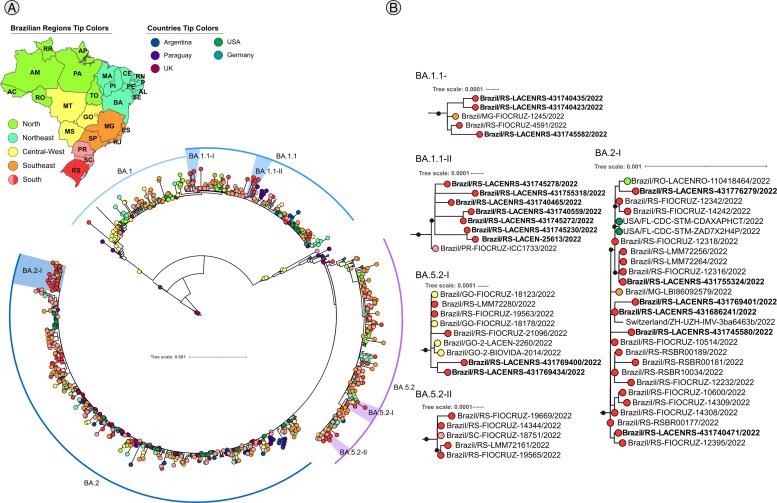
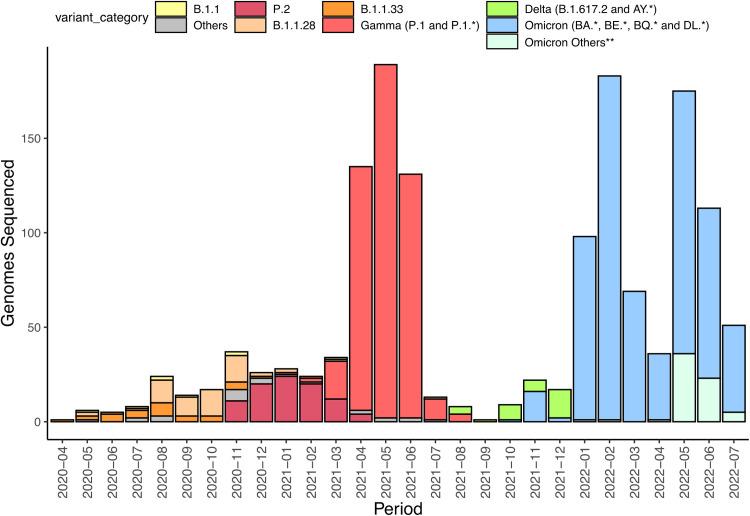
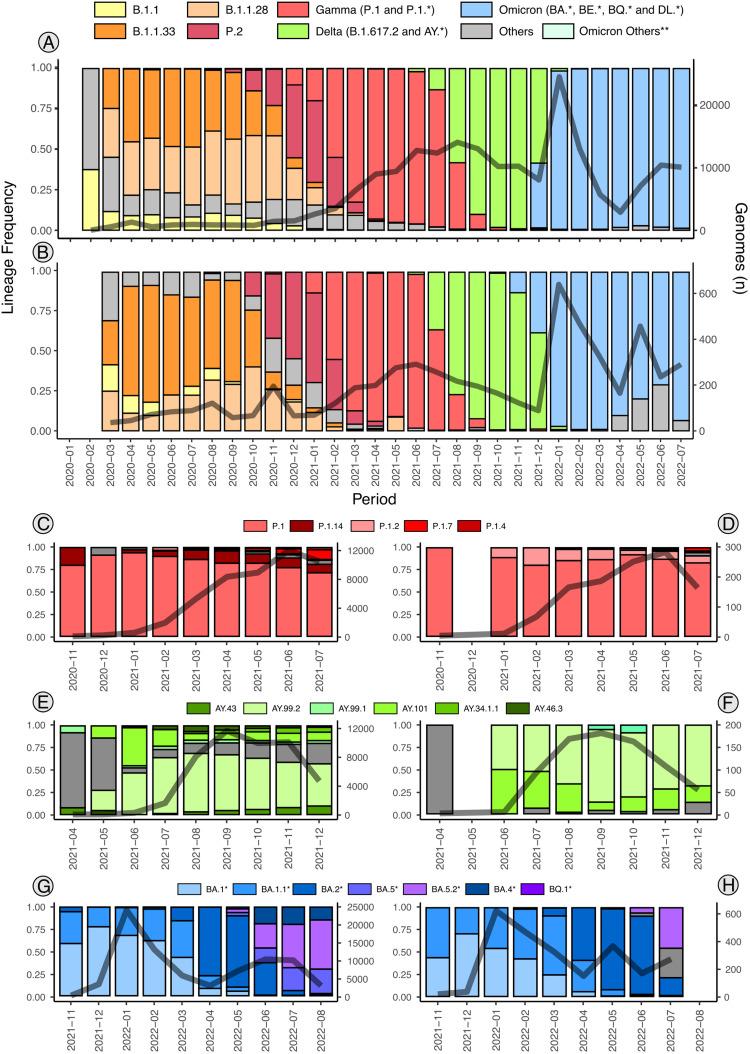
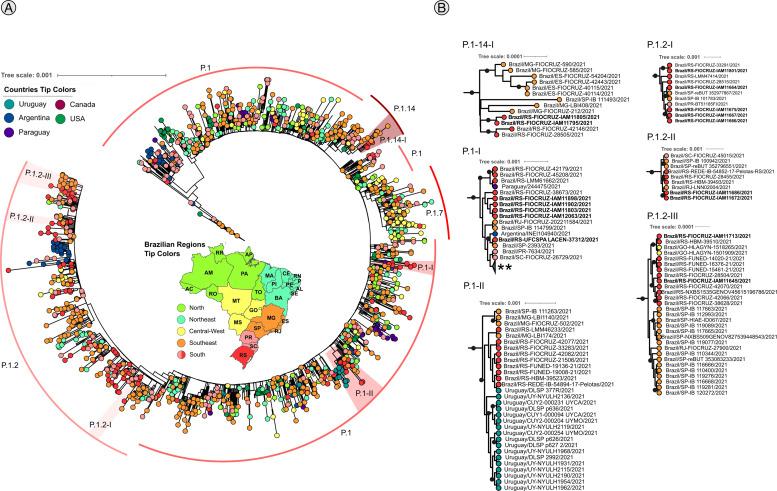
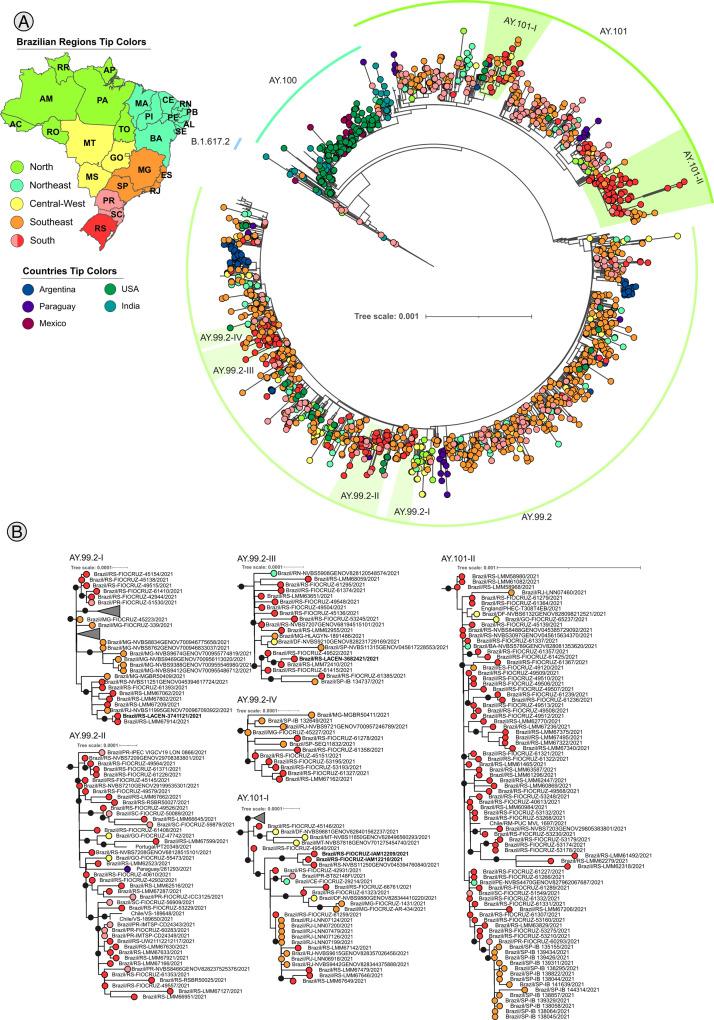
Brazil's COVID-19 response has faced challenges due to the continuous emergence of variants of concern (VOCs), emphasizing the need for ongoing genomic surveillance and retrospective analyses of past epidemic waves to reassess and fine tune containment protocols. Rio Grande do Sul (RS), Brazil's southernmost state, has international borders and trades with Argentina and Uruguay, along with significant domestic connections within Brazil. The identification of source and sink transmission chains at national and international scales can identify main hubs and pathways to target future interventions. In this study we investigated the RS state role in the national and international SARS-CoV-2 transmission chains, which has not been fully explored. Nasopharyngeal samples from various municipalities in RS were collected between June 2020 and July 2022. SARS-CoV-2 whole genome amplification and sequencing were performed using high-throughput Illumina sequencing. Bioinformatics analysis encompassed the development of scripts and tools to perform subsampling taking into account epidemiological information to reduce sequencing disparities bias among the regions/countries, genome assembly, and large-scale alignment and phylogenetic reconstruction. We sequenced a total of 1,480 SARS-CoV-2 genomes from RS, covering all major regions. Sequences predominantly represented Gamma (April-June 2021) and Omicron (January-July 2022) lineages. Phylogenetic analysis revealed a regional pattern for transmission dynamics, particularly with Southeast Brazil for Gamma, and a range of inter-regional connections for Delta and Omicron within the country. On the other hand, international and cross-border transmission with Argentina and Uruguay was rather limited. We evaluated the three VOCs circulation over two years in RS using a new subsampling strategy based on the number of cases in each state during the circulation of each VOC. In summary, the retrospective analysis of genomic surveillance data demonstrated that virus transmission was less intense between country borders than within the country. These findings suggest that while non-pharmacological interventions were effective to mitigate transmission across international RS land borders, they were insufficient to contain transmission at the domestic level.
由于令人担忧的变异株(VOCs)不断出现,巴西应对新冠疫情面临挑战,这凸显了持续进行基因组监测以及对过去疫情波次进行回顾性分析以重新评估和微调防控方案的必要性。巴西南部的南里奥格兰德州(RS)与阿根廷和乌拉圭接壤并开展贸易,且在巴西国内也有重要联系。在国家和国际层面识别病毒传播的源链和汇链,有助于确定主要枢纽和传播途径,从而为未来干预措施提供目标。在本研究中,我们调查了南里奥格兰德州在全国及国际范围内严重急性呼吸综合征冠状病毒2(SARS-CoV-2)传播链中所起的作用,此前这方面尚未得到充分研究。2020年6月至2022年7月期间,我们收集了南里奥格兰德州不同城市的鼻咽样本。使用高通量Illumina测序技术对SARS-CoV-2进行全基因组扩增和测序。生物信息学分析包括开发脚本和工具,以便在考虑流行病学信息的情况下进行二次抽样,以减少各地区/国家之间测序差异偏差、基因组组装、大规模比对以及系统发育重建。我们总共对来自南里奥格兰德州的1480个SARS-CoV-2基因组进行了测序,覆盖了所有主要地区。序列主要代表了伽马变异株(2021年4月至6月)和奥密克戎变异株(2022年1月至7月)谱系。系统发育分析揭示了传播动态的区域模式,特别是伽马变异株在巴西东南部呈现出区域传播模式,而德尔塔变异株和奥密克戎变异株在巴西国内存在一系列区域间联系。另一方面,与阿根廷和乌拉圭的国际及跨境传播相当有限。我们使用了一种基于每个变异株传播期间各州病例数的新二次抽样策略,评估了两年内南里奥格兰德州三种变异株的传播情况。总之,对基因组监测数据的回顾性分析表明,国界之间的病毒传播强度低于国内。这些发现表明,虽然非药物干预措施在减轻南里奥格兰德州国际陆地边界的传播方面有效,但在控制国内传播方面却不足。
 Zotero 插件