
UGGT1介导的聚糖再糖基化与内质网相关的不稳定和错误折叠糖蛋白的降解相互竞争。
UGGT1-mediated reglucosylation of -glycan competes with ER-associated degradation of unstable and misfolded glycoproteins.
作者信息
Ninagawa Satoshi, Matsuo Masaki, Ying Deng, Oshita Shuichiro, Aso Shinya, Matsushita Kazutoshi, Taniguchi Mai, Fueki Akane, Yamashiro Moe, Sugasawa Kaoru, Saito Shunsuke, Imami Koshi, Kizuka Yasuhiko, Sakuma Tetsushi, Yamamoto Takashi, Yagi Hirokazu, Kato Koichi, Mori Kazutoshi
机构信息
Biosignal Research Center, Kobe University, Kobe, Japan.
Department of Bioresource Science, Graduate School of Agricultural Science, Kobe University, Kobe, Japan.
出版信息
Elife. 2024 Dec 10;12:RP93117. doi: 10.7554/eLife.93117.
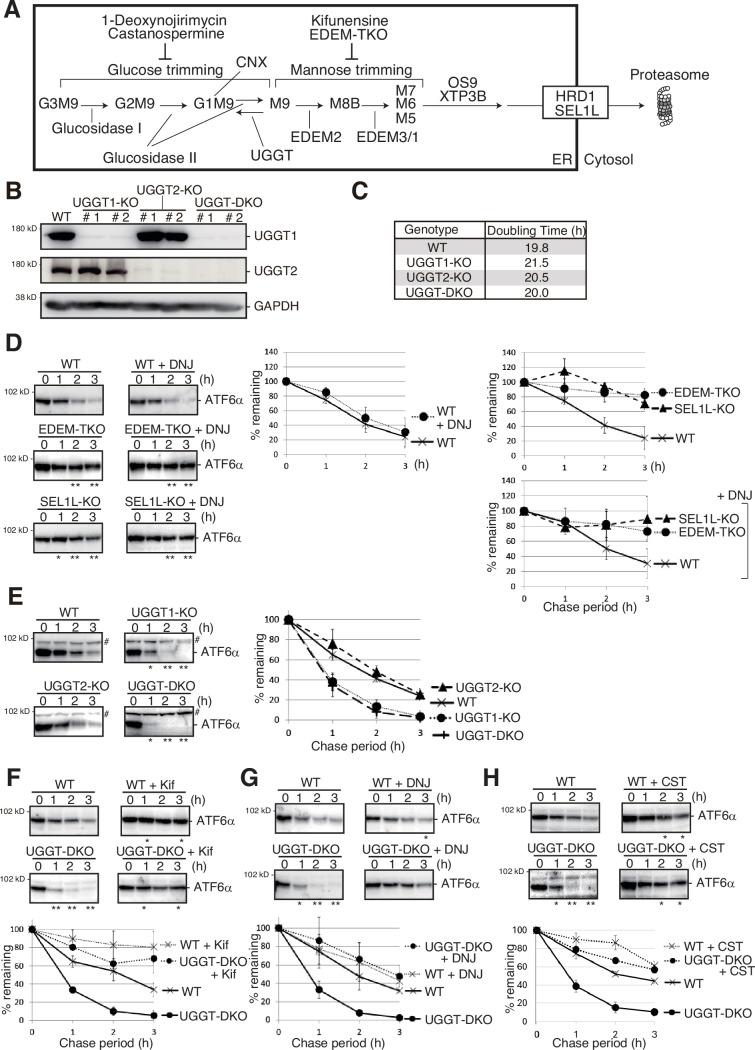
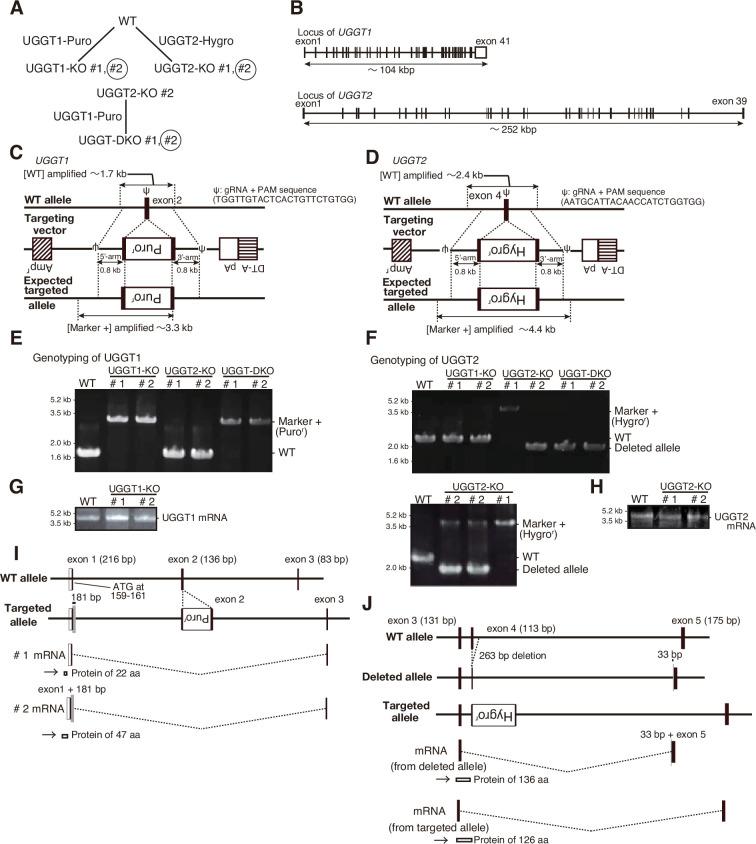
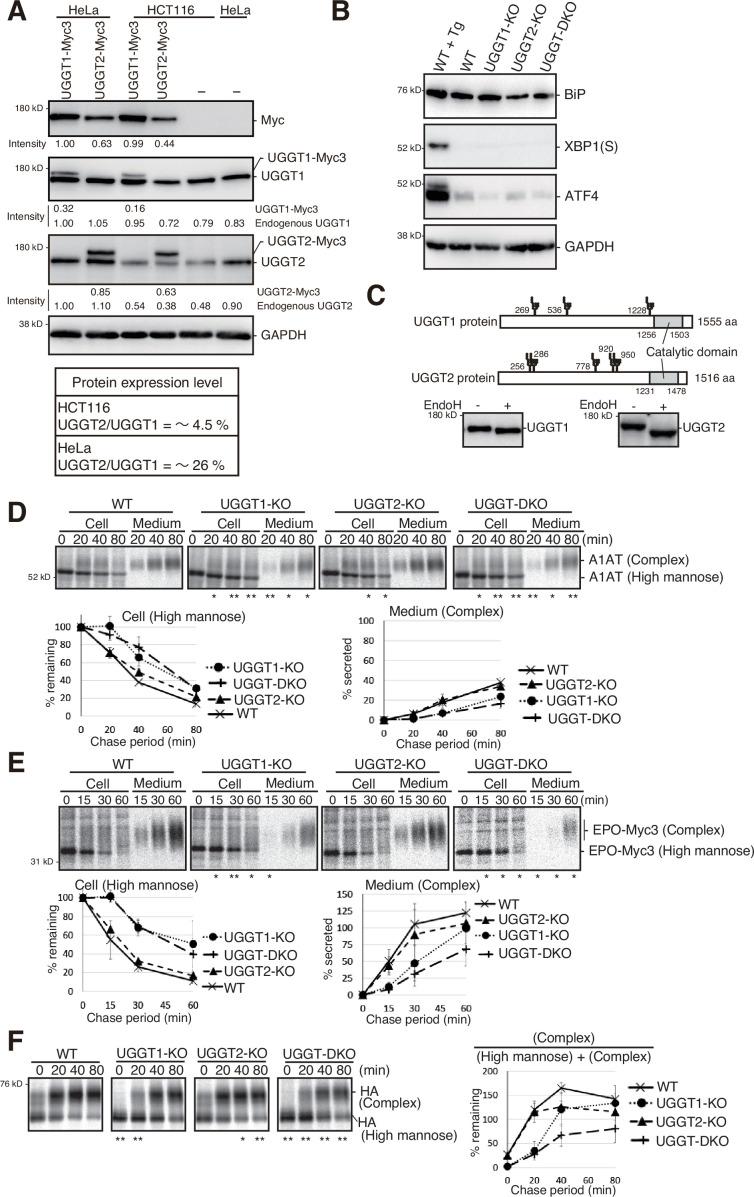
How the fate (folding versus degradation) of glycoproteins is determined in the endoplasmic reticulum (ER) is an intriguing question. Monoglucosylated glycoproteins are recognized by lectin chaperones to facilitate their folding, whereas glycoproteins exposing well-trimmed mannoses are subjected to glycoprotein ER-associated degradation (gpERAD); we have elucidated how mannoses are sequentially trimmed by EDEM family members (George et al., 2020; 2021 eLife). Although reglucosylation by UGGT was previously reported to have no effect on substrate degradation, here we directly tested this notion using cells with genetically disrupted UGGT1/2. Strikingly, the results showed that UGGT1 delayed the degradation of misfolded substrates and unstable glycoproteins including ATF6α. An experiment with a point mutant of UGGT1 indicated that the glucosylation activity of UGGT1 was required for the inhibition of early glycoprotein degradation. These and overexpression-based competition experiments suggested that the fate of glycoproteins is determined by a tug-of-war between structure formation by UGGT1 and degradation by EDEMs. We further demonstrated the physiological importance of UGGT1, since ATF6α cannot function properly without UGGT1. Thus, our work strongly suggests that UGGT1 is a central factor in ER protein quality control via the regulation of both glycoprotein folding and degradation.
糖蛋白在内质网(ER)中的命运(折叠与降解)是如何被决定的,这是一个饶有趣味的问题。单葡糖基化糖蛋白被凝集素伴侣识别以促进其折叠,而暴露经过良好修剪的甘露糖的糖蛋白则会经历糖蛋白内质网相关降解(gpERAD);我们已经阐明了甘露糖是如何被EDEM家族成员依次修剪的(George等人,2020年;2021年,《eLife》)。尽管此前有报道称UGGT进行的再葡糖基化对底物降解没有影响,但我们在这里使用基因敲除UGGT1/2的细胞直接测试了这一观点。令人惊讶的是,结果表明UGGT1延迟了错误折叠底物和不稳定糖蛋白(包括ATF6α)的降解。一项针对UGGT1点突变体的实验表明,UGGT1的葡糖基化活性是抑制早期糖蛋白降解所必需的。这些实验以及基于过表达的竞争实验表明,糖蛋白的命运是由UGGT1介导的结构形成与EDEM介导的降解之间的拔河比赛决定的。我们进一步证明了UGGT1的生理重要性,因为没有UGGT1,ATF6α就无法正常发挥功能。因此,我们的工作有力地表明,UGGT1是内质网蛋白质质量控制的核心因素,通过调节糖蛋白的折叠和降解来实现。




 Zotero 插件