
源自胚胎干细胞的低免疫原性CD19嵌合抗原受体自然杀伤细胞抑制异种移植动物中人类B细胞恶性肿瘤的进展。
Hypoimmunogenic CD19 CAR-NK cells derived from embryonic stem cells suppress the progression of human B-cell malignancies in xenograft animals.
作者信息
Zhang Qi, Xia Chengxiang, Weng Qitong, Zhang Leqiang, Wang Yao, Liu Yanhong, Zheng Xiujuan, Lin Yunqing, Chen Yi, Shen Yiyuan, Qi Hanmeng, Liu Lijuan, Zhu Yanping, Zhang Min, Huang Dehao, Hu Fangxiao, Zhang Mengyun, Zeng Hui, Wang Jinyong, Wang Tongjie
机构信息
State Key Laboratory of Stem Cell and Reproductive Biology, Institute of Zoology, Chinese Academy of Sciences, Beijing, China.
Beijing Institute for Stem Cell and Regenerative Medicine, Beijing, China.
出版信息
Front Immunol. 2024 Nov 27;15:1504459. doi: 10.3389/fimmu.2024.1504459. eCollection 2024.
BACKGROUND
Chimeric antigen receptor (CAR) engineered natural killer (NK) cells exhibit advantages such as MHC-independent recognition and strong anti-tumor functions. However, allogeneic CAR-NK cells derived from human tissues are heterogeneous and susceptible to clearance by hosts.
METHODS
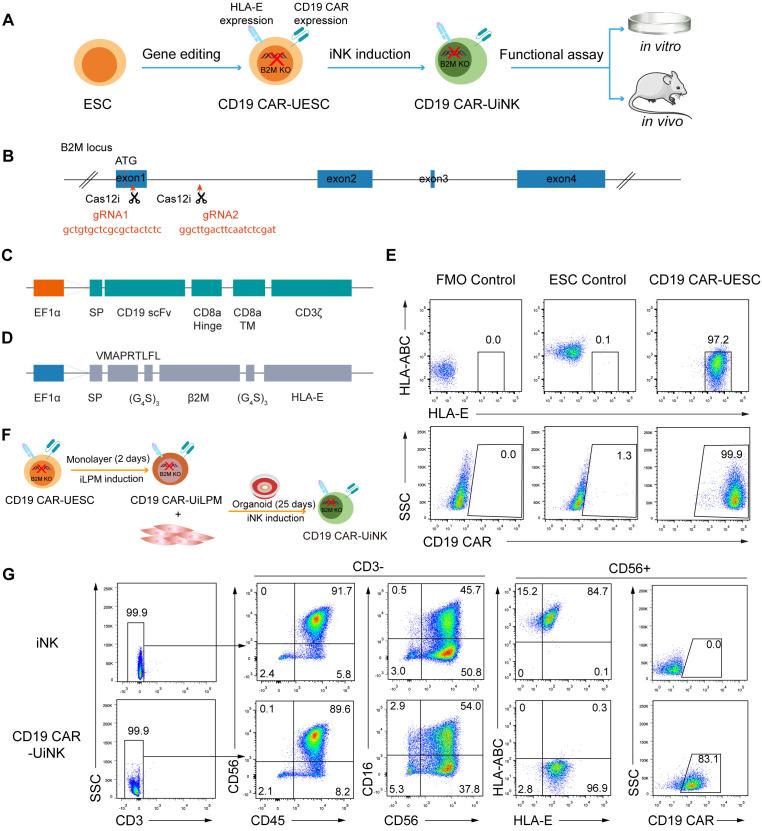
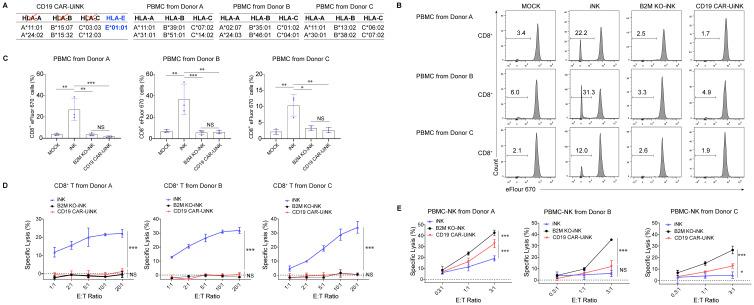
We generated a B2M knockout, HLA-E and CD19 CAR ectopic expressing embryonic stem cell (ESC) line, which differentiated normally and gave rise to homogeneous CD19 CAR-NK (CD19 CAR-UiNK) cells using an organoid aggregate induction method. The CD19 CAR-UiNK were co-cultured with T cells or NK cells derived from peripheral blood mononuclear cells (PBMC) with the mismatched HLA to evaluate the immunogenicity of CD19 CAR-UiNK cells. We further assessed the therapeutic effects of CD19 CAR-UiNK cells on CD19 tumor cells through cytotoxicity assays and animal models.
RESULTS
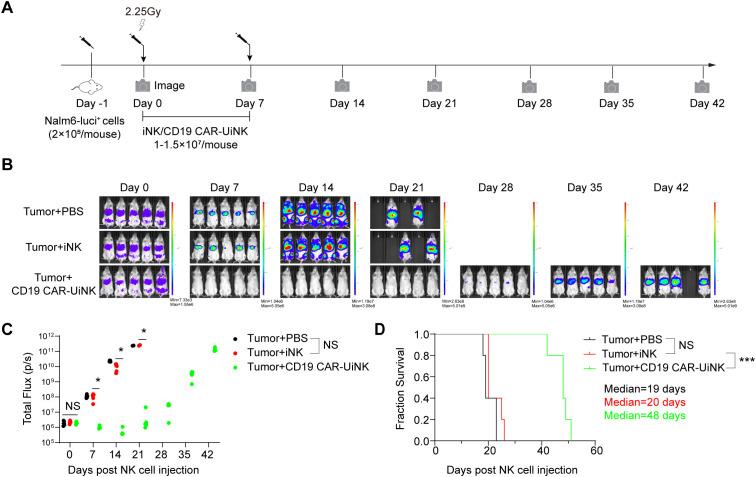
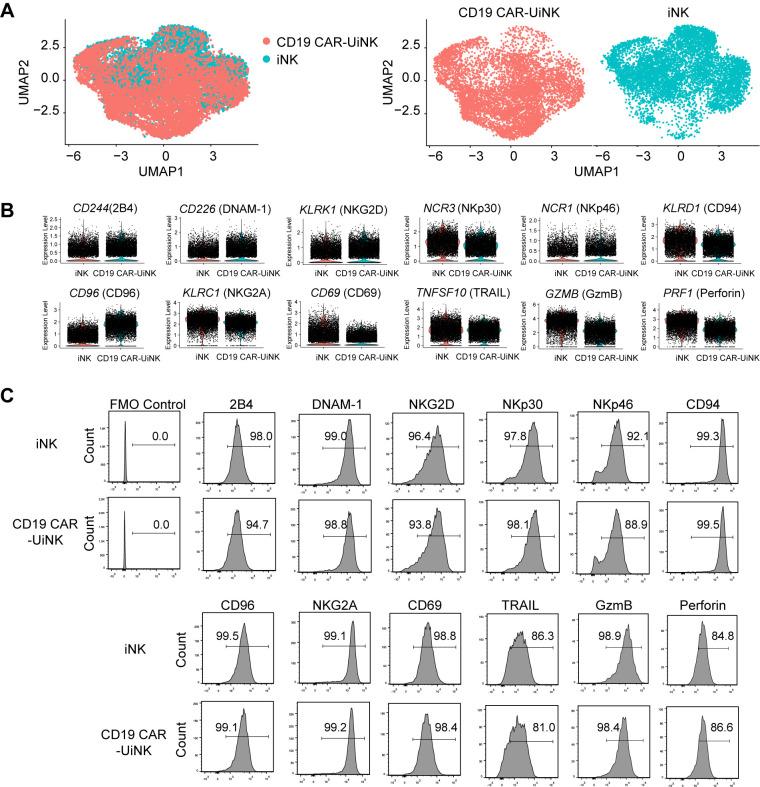
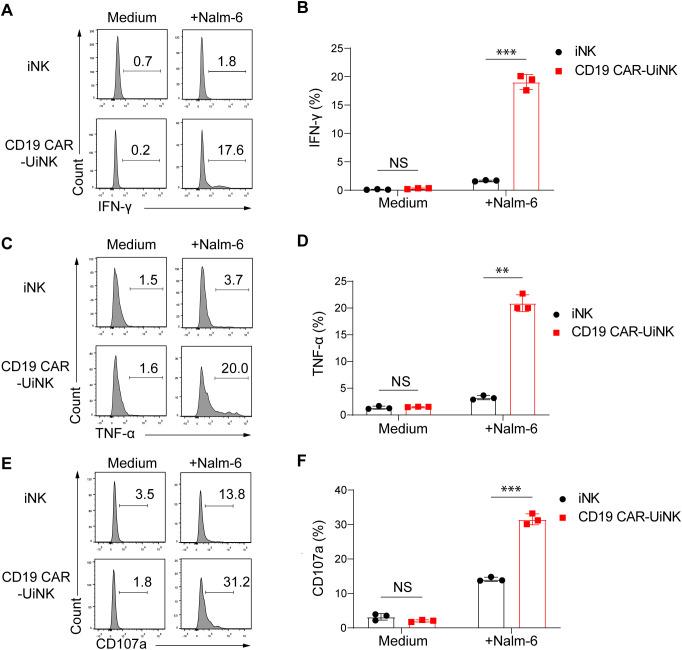
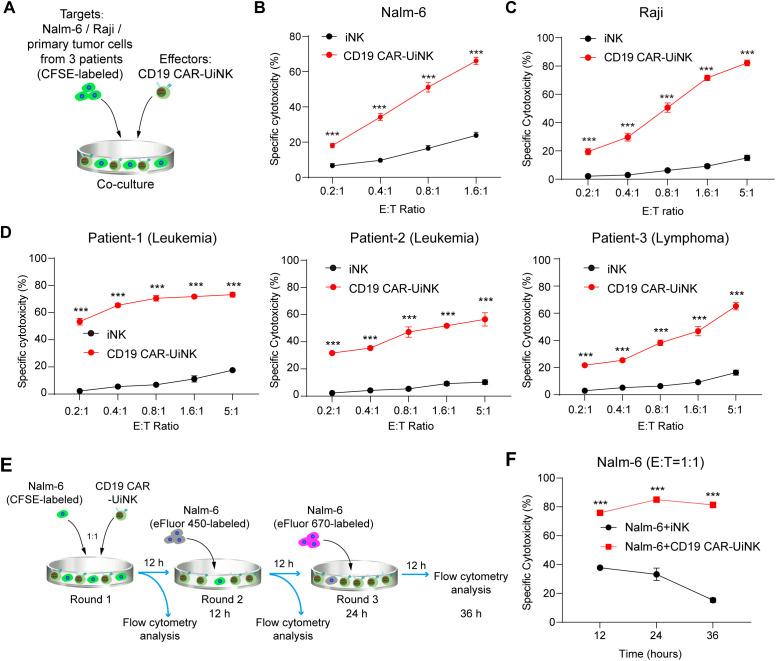
The CD19 CAR-UiNK cells exhibited typical expression patterns of activating and inhibitory receptors, and crucial effector molecules of NK cells, similar to those of unmodified NK cells. In co-culture assays, the CD19 CAR-UiNK cells evaded allogeneic T cell response and suppressed allogeneic NK cell response. Functionally, the CD19 CAR-UiNK cells robustly secreted IFN-γ and TNF-α, and upregulated CD107a upon stimulation with Nalm-6 tumor cells. The CD19 CAR-UiNK cells effectively eliminated CD19 tumor cells , including B-cell cancer cell lines and primary tumor cells from human B-cell leukemia and lymphoma. Further, the CD19 CAR-UiNK cells exhibited strong anti-tumor activity in xenograft animals.
CONCLUSION
We offer a strategy for deriving homogeneous and hypoimmunogenic CD19 CAR-iNK cells with robust anti-tumor effects from ESCs. Our study has significant implications for developing hypoimmunogenic CD19 CAR-NK cell therapy using human ESC as an unlimited cell source.
背景
嵌合抗原受体(CAR)工程化自然杀伤(NK)细胞具有不依赖主要组织相容性复合体(MHC)识别以及强大抗肿瘤功能等优势。然而,源自人体组织的同种异体CAR-NK细胞具有异质性,且易被宿主清除。
方法
我们构建了一个敲除B2M、异位表达HLA-E和CD19 CAR的胚胎干细胞(ESC)系,该细胞系能正常分化,并采用类器官聚集体诱导法产生均一的CD19 CAR-NK(CD19 CAR-UiNK)细胞。将CD19 CAR-UiNK与来自外周血单个核细胞(PBMC)且HLA不匹配的T细胞或NK细胞共培养,以评估CD19 CAR-UiNK细胞的免疫原性。我们还通过细胞毒性试验和动物模型进一步评估了CD19 CAR-UiNK细胞对CD19肿瘤细胞的治疗效果。
结果
CD19 CAR-UiNK细胞表现出与未修饰NK细胞相似的激活和抑制性受体以及NK细胞关键效应分子的典型表达模式。在共培养试验中,CD19 CAR-UiNK细胞规避了同种异体T细胞反应并抑制了同种异体NK细胞反应。在功能上,CD19 CAR-UiNK细胞在受到Nalm-6肿瘤细胞刺激后能强力分泌干扰素-γ(IFN-γ)和肿瘤坏死因子-α(TNF-α),并上调CD107a。CD19 CAR-UiNK细胞有效清除了CD19肿瘤细胞,包括B细胞癌细胞系以及来自人B细胞白血病和淋巴瘤的原发性肿瘤细胞。此外,CD19 CAR-UiNK细胞在异种移植动物中表现出强大的抗肿瘤活性。
结论
我们提供了一种从胚胎干细胞中获得具有强大抗肿瘤作用的均一且低免疫原性的CD19 CAR-iNK细胞的策略。我们的研究对于利用人胚胎干细胞作为无限细胞来源开发低免疫原性的CD19 CAR-NK细胞疗法具有重要意义。
 Zotero 插件