
信使核糖核酸疫苗作为癌症治疗方法。
mRNA vaccines as cancer therapies.
作者信息
Huang Shaoxiong, Que Haiying, Wang Manni, Wei Xiawei
机构信息
Laboratory of Aging Research and Cancer Drug Target, National/State Key Laboratory of Biotherapy, West China Hospital, West China Medical School, Sichuan University, Chengdu, Sichuan 610041, China.
Department of Biotherapy, West China Hospital and State Key Laboratory of Biotherapy, Sichuan University, Chengdu, Sichuan 610041, China.
出版信息
Chin Med J (Engl). 2024 Dec 20;137(24):2979-2995. doi: 10.1097/CM9.0000000000003455. Epub 2024 Dec 13.
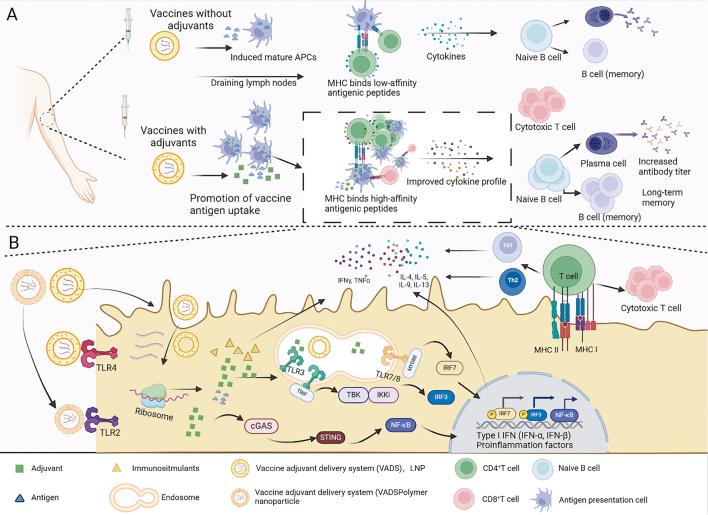
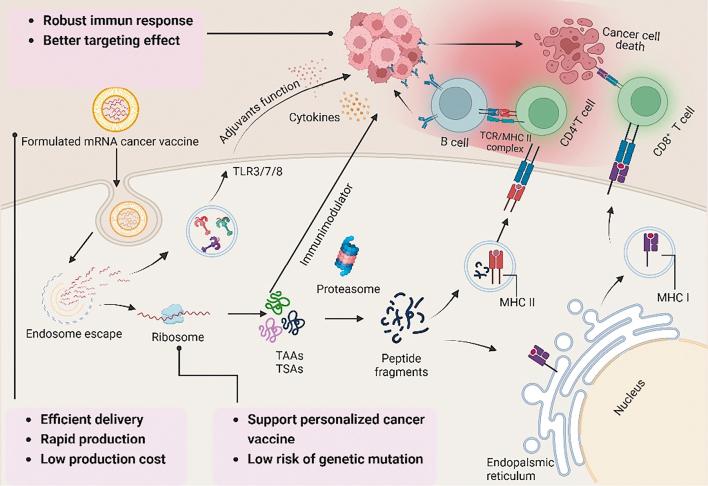
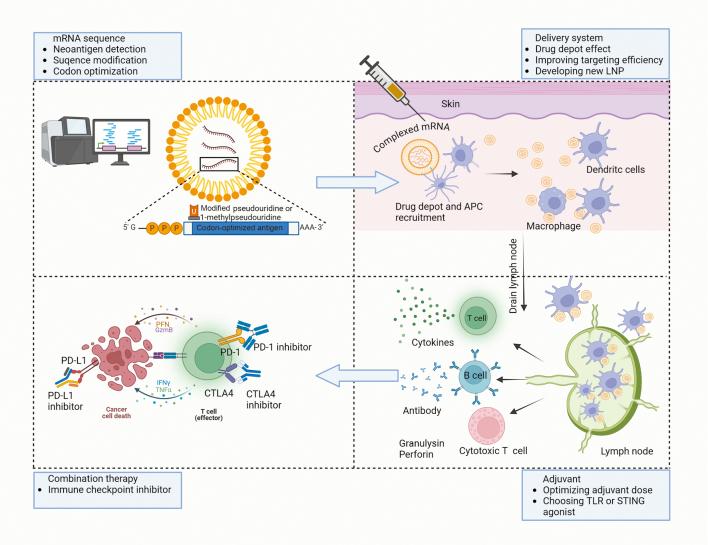
Cancer remains a major global health challenge, with conventional treatments like chemotherapy and radiotherapy often hindered by significant side effects, lack of specificity, and limited efficacy in advanced cases. Among emerging therapeutic strategies, mRNA vaccines have shown remarkable potential due to their adaptability, rapid production, and capability for personalized cancer treatment. This review provides an in-depth analysis of messenger RNA (mRNA) vaccines as a therapeutic approach for cancer immunotherapy, focusing on their molecular biology, classification, mechanisms, and clinical studies. Derived from reported literature and data on clinicaltrials.gov, it examines studies on mRNA vaccines encoding tumor-specific antigens (TSAs), tumor-associated antigens (TAAs), immunomodulators, and chimeric antigen receptors (CARs) across various cancer types. The review highlights the ability of mRNA vaccines to encode TSAs and TAAs, enabling personalized cancer treatments, and classifies these vaccines into non-replicating and self-amplifying types. It further explores their mechanisms of action, including antigen presentation and immune activation, while emphasizing findings from clinical studies that demonstrate the potential of mRNA vaccines in cancer therapy. Despite their promise, challenges remain in enhancing delivery systems, improving immunogenicity, and addressing tumor heterogeneity. Overcoming these obstacles will require further investigation to fully harness the potential of mRNA vaccines in personalized cancer treatment.
癌症仍然是一项重大的全球健康挑战,化疗和放疗等传统治疗方法往往受到严重副作用、缺乏特异性以及在晚期病例中疗效有限的阻碍。在新兴的治疗策略中,信使核糖核酸(mRNA)疫苗因其适应性、快速生产能力以及个性化癌症治疗的潜力而展现出显著的前景。本综述深入分析了信使核糖核酸(mRNA)疫苗作为癌症免疫治疗的一种方法,重点关注其分子生物学、分类、作用机制及临床研究。它基于已发表的文献和clinicaltrials.gov上的数据,审视了针对各种癌症类型编码肿瘤特异性抗原(TSA)、肿瘤相关抗原(TAA)、免疫调节剂和嵌合抗原受体(CAR)的mRNA疫苗的研究。该综述强调了mRNA疫苗编码TSA和TAA以实现个性化癌症治疗的能力,并将这些疫苗分为非复制型和自我扩增型。它进一步探讨了其作用机制,包括抗原呈递和免疫激活,同时强调了临床研究的结果,这些结果证明了mRNA疫苗在癌症治疗中的潜力。尽管前景广阔,但在增强递送系统、提高免疫原性以及解决肿瘤异质性方面仍存在挑战。克服这些障碍需要进一步研究,以充分发挥mRNA疫苗在个性化癌症治疗中的潜力。
 Zotero 插件