
1型糖尿病患儿父母的心理社会变量与血糖控制:一项系统综述
Parental Psychosocial Variables and Glycemic Control in T1D Pediatric Age: A Systematic Review.
作者信息
Costa Vasco, Pereira Bárbara, Patton Susana R, Brandão Tânia
机构信息
William James Center for Research, Ispa-Instituto Universitário, Lisboa, Portugal.
Center for Healthcare Delivery Science, Nemours Children's Health System, Jacksonville, FL, USA.
出版信息
Curr Diab Rep. 2024 Dec 16;25(1):11. doi: 10.1007/s11892-024-01566-y.
PURPOSE OF REVIEW
This review aimed to summarize the evidence regarding the relationship between parental psychosocial (e.g., fear of hypoglycemia, stress and family conflict) and glycemic outcomes in children between the age of 1-10 years old.
RECENT FINDINGS
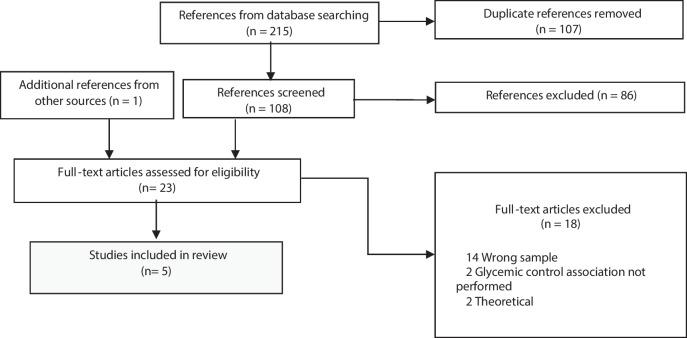
Type 1 Diabetes (T1D) in young children can be very complex to manage for their parents since they are the main individuals responsible for T1D tasks. Also, parental psychological adjustment impacts children's glycemic outcomes. This systematic review was performed following the PRISMA guidelines. The search process was conducted in four databases from 2019 to 2024. From a total of 215 studies, 5 were included. We identified five studies that found direct associations between parental psychosocial variables and children's glycemic outcomes. These findings suggest a unidirectional perspective, evidencing the need to examine the longitudinal interplay between these variables. In sum, promoting parental psychological interventions may be fundamental for enhancing children's glycemic outcomes.
综述目的
本综述旨在总结关于1至10岁儿童父母心理社会因素(如低血糖恐惧、压力和家庭冲突)与血糖结果之间关系的证据。
最新发现
幼儿1型糖尿病(T1D)对其父母来说管理起来可能非常复杂,因为他们是负责T1D相关任务的主要人员。此外,父母的心理调适会影响孩子的血糖结果。本系统综述按照PRISMA指南进行。检索过程于2019年至2024年在四个数据库中进行。在总共215项研究中,纳入了5项。我们确定了五项研究,发现父母心理社会变量与孩子的血糖结果之间存在直接关联。这些发现表明了一种单向观点,证明有必要研究这些变量之间的纵向相互作用。总之,促进父母心理干预可能是改善孩子血糖结果的关键。
 Zotero 插件