
利用新技术分析肠道微生物群并预测癌症风险。
Using New Technologies to Analyze Gut Microbiota and Predict Cancer Risk.
作者信息
Hemmati Mohammad Amin, Monemi Marzieh, Asli Shima, Mohammadi Sina, Foroozanmehr Behina, Haghmorad Dariush, Oksenych Valentyn, Eslami Majid
机构信息
Student Research Committee, Semnan University of Medical Sciences, Semnan 35147-99442, Iran.
Department of Basic Science, Faculty of Pharmacy and Pharmaceutical Science, Tehran Medical Science, Islamic Azad University, Tehran 19395-1495, Iran.
出版信息
Cells. 2024 Dec 1;13(23):1987. doi: 10.3390/cells13231987.
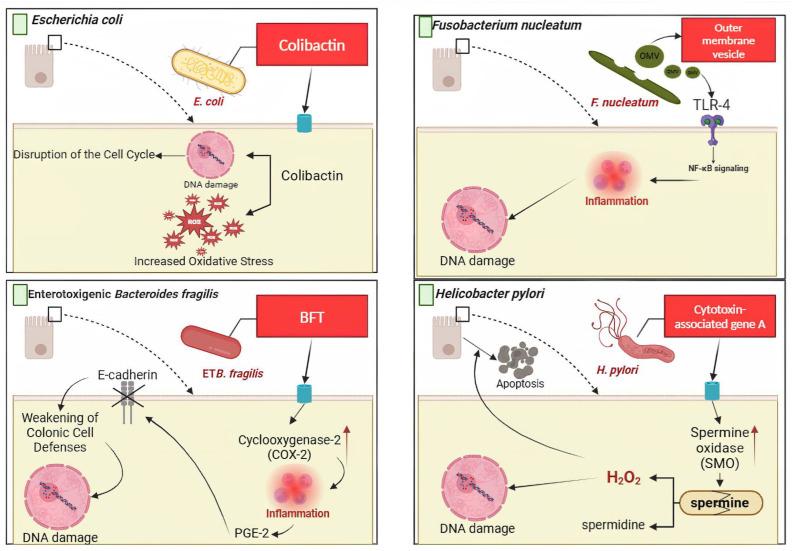
The gut microbiota significantly impacts human health, influencing metabolism, immunological responses, and disease prevention. Dysbiosis, or microbial imbalance, is linked to various diseases, including cancer. It is crucial to preserve a healthy microbiome since pathogenic bacteria, such as and , can cause inflammation and cancer. These pathways can lead to the formation of tumors. Recent advancements in high-throughput sequencing, metagenomics, and machine learning have revolutionized our understanding of the role of gut microbiota in cancer risk prediction. Early detection is made easier by machine learning algorithms that improve the categorization of cancer kinds based on microbiological data. Additionally, the investigation of the microbiome has been transformed by next-generation sequencing (NGS), which has made it possible to fully profile both cultivable and non-cultivable bacteria and to understand their roles in connection with cancer. Among the uses of NGS are the detection of microbial fingerprints connected to treatment results and the investigation of metabolic pathways implicated in the development of cancer. The combination of NGS with machine learning opens up new possibilities for creating customized medicine by enabling the development of diagnostic tools and treatments that are specific to each patient's microbiome profile, even in the face of obstacles like data complexity. Multi-omics studies reveal microbial interactions, biomarkers for cancer detection, and gut microbiota's impact on cancer progression, underscoring the need for further research on microbiome-based cancer prevention and therapy.
肠道微生物群对人类健康有重大影响,影响新陈代谢、免疫反应和疾病预防。生态失调,即微生物失衡,与包括癌症在内的各种疾病有关。保持健康的微生物组至关重要,因为诸如[具体细菌名称缺失]等致病细菌会引发炎症和癌症。这些途径可导致肿瘤形成。高通量测序、宏基因组学和机器学习的最新进展彻底改变了我们对肠道微生物群在癌症风险预测中作用的理解。机器学习算法基于微生物数据改进癌症类型分类,从而使早期检测更加容易。此外,下一代测序(NGS)改变了对微生物组的研究,它使全面分析可培养和不可培养细菌成为可能,并了解它们与癌症相关的作用。NGS的用途包括检测与治疗结果相关的微生物指纹以及研究与癌症发展相关的代谢途径。NGS与机器学习的结合为开发个性化药物开辟了新的可能性,即使面对数据复杂性等障碍,也能开发出针对每个患者微生物组特征的诊断工具和治疗方法。多组学研究揭示了微生物相互作用、癌症检测的生物标志物以及肠道微生物群对癌症进展的影响,凸显了对基于微生物组的癌症预防和治疗进行进一步研究的必要性。


 Zotero 插件