
肥大细胞作为精原干细胞微环境的一个组成部分。
Mast Cells as a Component of Spermatogonial Stem Cells' Microenvironment.
作者信息
Sadek Ali, Khramtsova Yulia, Yushkov Boris
机构信息
Department of Biology and Fundamental Medicine, Ural Federal University Named After the First President of Russia B. N. Yeltsin, 620002 Ekaterinburg, Russia.
Central Experimental Laboratory of Biotechnology, Institute of Medical Cell Technologies of the Sverdlovsk Region, 620026 Ekaterinburg, Russia.
出版信息
Int J Mol Sci. 2024 Dec 7;25(23):13177. doi: 10.3390/ijms252313177.
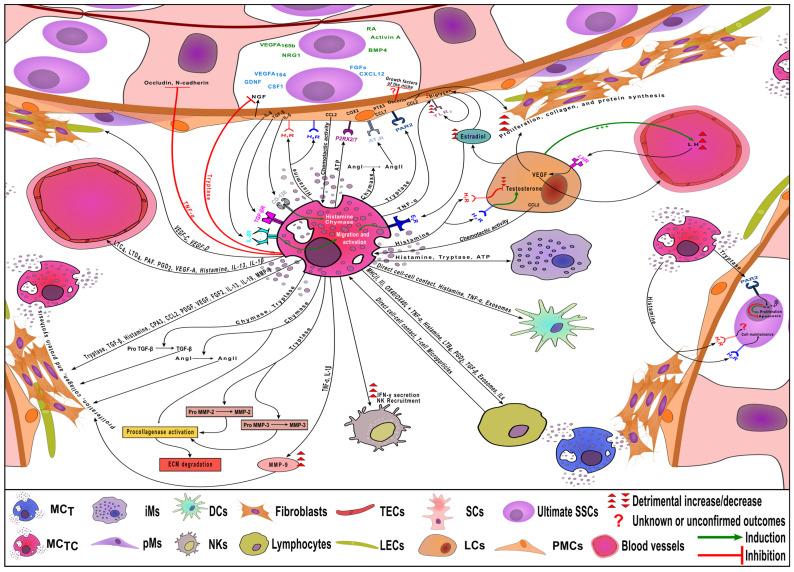
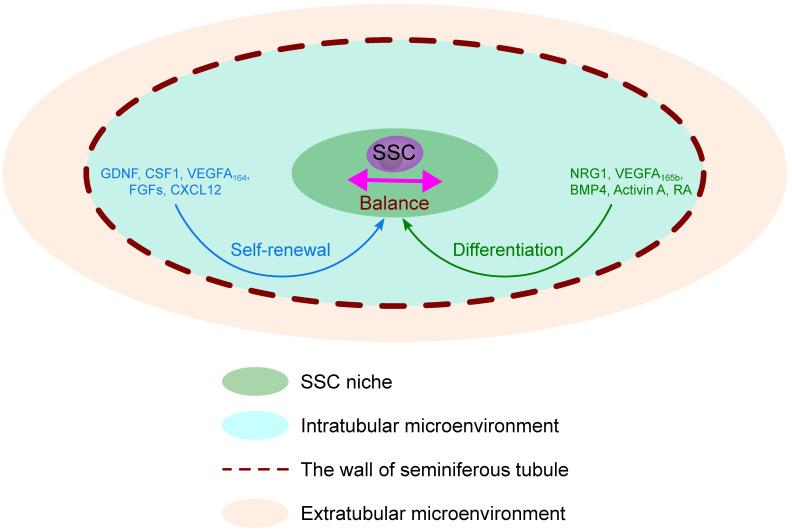
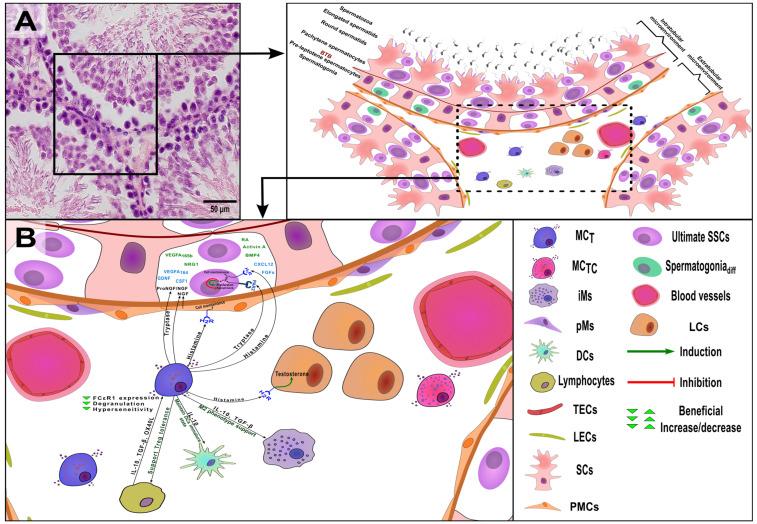
The formation of mature spermatozoa originates from spermatogonial stem cells (SSCs) located near the basement membrane of the seminiferous tubules. This developmental process, known as spermatogenesis, is tightly regulated to ensure continuous sperm production. A critical aspect of this regulation is the balance between SSC differentiation and self-renewal, which is directed by various factors guiding SSCs in either of these two directions. The SSC niche, defined functionally rather than anatomically, includes all factors necessary for SSC maintenance. These factors are produced by cells surrounding the SSC niche, collectively creating the microenvironment of the seminiferous tubules. Coordination between the cells in this microenvironment is essential for the proper function of the SSC niche and successful spermatogenesis. Testicular mast cells (MCs) significantly influence the regulation of this niche, as they contain various biologically active substances that regulate a wide range of physiological processes and contribute to different pathological conditions affecting fertility. This review explores the effects of testicular MCs on SSCs, their role in regulating spermatogenesis under normal and pathological conditions, and their interactions with other components of the testicular microenvironment, with a focus on their potentially critical impact on spermatogenesis and male fertility.
成熟精子的形成起源于位于生精小管基底膜附近的精原干细胞(SSCs)。这个被称为精子发生的发育过程受到严格调控,以确保精子的持续产生。这种调控的一个关键方面是SSC分化与自我更新之间的平衡,这是由引导SSCs朝这两个方向发展的各种因素所决定的。SSC生态位是从功能而非解剖学角度定义的,包括维持SSC所需的所有因素。这些因素由围绕SSC生态位的细胞产生,共同构成了生精小管的微环境。这个微环境中细胞之间的协调对于SSC生态位的正常功能和成功的精子发生至关重要。睾丸肥大细胞(MCs)对这个生态位的调节有显著影响,因为它们含有各种生物活性物质,这些物质调节广泛的生理过程,并导致影响生育能力的不同病理状况。本综述探讨了睾丸MCs对SSCs的影响,它们在正常和病理条件下调节精子发生中的作用,以及它们与睾丸微环境其他成分的相互作用,重点关注它们对精子发生和男性生育能力的潜在关键影响。
 Zotero 插件