
含回收轮胎金属纤维的沥青混合料的微波加热与自修复性能
Microwave Heating and Self-Healing Performance of Asphalt Mixtures Containing Metallic Fibres from Recycled Tyres.
作者信息
Norambuena-Contreras Jose, Concha Jose L, Varela María J, Trigos Laura, Poulikakos Lily, González Alvaro, Arraigada Martín
机构信息
Materials and Manufacturing Research Institute, Department of Civil Engineering, Faculty of Science and Engineering, Swansea University, Swansea SA1 8EN, UK.
LabMAT, Department of Civil and Environmental Engineering, University of Bío-Bío, Concepción 4051381, Chile.
出版信息
Materials (Basel). 2024 Dec 5;17(23):5950. doi: 10.3390/ma17235950.
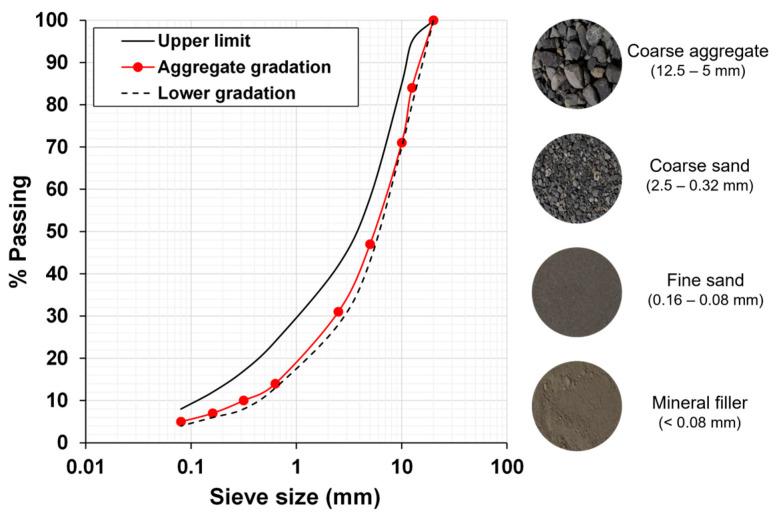
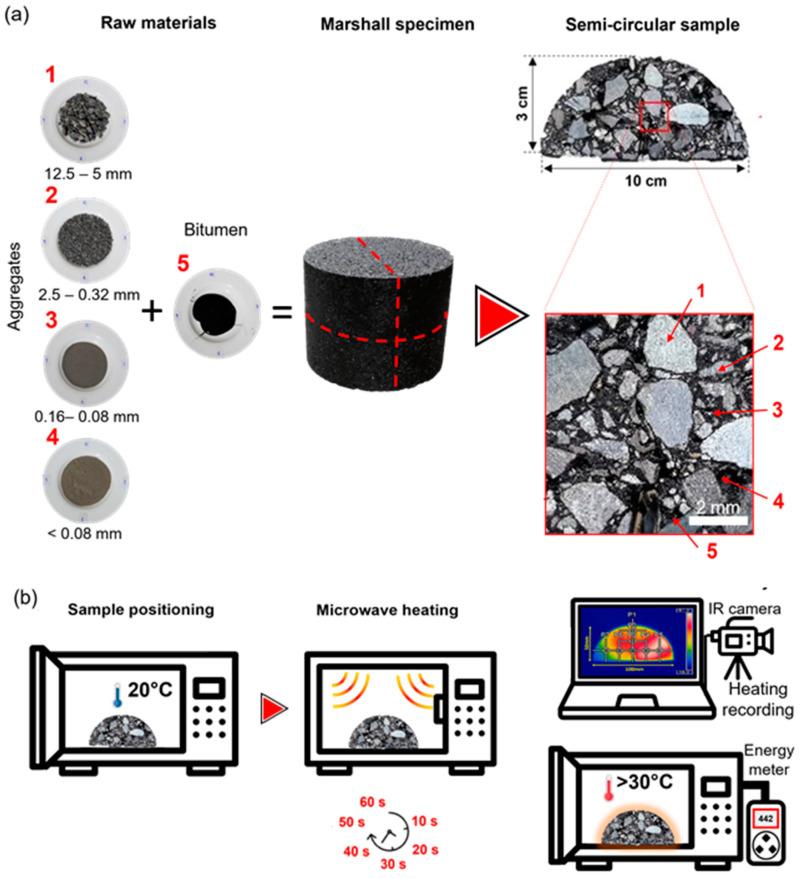
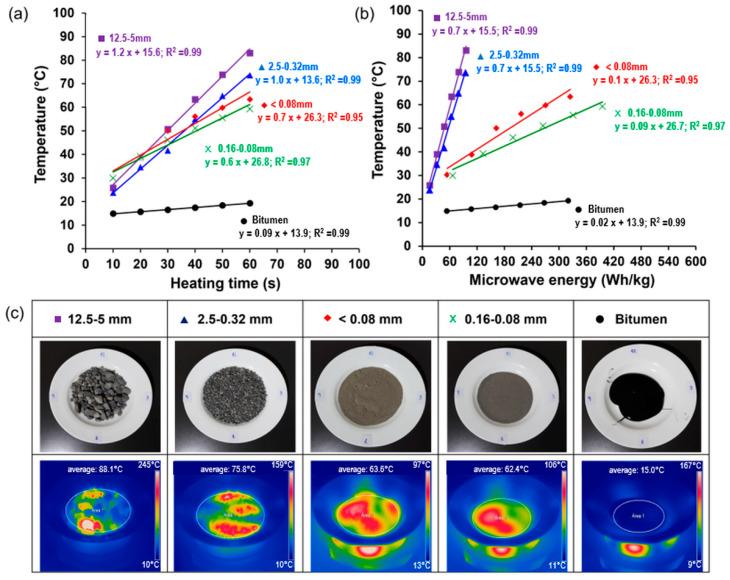
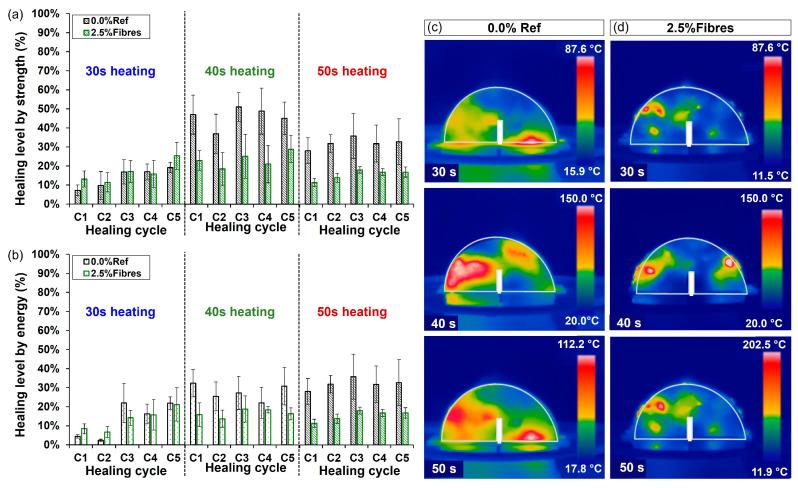
This study investigates how recycled metal fibres from End-of-Life Tyres (ELTs) affect both microwave heating efficiency and crack healing properties in dense asphalt mixtures. The aim is to improve tyre recyclability by using their fibres in asphalt and exploring their self-healing potential with microwave heating. To achieve this, four dense asphalt mixture designs were studied in the laboratory. Each mixture used the same aggregate gradation and bitumen content, but with three different percentages of metallic fibres by binder volume (i.e., 1.5%, 2.5%, and 3.5%), along with an asphalt mixture without fibres serving as a reference material. The microwave heating properties of the asphalt mixtures and their individual components (i.e., aggregates and bitumen) were measured at six different heating times, ranging from 10 to 60 s. Based on the microwave heating results, the cracking and subsequent self-healing properties of the mixtures were evaluated by exposing them to microwave radiation at three heating times: 30, 40, and 50 s. The main results indicated that adding metallic fibres to facilitate microwave heating of the asphalt mixture is unnecessary because healing can be triggered predominately through the aggregates used. Unlike previous studies, it was observed that the healing level of asphalt mixtures, both with and without metallic fibres, increases with the accumulation of crack-healing cycles. Finally, it was determined that the advised microwave heating time for laboratory-sized mixtures, with or without fibres, is 40 s.
本研究调查了来自废旧轮胎(ELTs)的回收金属纤维如何影响密集型沥青混合料的微波加热效率和裂缝愈合性能。目的是通过在沥青中使用其纤维并利用微波加热探索其自愈潜力来提高轮胎的可回收性。为实现这一目标,在实验室中研究了四种密集型沥青混合料设计。每种混合料使用相同的集料级配和沥青含量,但按粘结剂体积计有三种不同百分比的金属纤维(即1.5%、2.5%和3.5%),同时还有一种无纤维的沥青混合料作为参考材料。在10至60秒的六个不同加热时间下测量了沥青混合料及其各组分(即集料和沥青)的微波加热性能。根据微波加热结果,通过在30、40和50秒这三个加热时间将混合料暴露于微波辐射下,评估了混合料的开裂及随后的自愈性能。主要结果表明,添加金属纤维以促进沥青混合料的微波加热并无必要,因为愈合主要可通过所用集料引发。与先前研究不同的是,观察到有金属纤维和无金属纤维的沥青混合料的愈合水平均随着裂缝愈合循环的积累而提高。最后确定,对于实验室规模的有纤维或无纤维混合料,建议的微波加热时间为40秒。







 Zotero 插件