
星形胶质细胞和小胶质细胞在晚期慢性肝病相关肝性脑病中的作用:来自动物研究的经验教训。
Role of astrocytes and microglia in hepatic encephalopathy associated with advanced chronic liver disease: lessons from animal studies.
作者信息
Claeys Wouter, Geerts Anja, Van Hoecke Lien, Van Steenkiste Christophe, Vandenbroucke Roosmarijn E
机构信息
Department of Internal Medicine and Paediatrics, Hepatology Research Unit, Ghent University, Ghent, Belgium.
Liver Research Center Ghent, Ghent University, Ghent University Hospital, Ghent, Belgium.
出版信息
Neural Regen Res. 2025 Dec 1;20(12):3461-3475. doi: 10.4103/NRR.NRR-D-24-00600. Epub 2024 Dec 16.
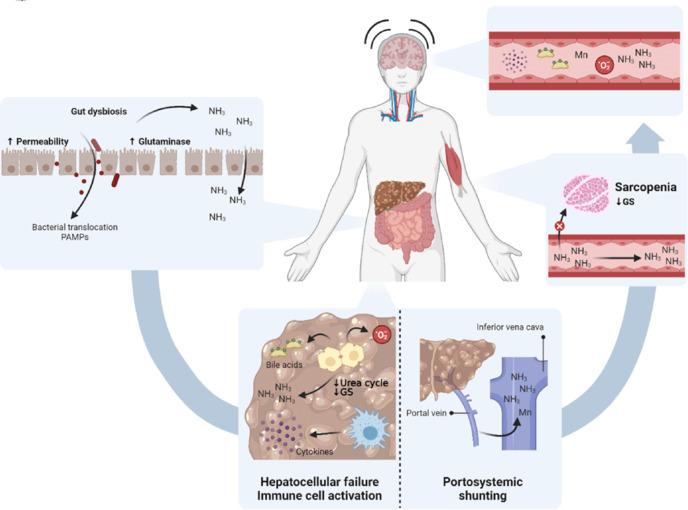
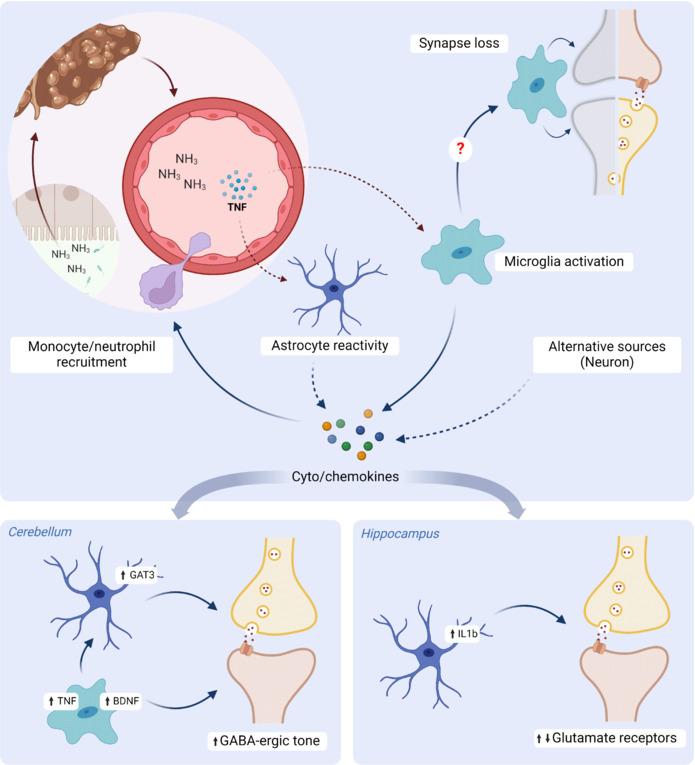
Hepatic encephalopathy, defined as neuropsychiatric dysfunction secondary to liver disease, is a frequent decompensating event in cirrhosis. Its clinical impact is highlighted by a notable increase in patient mortality rates and a concomitant reduction in overall quality of life. Systemically, liver disease, liver function failure, portosystemic shunting, and associated multi-organ dysfunction result in the increase of disease-causing neurotoxins in the circulation, which impairs cerebral homeostasis. Key circulating neurotoxins are ammonia and inflammatory mediators. In the brain, pathophysiology is less well understood, but is thought to be driven by glial cell dysfunction. Astrocytes are the only brain resident cells that have ammonia-metabolizing machinery and are therefore putatively most susceptible to ammonia elevation. Based on a large body of mostly in vitro evidence, ammonia-induced cellular and molecular disturbances include astrocyte swelling and oxidative stress. Microglia, the brain resident macrophages, have been linked to the translation of systemic inflammation to the brain microenvironment. Recent evidence from animal studies has provided novel insights into old and new downstream effects of astrocyte and microglial dysfunction such as toxin clearance disruption and myeloid cell attraction to the central nervous system parenchyma. Furthermore, state of the art research increasingly implicates neuronal dysfunction and possibly even irreversible neuronal cell death. Cell-type specific investigation in animal models highlights the need for critical revision of the contribution of astrocytes and microglia to well-established and novel cellular and molecular alterations in hepatic encephalopathy. In this review, we therefore give a current and comprehensive overview of causes, features, and consequences of astrocyte and microglial dysfunction in hepatic encephalopathy, including areas of interest for future investigation.
肝性脑病被定义为继发于肝脏疾病的神经精神功能障碍,是肝硬化中常见的失代偿事件。患者死亡率显著增加以及整体生活质量随之下降突出了其临床影响。在全身,肝脏疾病、肝功能衰竭、门体分流以及相关的多器官功能障碍导致循环中致病神经毒素增加,从而损害脑内稳态。关键的循环神经毒素是氨和炎症介质。在大脑中,病理生理学尚不太清楚,但被认为是由胶质细胞功能障碍驱动的。星形胶质细胞是大脑中唯一具有氨代谢机制的驻留细胞,因此推测最易受氨升高的影响。基于大量主要是体外实验的证据,氨诱导的细胞和分子紊乱包括星形胶质细胞肿胀和氧化应激。小胶质细胞是大脑中的驻留巨噬细胞,已被证明与全身炎症向脑微环境的转化有关。动物研究的最新证据为星形胶质细胞和小胶质细胞功能障碍的新旧下游效应提供了新的见解,如毒素清除破坏和髓样细胞向中枢神经系统实质的吸引。此外,最新研究越来越多地表明存在神经元功能障碍,甚至可能存在不可逆的神经元细胞死亡。动物模型中的细胞类型特异性研究凸显了对星形胶质细胞和小胶质细胞在肝性脑病中既定和新出现的细胞及分子改变所起作用进行批判性审视的必要性。因此,在本综述中,我们对肝性脑病中星形胶质细胞和小胶质细胞功能障碍的原因、特征及后果进行了全面的最新概述,包括未来研究的关注领域。




 Zotero 插件