
吲哚 - 3 - 醛通过激活芳烃受体抑制组蛋白去乙酰化酶/核因子κB/核苷酸结合寡聚化结构域样受体蛋白3信号通路来减轻慢性阻塞性肺疾病中的肺部炎症。
Indole-3-Aldehyde alleviates lung inflammation in COPD through activating Aryl Hydrocarbon Receptor to inhibit HDACs/NF-κB/NLRP3 signaling pathways.
作者信息
Wang Pengtao, Tao Wei, Li Qiujie, Ma Wanting, Jia Wei, Kang Yuting
机构信息
Ningxia Key Laboratory of Clinical and Pathogenic Microbiology, Institute of Medical Sciences, General Hospital of Ningxia Medical University, Shengli Road 804, Xingqing District, Yinchuan, 750004, Ningxia, China.
College of Clinical Medicine, Ningxia Medical University, Yinchuan, 750004, Ningxia, China.
出版信息
J Mol Med (Berl). 2025 Feb;103(2):157-174. doi: 10.1007/s00109-024-02506-9. Epub 2024 Dec 19.
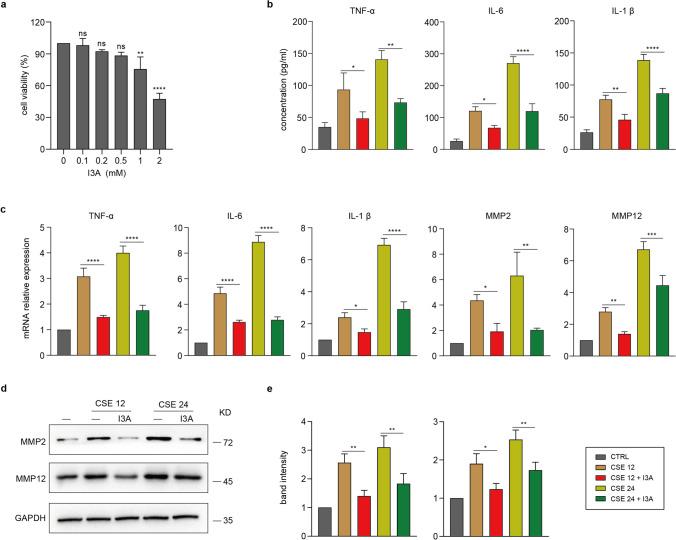
Indole-3-aldehyde (I3A) is an intestinal microbial metabolite that regulates inflammation in various inflammatory diseases; however, its role in chronic obstructive pulmonary disease (COPD) remains unclear. This study aimed to investigate the anti-inflammatory effects and molecular mechanisms of I3A in COPD. We constructed in vivo models using cigarette smoke (CS)-stimulated mice and in vitro models using cigarette smoke extract (CSE)-stimulated MH-S cells. The results demonstrated that I3A significantly alleviated bronchial obstruction in mice with COPD and reduced the expression of inflammatory factors such as TNF-α, IL-1β, and IL-6. Additionally, I3A decreased the levels of matrix metalloproteinases MMP2, MMP12, and inhibited the NF-κB p65/NLRP3 pathways. Further investigation revealed that I3A inhibited NF-κB activity by suppressing p65 phosphorylation and nuclear translocation in CSE-stimulated MH-S cells. The activation of the NF-κB and NLRP3 signaling pathways is mediated by histone deacetylase 5 (HDAC5) and HDAC6, both of which are inhibited by I3A. Subsequent experiments indicated that aryl hydrocarbon receptor (AHR) knockdown attenuated the inhibitory effect of I3A on pro-inflammatory cytokines and the HDACs/NF-κB/NLRP3 signaling pathways, highlighting the dependence of I3A's anti-inflammatory effects on the AHR receptor. KEY MESSAGES: I3A effectively reduced lung inflammation in COPD mice by inhibiting the NF-κB pathway. In CSE-stimulated MH-S cells, I3A suppressed p65 phosphorylation and nuclear translocation, thereby inhibiting NF-κB activity. The activation of the NF-κB/NLRP3 pathways by HDAC5 and HDAC6 was diminished by I3A. Through the activation of the AHR receptor, I3A suppressed the activities of HDAC5/6, leading to a decrease in inflammatory factor levels.
吲哚 - 3 - 醛(I3A)是一种肠道微生物代谢产物,可调节多种炎症性疾病中的炎症反应;然而,其在慢性阻塞性肺疾病(COPD)中的作用仍不清楚。本研究旨在探讨I3A在COPD中的抗炎作用及其分子机制。我们使用香烟烟雾(CS)刺激的小鼠构建了体内模型,并使用香烟烟雾提取物(CSE)刺激的MH - S细胞构建了体外模型。结果表明,I3A显著减轻了COPD小鼠的支气管阻塞,并降低了肿瘤坏死因子 - α(TNF - α)、白细胞介素 - 1β(IL - 1β)和白细胞介素 - 6(IL - 6)等炎症因子的表达。此外,I3A降低了基质金属蛋白酶MMP2、MMP12的水平,并抑制了核因子κB p65/核苷酸结合寡聚化结构域样受体蛋白3(NLRP3)信号通路。进一步研究发现,I3A通过抑制CSE刺激的MH - S细胞中p65的磷酸化和核转位来抑制核因子κB活性。核因子κB和NLRP3信号通路的激活由组蛋白去乙酰化酶5(HDAC5)和组蛋白去乙酰化酶6(HDAC6)介导,二者均被I3A抑制。随后的实验表明,芳烃受体(AHR)基因敲低减弱了I3A对促炎细胞因子以及HDACs/核因子κB/NLRP3信号通路的抑制作用,突出了I3A抗炎作用对AHR受体的依赖性。关键信息:I3A通过抑制核因子κB通路有效减轻了COPD小鼠的肺部炎症。在CSE刺激的MH - S细胞中,I3A抑制p65的磷酸化和核转位,从而抑制核因子κB活性。I3A减弱了HDAC5和HDAC6对核因子κB/NLRP3信号通路的激活作用。通过激活AHR受体,I3A抑制了HDAC5/6的活性,导致炎症因子水平降低。




 Zotero 插件