
S-亚硝基化检测方法的演变以及蛋白质S-亚硝基化在各种癌症中的作用。
The evolution of S-nitrosylation detection methodology and the role of protein S-nitrosylation in various cancers.
作者信息
Liang Feng, Wang Min, Li Jiannan, Guo Jie
机构信息
Department of General Surgery, The Second Hospital of Jilin University, Changchun, China.
Department of Radiation Oncology, The Second Hospital of Jilin University, Changchun, China.
出版信息
Cancer Cell Int. 2024 Dec 19;24(1):408. doi: 10.1186/s12935-024-03568-y.
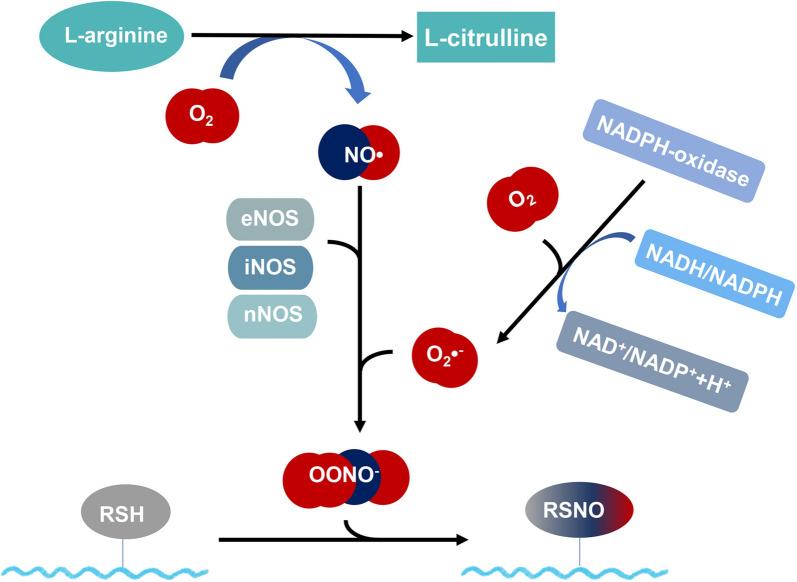
S-nitrosylation (SNO) modification, a nitric oxide (NO)-mediated post-translational modification (PTM) of proteins, plays an important role in protein microstructure, degradation, activity, and stability. Due to the presence of reducing agents, the SNO modification process mediated by NO derivatives is often reversible and unstable. This reversible transformation between SNO modification and denitrification often influences the structure, activity, and function of proteins. The reversibility of SNO modifications also poses a challenge when verifying changes in the biological functions of proteins. Moreover, SNO modification of key signaling pathway proteins, such as caspase-3, NF-κB, and Bcl-2, can affect tumor proliferation, invasion, and apoptosis. The SNO-modified proteins play important roles in both promoting and inhibiting cancer, which indirectly confirms the duality and complexity of SNO modification functions. This article reviews the biological significance of various SNO-modified proteins in different cancers, providing a theoretical basis for determining whether the related changes of SNO-modified proteins are universal in cancers. Additionally, this review presents a comprehensive and detailed summary of the evolution of detection methods for SNO-modified proteins, providing a possible methodological basis for future research on SNO-modified proteins.
S-亚硝基化(SNO)修饰是一种由一氧化氮(NO)介导的蛋白质翻译后修饰(PTM),在蛋白质的微观结构、降解、活性和稳定性方面发挥着重要作用。由于存在还原剂,由NO衍生物介导的SNO修饰过程通常是可逆且不稳定的。SNO修饰与脱氮之间的这种可逆转变常常影响蛋白质的结构、活性和功能。在验证蛋白质生物学功能的变化时,SNO修饰的可逆性也带来了挑战。此外,关键信号通路蛋白如半胱天冬酶-3、核因子-κB和Bcl-2的SNO修饰可影响肿瘤的增殖、侵袭和凋亡。SNO修饰的蛋白质在促进和抑制癌症方面都发挥着重要作用,这间接证实了SNO修饰功能的双重性和复杂性。本文综述了不同癌症中各种SNO修饰蛋白质的生物学意义,为确定SNO修饰蛋白质的相关变化在癌症中是否具有普遍性提供理论依据。此外,本综述全面详细地总结了SNO修饰蛋白质检测方法的演变,为未来SNO修饰蛋白质的研究提供可能的方法学依据。
 Zotero 插件