
荷包牡丹苷B抑制新型冠状病毒奥密克戎BA.2变体进入细胞并调节免疫反应。
Calceolarioside B inhibits SARS-CoV-2 Omicron BA.2 variant cell entry and modulates immune response.
作者信息
Lin Xiao-Bin, Yao Yu-Zhi, Wen Qi-Rong, Liu Fu-Bin, Cai Yuan-Xuan, Chen Rui-Hong, Han Jin
机构信息
Department of Thyroid and Breast Surgery, Guangzhou Women and Children's Medical Center, Guangzhou Medical University, Guangzhou, 510623, Guangdong Province, China.
Department of Paediatric Surgery Clinic, Guangzhou Women and Children's Medical Center, Guangzhou Medical University, Guangzhou, 510623, Guangdong Province, China.
出版信息
Virol J. 2024 Dec 21;21(1):329. doi: 10.1186/s12985-024-02566-w.
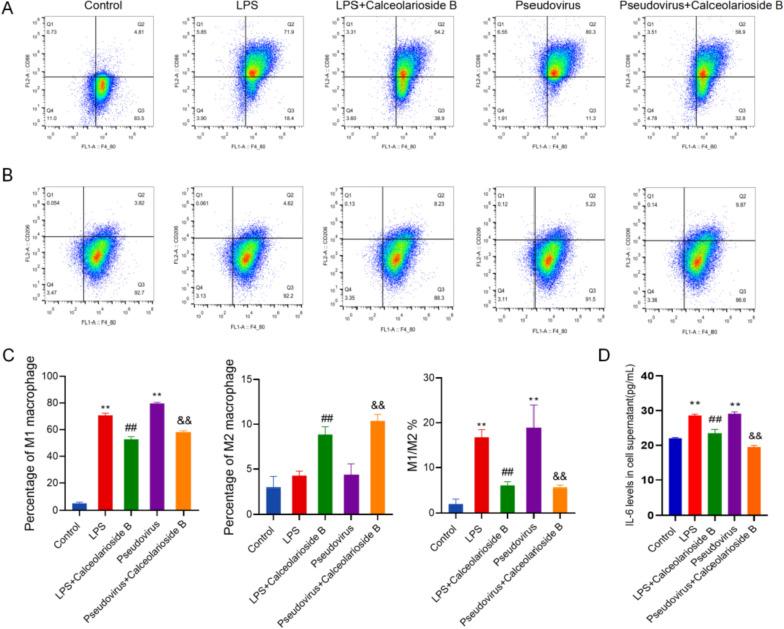
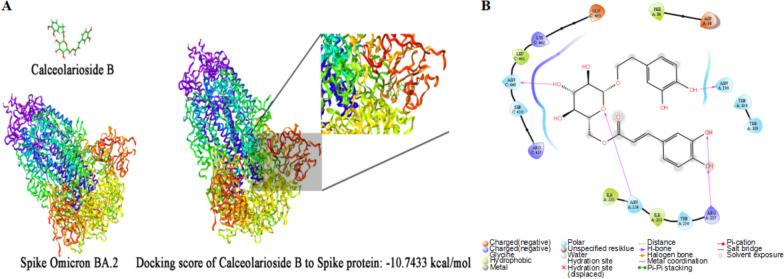
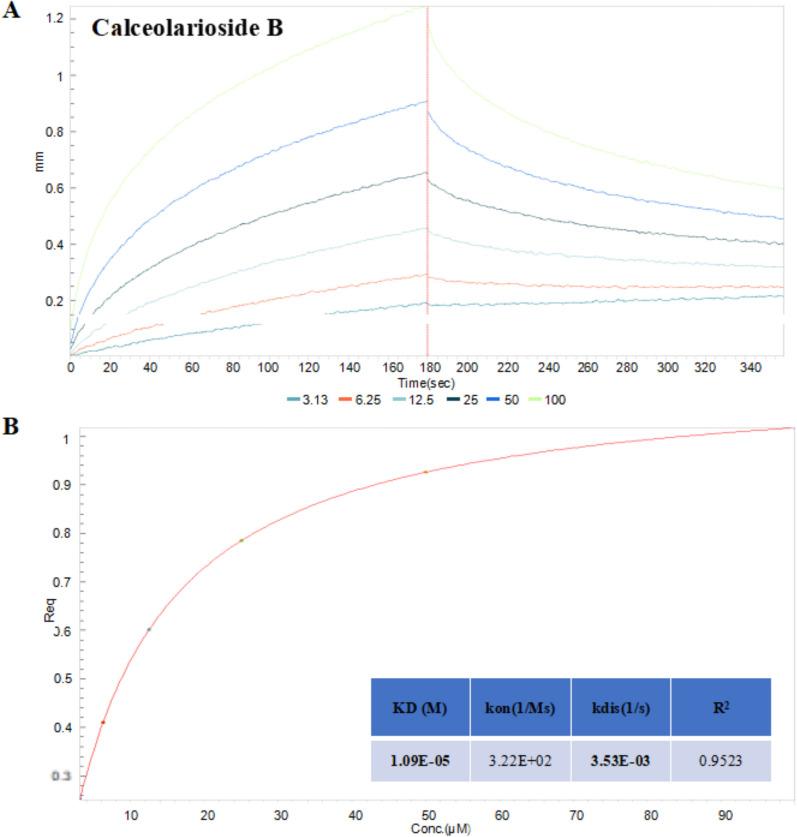
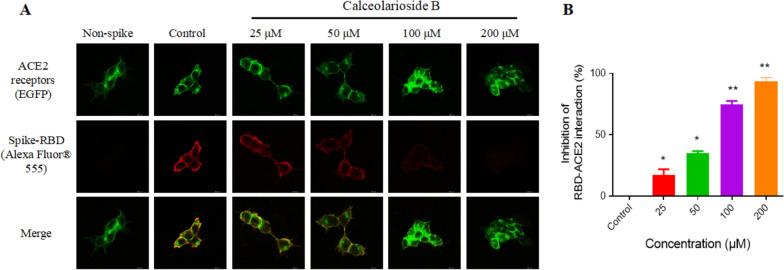
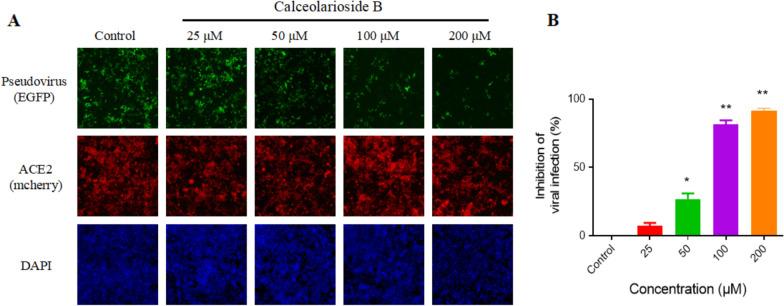
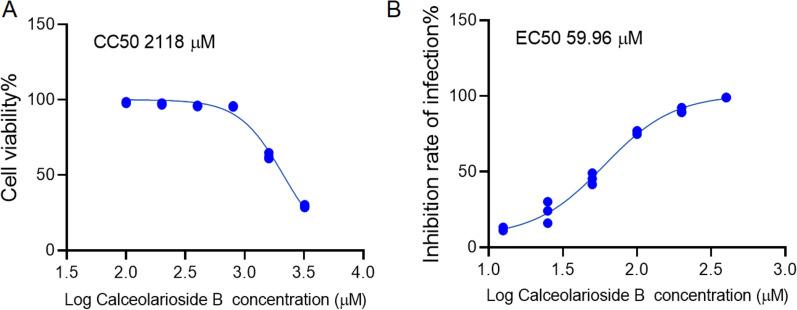
This study evaluated the inhibitory effects of calceolarioside B, extracted from the traditional Chinese herb Mutong (Akebia quinata Thumb), on the SARS-CoV-2 Omicron BA.2 variant. Molecular docking and molecular dynamics simulations predicted the binding sites and interactions between calceolarioside B and the Omicron BA.2 spike (S) protein. Biolayer interferometry (BLI) and immunofluorescence assays validated its high-affinity binding. Pseudovirus entry assays assessed the inhibitory effects of calceolarioside B on viral entry into host cells, while enzyme-linked immunosorbent assay (ELISA) measured inflammatory cytokine levels. Flow cytometry was used to analyze its effects on macrophage phenotype switching. Results demonstrated that calceolarioside B could bind to the Omicron BA.2 S protein with high affinity, and significantly inhibited viral entry into host cells by interfering with the binding of angiotensin-converting enzyme 2 (ACE2) receptor and S protein. Additionally, calceolarioside B reduced IL(interleukin)-6 expression levels and promoted the switch of macrophages from the pro-inflammatory M1 phenotype to the anti-inflammatory M2 phenotype. These findings suggest that calceolarioside B possesses antiviral and immunomodulatory effects, making it a potential dual-function inhibitor for the treatment of COVID-19.
本研究评估了从传统中药木通(木通科木通属植物)中提取的荷包牡丹苷B对严重急性呼吸综合征冠状病毒2(SARS-CoV-2)奥密克戎BA.2变体的抑制作用。分子对接和分子动力学模拟预测了荷包牡丹苷B与奥密克戎BA.2刺突(S)蛋白之间的结合位点和相互作用。生物膜干涉技术(BLI)和免疫荧光分析验证了其高亲和力结合。伪病毒进入试验评估了荷包牡丹苷B对病毒进入宿主细胞的抑制作用,而酶联免疫吸附测定(ELISA)则测量了炎性细胞因子水平。流式细胞术用于分析其对巨噬细胞表型转换的影响。结果表明,荷包牡丹苷B能与奥密克戎BA.2 S蛋白高亲和力结合,并通过干扰血管紧张素转换酶2(ACE2)受体与S蛋白的结合,显著抑制病毒进入宿主细胞。此外,荷包牡丹苷B降低了白细胞介素6(IL-6)的表达水平,并促进巨噬细胞从促炎M1表型向抗炎M2表型的转变。这些发现表明,荷包牡丹苷B具有抗病毒和免疫调节作用,使其成为一种治疗新型冠状病毒肺炎(COVID-19)的潜在双功能抑制剂。
 Zotero 插件