
用于研究NRF2在非传染性疾病中功能作用的模式生物。
Model organisms for investigating the functional involvement of NRF2 in non-communicable diseases.
作者信息
Rojo Ana I, Buttari Brigitta, Cadenas Susana, Carlos Ana Rita, Cuadrado Antonio, Falcão Ana Sofia, López Manuela G, Georgiev Milen I, Grochot-Przeczek Anna, Gumeni Sentiljana, Jimenez-Villegas José, Horbanczuk Jarosław Olav, Konu Ozlen, Lastres-Becker Isabel, Levonen Anna-Liisa, Maksimova Viktorija, Michaeloudes Charalambos, Mihaylova Liliya V, Mickael Michel Edwar, Milisav Irina, Miova Biljana, Rada Patricia, Santos Marlene, Seabra Miguel C, Strac Dubravka Svob, Tenreiro Sandra, Trougakos Ioannis P, Dinkova-Kostova Albena T
机构信息
Department of Biochemistry, Medical College, Autonomous University of Madrid (UAM), Madrid, Spain; Instituto de Investigación Sanitaria La Paz (IdiPaz), Madrid, Spain; Centro de Investigación Biomédica en Red de Enfermedades Neurodegenerativas (CIBERNED), Madrid, Spain; Instituto de Investigaciones Biomédicas Sols-Morreale (CSIC-UAM), Madrid, Spain.
Department of Cardiovascular, Endocrine-Metabolic Diseases, and Aging, Italian National Institute of Health, 00161, Rome, Italy.
出版信息
Redox Biol. 2025 Feb;79:103464. doi: 10.1016/j.redox.2024.103464. Epub 2024 Dec 16.
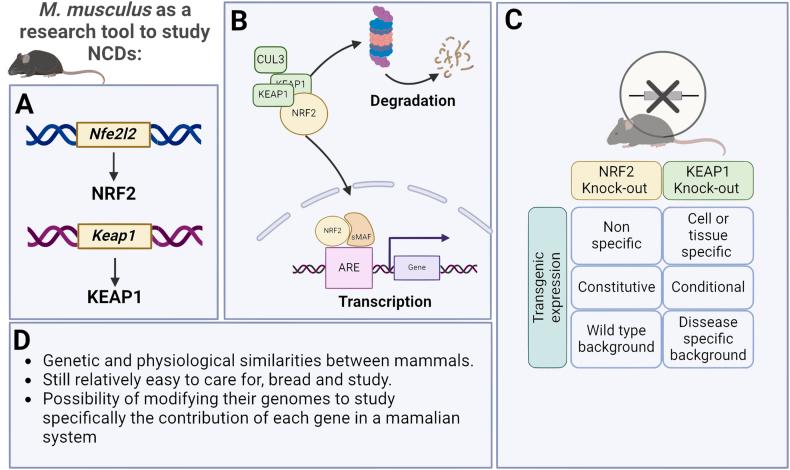
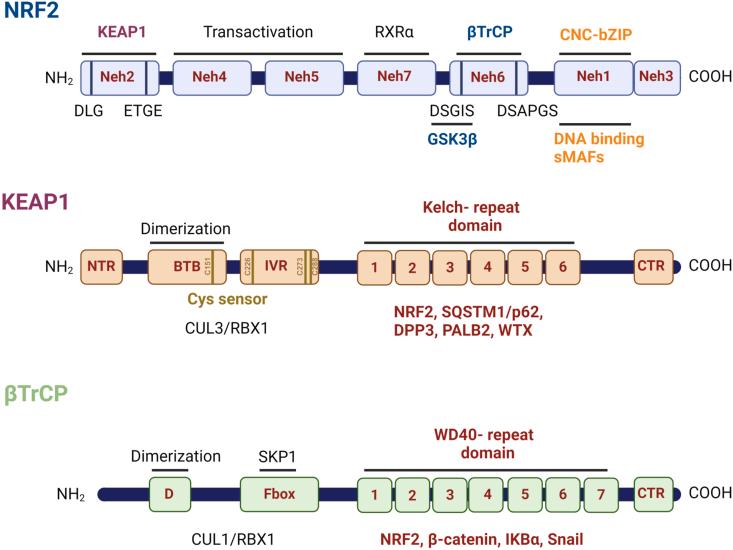
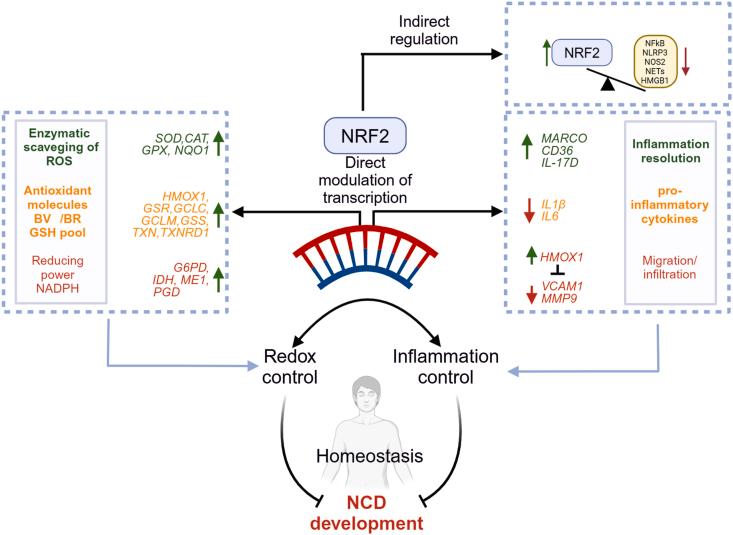
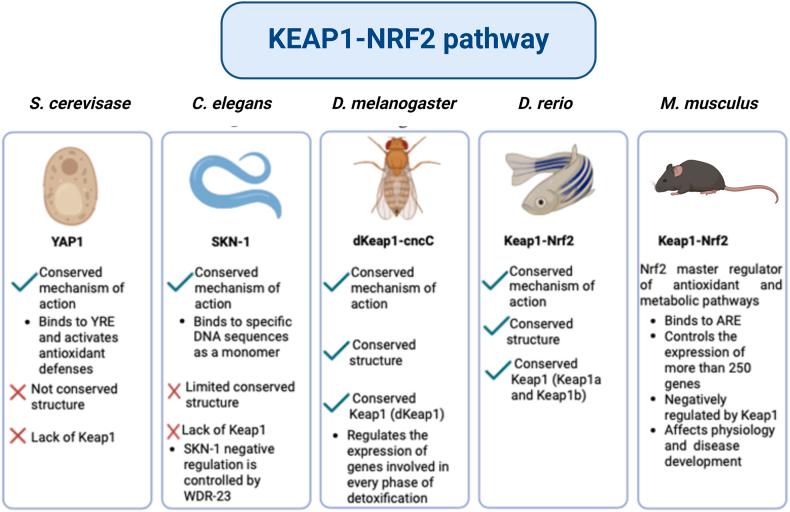
Non-communicable chronic diseases (NCDs) are most commonly characterized by age-related loss of homeostasis and/or by cumulative exposures to environmental factors, which lead to low-grade sustained generation of reactive oxygen species (ROS), chronic inflammation and metabolic imbalance. Nuclear factor erythroid 2-like 2 (NRF2) is a basic leucine-zipper transcription factor that regulates the cellular redox homeostasis. NRF2 controls the expression of more than 250 human genes that share in their regulatory regions a cis-acting enhancer termed the antioxidant response element (ARE). The products of these genes participate in numerous functions including biotransformation and redox homeostasis, lipid and iron metabolism, inflammation, proteostasis, as well as mitochondrial dynamics and energetics. Thus, it is possible that a single pharmacological NRF2 modulator might mitigate the effect of the main hallmarks of NCDs, including oxidative, proteostatic, inflammatory and/or metabolic stress. Research on model organisms has provided tremendous knowledge of the molecular mechanisms by which NRF2 affects NCDs pathogenesis. This review is a comprehensive summary of the most commonly used model organisms of NCDs in which NRF2 has been genetically or pharmacologically modulated, paving the way for drug development to combat NCDs. We discuss the validity and use of these models and identify future challenges.
非传染性慢性病(NCDs)的最常见特征是与年龄相关的体内平衡丧失和/或长期暴露于环境因素,这会导致活性氧(ROS)的低水平持续产生、慢性炎症和代谢失衡。核因子红细胞2样2(NRF2)是一种碱性亮氨酸拉链转录因子,可调节细胞氧化还原稳态。NRF2控制着超过250个人类基因的表达,这些基因在其调控区域共享一个称为抗氧化反应元件(ARE)的顺式作用增强子。这些基因的产物参与多种功能,包括生物转化和氧化还原稳态、脂质和铁代谢、炎症、蛋白质稳态以及线粒体动力学和能量学。因此,单一的药理学NRF2调节剂有可能减轻非传染性慢性病主要特征的影响,包括氧化应激、蛋白质稳态应激、炎症和/或代谢应激。对模式生物的研究提供了关于NRF2影响非传染性慢性病发病机制的分子机制的大量知识。这篇综述全面总结了最常用的非传染性慢性病模式生物,其中NRF2已通过基因或药理学方法进行调节,为开发对抗非传染性慢性病的药物铺平了道路。我们讨论了这些模型的有效性和用途,并确定了未来的挑战。


 Zotero 插件