
提高玉米的耐旱性和耐热性:单一接种与联合接种植物促生根际细菌
Enhancing maize drought and heat tolerance: single vs combined plant growth promoting rhizobacterial inoculation.
作者信息
Notununu Iviwe, Moleleki Lucy, Roopnarain Ashira, Adeleke Rasheed
机构信息
Department of Biochemistry, Genetics and Microbiology, Forestry and Agricultural Biotechnology Institute, University of Pretoria, Pretoria, South Africa.
Microbiology and Environmental Biotechnology Research Group, Agricultural Research Council - Soil, Climate and Water, Pretoria, South Africa.
出版信息
Front Plant Sci. 2024 Dec 10;15:1480718. doi: 10.3389/fpls.2024.1480718. eCollection 2024.
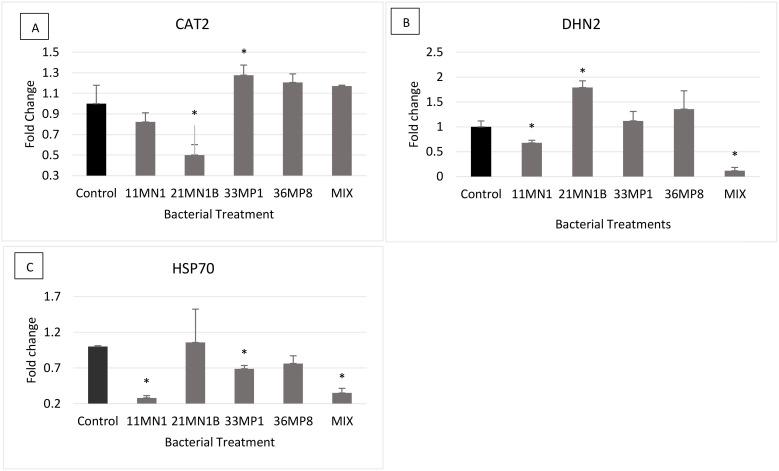
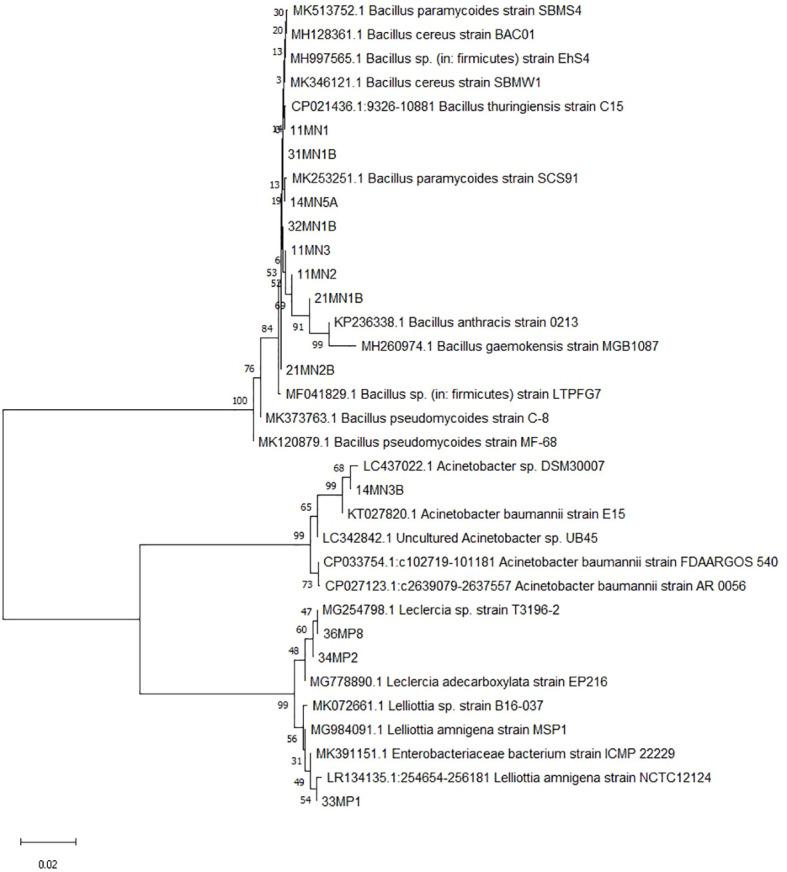
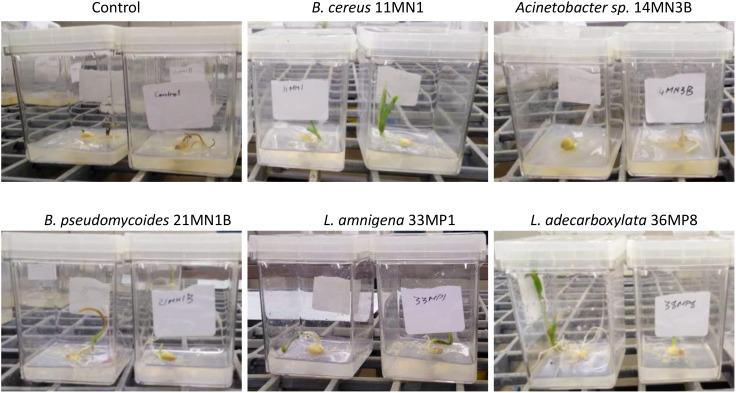
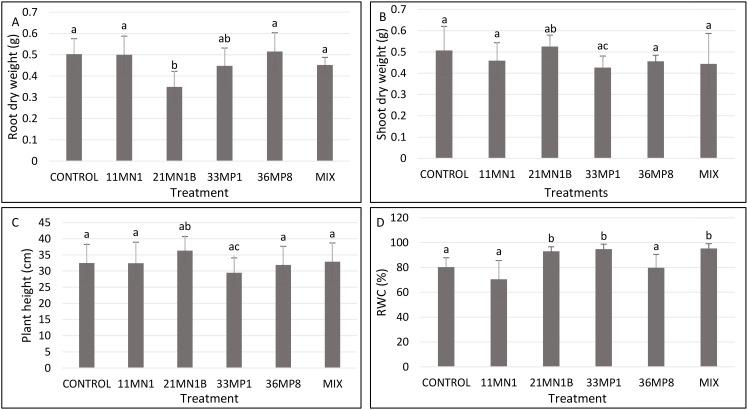
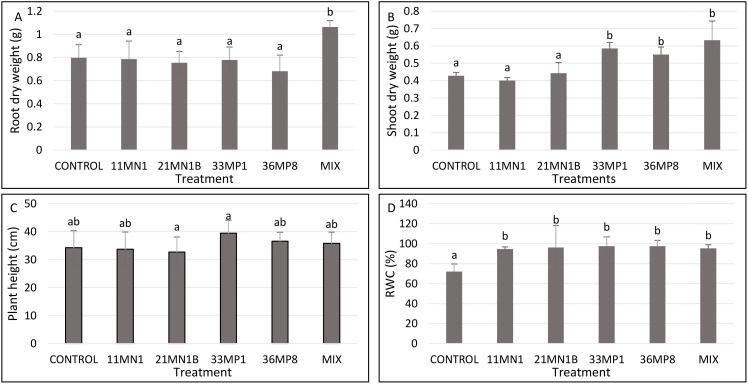
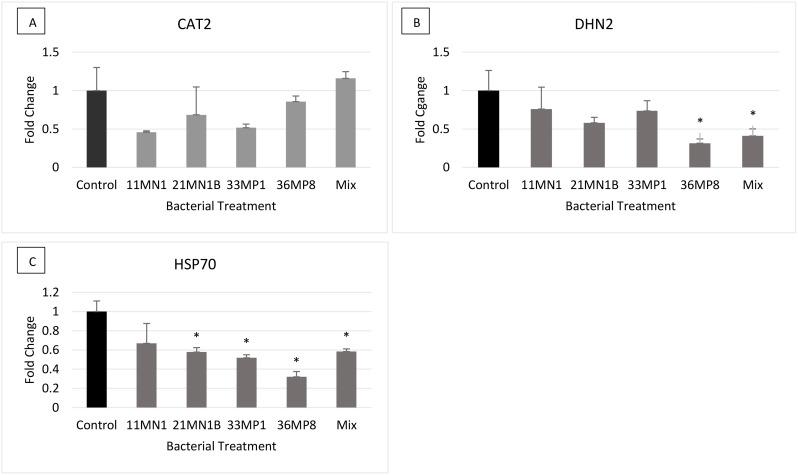
Maize ( L.), a key staple crop in Sub-Saharan Africa, is particularly vulnerable to concurrent drought and heat stress, which threatens crop yield and food security. Plant growth-promoting rhizobacteria (PGPR) have shown potential as biofertilizers to enhance plant resilience under such abiotic stresses. This study aimed to (1) identify PGPR isolates tolerant to drought and heat, (2) assess their capacity to mitigate the effects of these stresses on early maize growth, and (3) analyze maize gene expression changes associated with PGPR-induced tolerance. Rhizobacteria were isolated and screened for drought and heat tolerance, alongside key plant growth-promoting (PGP) traits, including phosphorus solubilization, nitrogen fixation, and indole acetic acid production. In vitro and pot trials evaluated the effects of selected isolates on maize growth under stress, using indicators such as shoot length, root and shoot biomass (wet and dry), and leaf water content. Quantitative reverse transcription PCR (qRT-PCR) was employed to profile maize stress response genes. The identified PGPR isolates included (11MN1), (21MN1B), (33MP1), and (36MP8). Greenhouse trials demonstrated that 33MP1, 36MP8, and a mixed culture of isolates (11MN1, 21MN1B, 33MP1, 36MP8) effectively alleviated the adverse effects of concurrent drought and heat stress in maize. Notably, qRT-PCR analysis indicated that PGPR-induced tolerance may involve the modulation of stress response genes (catalase 2) and (dehydrin 2), which play roles in oxidative stress management and cellular protection. The PGPR isolates identified in this study represent promising bioinoculants for enhancing maize resilience under climate-induced stresses, offering a sustainable approach to improve maize productivity, conserve water, and reduce irrigation needs in drought-prone regions.
玉米(L.)是撒哈拉以南非洲的一种关键主食作物,特别容易受到干旱和热胁迫并发的影响,这威胁到作物产量和粮食安全。植物促生根际细菌(PGPR)已显示出作为生物肥料的潜力,可增强植物在这种非生物胁迫下的恢复力。本研究旨在:(1)鉴定耐旱和耐热的PGPR分离株;(2)评估它们减轻这些胁迫对玉米早期生长影响的能力;(3)分析与PGPR诱导的耐受性相关的玉米基因表达变化。分离并筛选根际细菌的耐旱和耐热性以及关键的植物促生长(PGP)特性,包括磷溶解、固氮和吲哚乙酸产生。通过体外试验和盆栽试验,利用茎长、根和茎生物量(湿重和干重)以及叶片含水量等指标,评估所选分离株对胁迫下玉米生长的影响。采用定量逆转录PCR(qRT-PCR)分析玉米胁迫响应基因。鉴定出的PGPR分离株包括(11MN1)、(21MN1B)、(33MP1)和(36MP8)。温室试验表明,33MP1、36MP8以及分离株(11MN1、21MN1B、33MP1、36MP8)的混合培养物有效减轻了干旱和热胁迫并发对玉米的不利影响。值得注意的是,qRT-PCR分析表明,PGPR诱导的耐受性可能涉及胁迫响应基因(过氧化氢酶2)和(脱水素2)的调节,它们在氧化应激管理和细胞保护中发挥作用。本研究中鉴定出的PGPR分离株代表了有前景的生物接种剂,可增强玉米在气候诱导胁迫下的恢复力,为提高玉米生产力、节约用水和减少易旱地区的灌溉需求提供了一种可持续的方法。

 Zotero 插件