
线粒体蓝图:开启次生代谢产物的生产
The Mitochondrial Blueprint: Unlocking Secondary Metabolite Production.
作者信息
Li Yang, Zhang Yujia, He Xinyu, Guo Ziyi, Yang Ning, Bai Guohui, Zhao Juanjuan, Xu Delin
机构信息
Department of Medical Instrumental Analysis, Zunyi Medical University, Zunyi 563099, China.
Department of Cell Biology, Zunyi Medical University, Zunyi 563099, China.
出版信息
Metabolites. 2024 Dec 18;14(12):711. doi: 10.3390/metabo14120711.
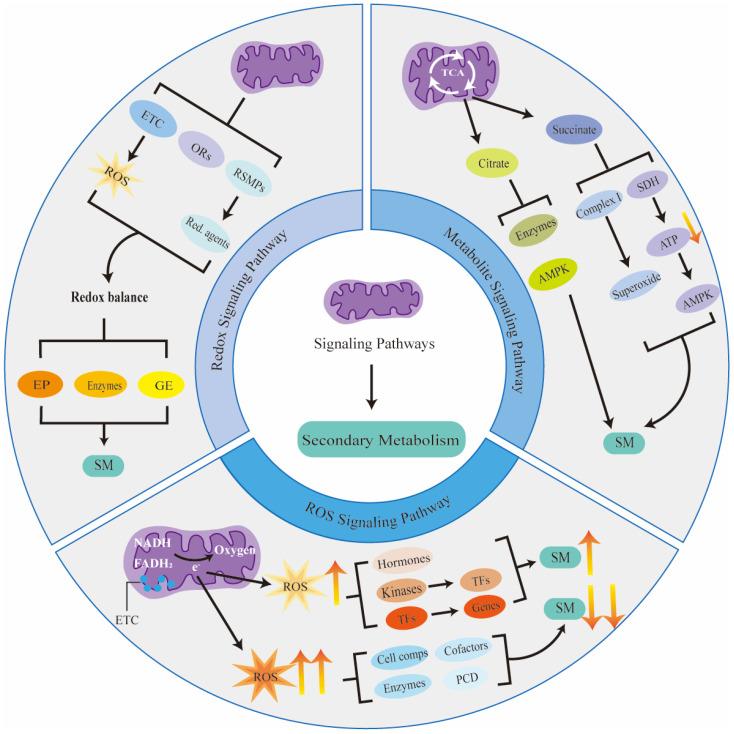
Mitochondrial metabolism plays a pivotal role in regulating the synthesis of secondary metabolites, which are crucial for the survival and adaptation of organisms. These metabolites are synthesized during specific growth stages or in response to environmental stress, reflecting the organism's ability to adapt to changing conditions. Mitochondria, while primarily known for their role in energy production, directly regulate secondary metabolite biosynthesis by providing essential precursor molecules, energy, and reducing equivalents necessary for metabolic reactions. Furthermore, they indirectly influence secondary metabolism through intricate signaling pathways, including reactive oxygen species (ROS), metabolites, and redox signaling, which modulate various metabolic processes. This review explores recent advances in understanding the molecular mechanisms governing mitochondrial metabolism and their regulatory roles in secondary metabolite biosynthesis, which highlights the involvement of transcription factors, small RNAs, and post-translational mitochondrial modifications in shaping these processes. By integrating current insights, it aims to inspire future research into mitochondrial regulatory mechanisms in , , , and others that may enhance their secondary metabolite production. A deeper understanding of the roles of mitochondria in secondary metabolism could contribute to the development of new approaches in biotechnology applications.
线粒体代谢在调节次生代谢产物的合成中起着关键作用,这些次生代谢产物对生物体的生存和适应至关重要。这些代谢产物在特定的生长阶段合成或对环境压力作出反应,反映了生物体适应变化条件的能力。线粒体虽然主要以其在能量产生中的作用而闻名,但它通过提供代谢反应所需的必需前体分子、能量和还原当量,直接调节次生代谢产物的生物合成。此外,它们通过复杂的信号通路间接影响次生代谢,这些信号通路包括活性氧(ROS)、代谢产物和氧化还原信号,它们调节各种代谢过程。本综述探讨了在理解线粒体代谢的分子机制及其在次生代谢产物生物合成中的调节作用方面的最新进展,其中强调了转录因子、小RNA和线粒体翻译后修饰在塑造这些过程中的作用。通过整合当前的见解,其目的是激发未来对线粒体调节机制在[此处可能缺失具体物种名称]及其他物种中的研究,这些研究可能会提高它们的次生代谢产物产量。对线粒体在次生代谢中作用的更深入理解可能有助于生物技术应用新方法的开发。

 Zotero 插件