
用于强化疼痛管理的内源性抗炎纳米药物。
Intrinsic anti-inflammatory nanomedicines for enhanced pain management.
作者信息
Qiao Bin, Yao Jiaqian, Fan Yu'ang, Zhang Na, Feng Miao, Zhao Jiaju, Song Xinye, Luan Yong, Zhuang Bowen, Zhang Nan, Xie Xiaoyan, Xu Ming
机构信息
Department of Medical Ultrasonics, The First Affiliated Hospital of Sun Yat-sen University, Guangzhou, China.
Department of Anesthesiology, The First Affiliated Hospital of Dalian Medical University, Dalian, Liaoning, China.
出版信息
Front Bioeng Biotechnol. 2024 Dec 16;12:1514245. doi: 10.3389/fbioe.2024.1514245. eCollection 2024.
INTRODUCTION
Effective postoperative pain management remains a significant challenge due to the severe side effects of opioids and the limitations of existing analgesic delivery systems. Inflammation plays a critical role in pain exacerbation, highlighting the need for therapies that combine analgesic effects with intrinsic anti-inflammatory properties.
METHODS
Herein, we develop an intrinsic anti-inflammatory nanomedicine designed to enhance pain management by integrating controlled anesthetic release with inherent anti-inflammatory activity. Our nanoplatform utilizes dendritic mesoporous silica nanoparticles (MSNs) loaded with levobupivacaine and coated with Rg3-based liposomes derived from ginsenoside Rg3, termed LMSN-bupi.
RESULTS
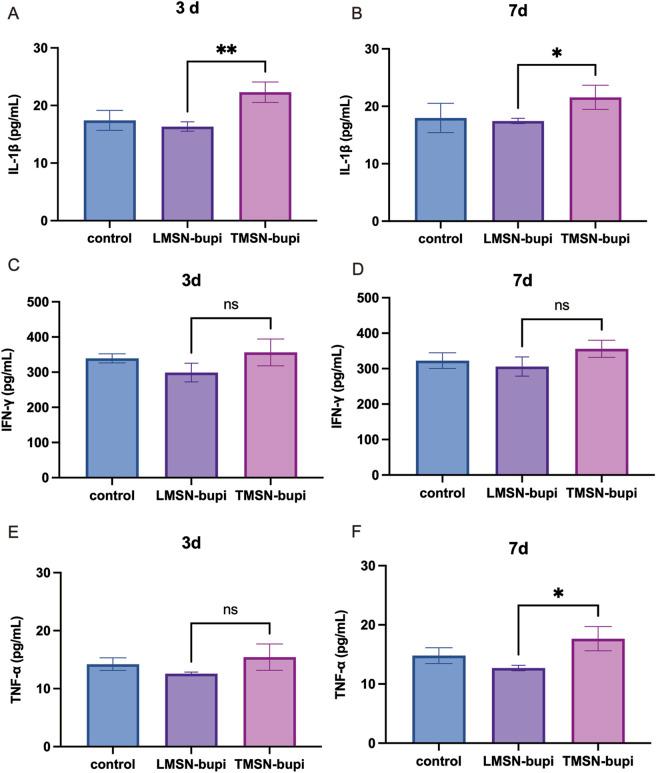
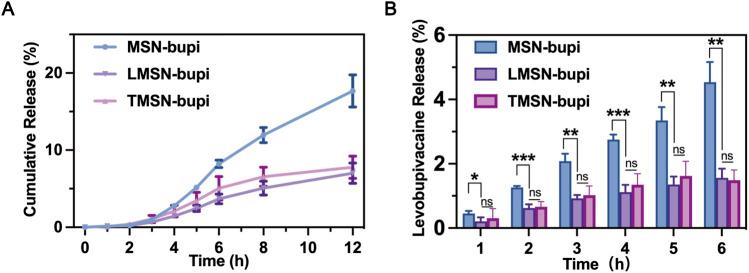
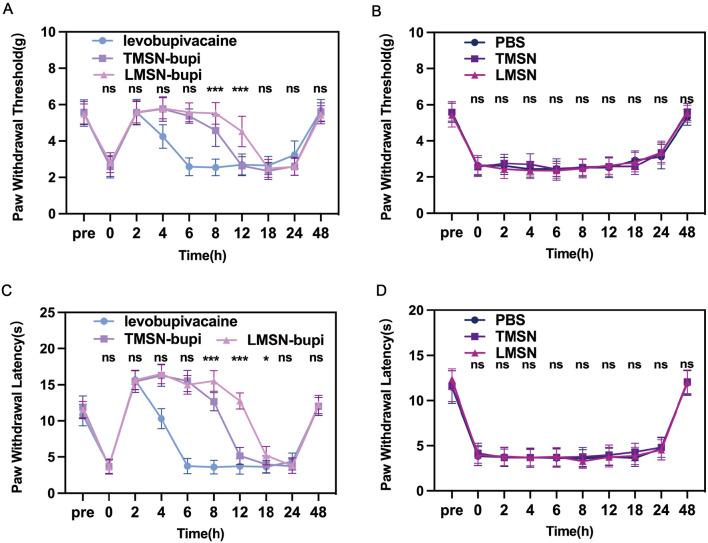
The MSNs enable sustained and controlled release of the local anesthetic, while the Rg3-liposome coating provides intrinsic anti-inflammatory effects by inhibiting macrophage activation. In animal models, LMSN-bupi demonstrates significantly prolonged analgesic effects and attenuated inflammatory responses compared to traditional liposome-decorated nanoparticles (TMSN-bupi) (n = 5).
DISCUSSION
These findings underscore the potential of intrinsic anti-inflammatory nanomedicines in enhancing pain management, offering a promising strategy to overcome the limitations of current therapies and improve patient outcomes in postoperative care.
引言
由于阿片类药物的严重副作用以及现有镇痛给药系统的局限性,有效的术后疼痛管理仍然是一项重大挑战。炎症在疼痛加剧过程中起关键作用,这凸显了将镇痛效果与内在抗炎特性相结合的治疗方法的必要性。
方法
在此,我们开发了一种具有内在抗炎作用的纳米药物,旨在通过将可控的麻醉剂释放与固有的抗炎活性相结合来加强疼痛管理。我们的纳米平台利用负载左旋布比卡因的树枝状介孔二氧化硅纳米颗粒(MSN),并包覆源自人参皂苷Rg3的基于Rg3的脂质体,称为LMSN-bupi。
结果
MSN能够实现局部麻醉剂的持续和可控释放,而Rg3脂质体涂层通过抑制巨噬细胞活化提供内在抗炎作用。在动物模型中,与传统脂质体修饰的纳米颗粒(TMSN-bupi)相比,LMSN-bupi表现出显著延长的镇痛效果和减轻的炎症反应(n = 5)。
讨论
这些发现强调了具有内在抗炎作用的纳米药物在加强疼痛管理方面的潜力,为克服当前治疗方法的局限性并改善术后护理中的患者预后提供了一种有前景的策略。


 Zotero 插件