
干旱和盐胁迫对小麦幼苗根系表型的影响及相关基因表达分析
Effects of drought and salt stress on the root phenotype of wheat seedlings and underlying gene expression analysis.
作者信息
Tang Kaiyue, An Chuanjing, Li Lixia, Sun Tao, Song Jiancheng, Zhao Jiqiang
机构信息
School of Life Science, Yantai University, Yantai, China.
Institute of Sericulture, Chengde Medical University, Chengde, Hebei, China.
出版信息
Front Plant Sci. 2024 Dec 16;15:1475500. doi: 10.3389/fpls.2024.1475500. eCollection 2024.
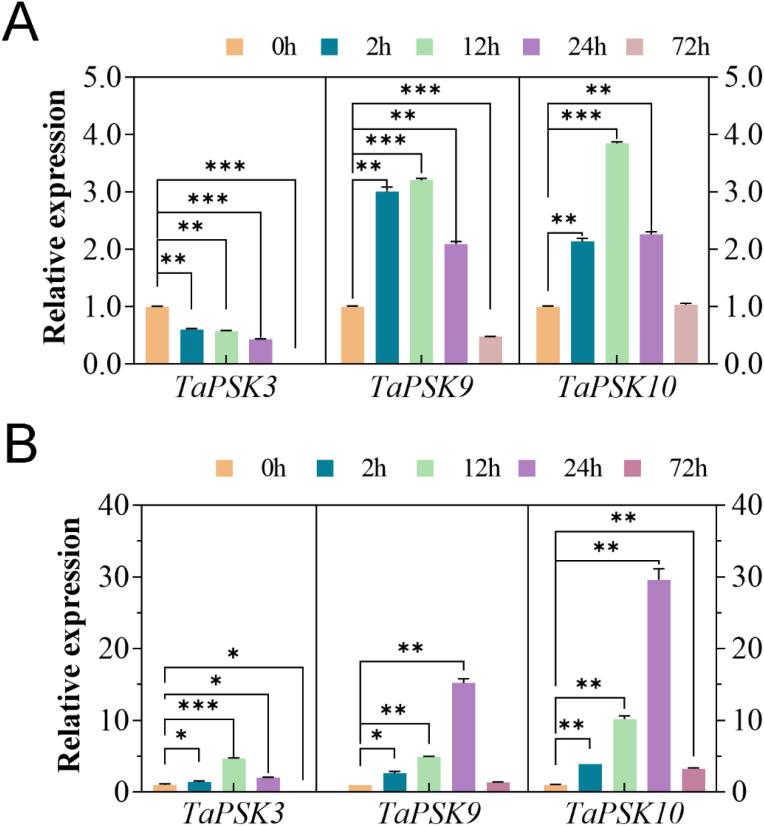
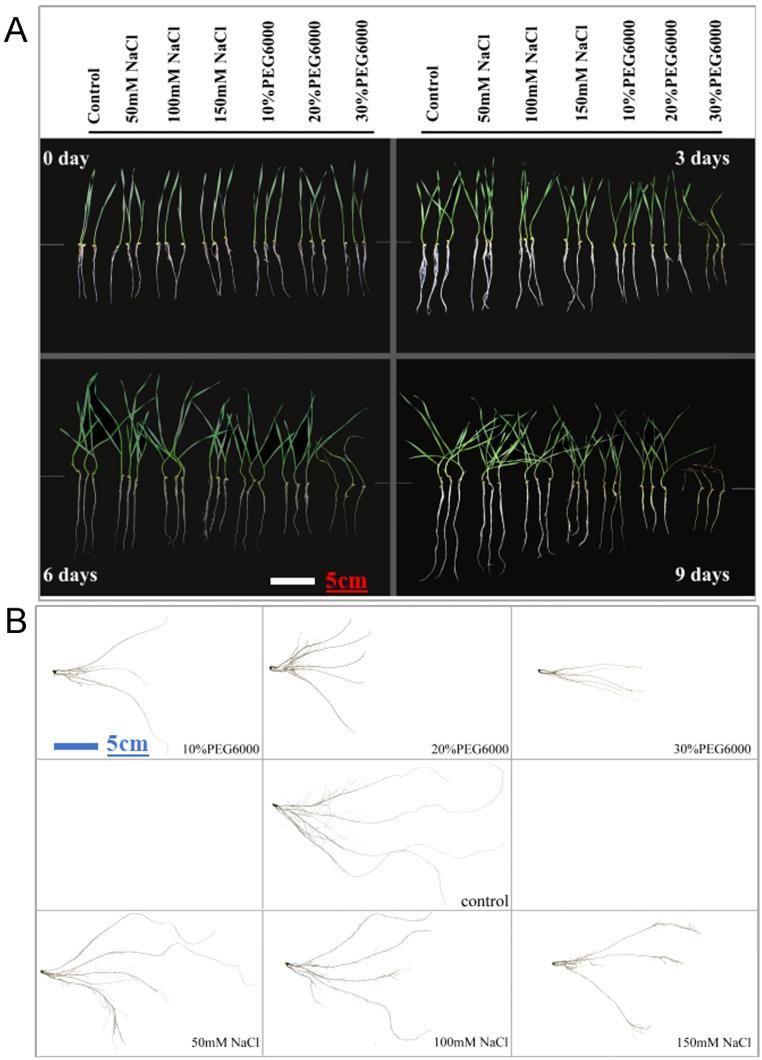
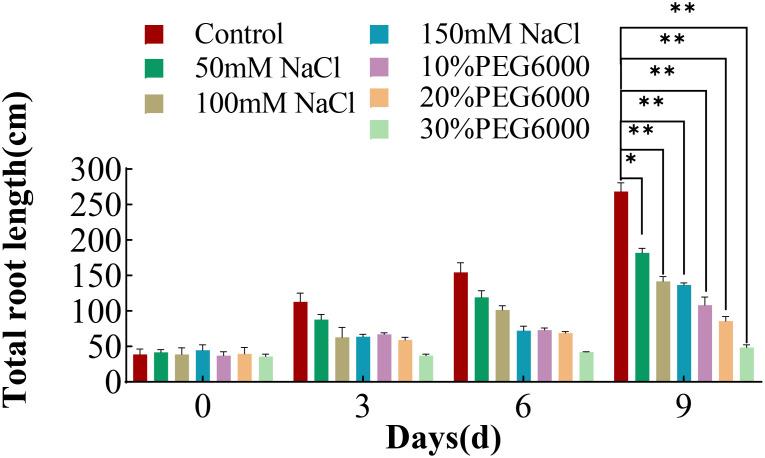
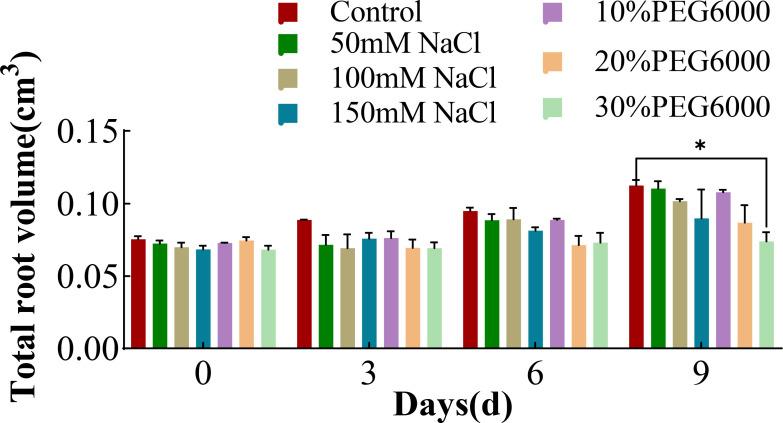
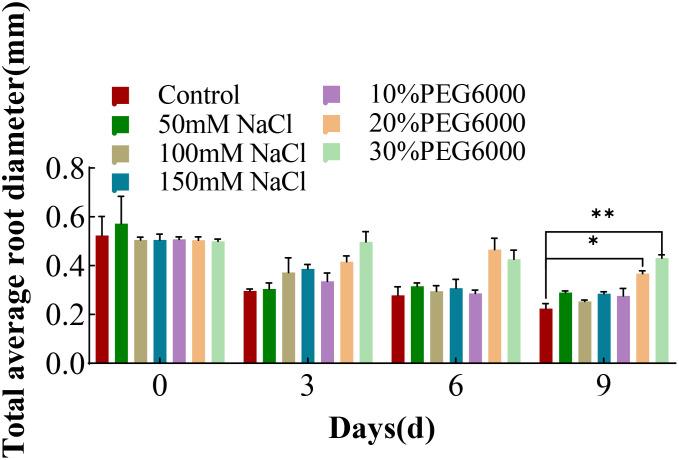
In our previous study, three genes highly expressed in the roots of wheat were screened. To explore the effects of adverse stresses on the wheat root phenotype and the expression of , and , we measured the phenotypic parameters of the JM22 root system at the seedling stage after treatment with different concentrations of NaCl and PEG6000. Additionally, the relative expression levels of TaPSK3, TaPSK9, and TaPSK10 were analyzed via RT-qPCR within 72 h of treatment with 150 mM NaCl and 30% PEG6000. The results revealed that drought and salt stress significantly inhibited phenotypic parameters such as total root length, root surface area, root biomass distribution estimation and root tip number in wheat. Notably, salt stress causes wheat roots to germinate more root hairs. The expression of did not change significantly during salt stress but was upregulated approximately five-fold at 12 h of drought stress. The gene expression levels of and were upregulated to varying degrees but gradually returned to normal at 72 h. These results show that when wheat encounters stresses, the expression of genes is upregulated to promote root growth and ensure the normal growth and development of plants. This study provides data and theoretical support for further study of gene function and cultivation of high-quality wheat plants with strong stress resistance.
在我们之前的研究中,筛选出了三个在小麦根中高表达的基因。为了探究逆境胁迫对小麦根表型以及[此处原文中相关基因名称缺失]、[此处原文中相关基因名称缺失]和[此处原文中相关基因名称缺失]表达的影响,我们测量了用不同浓度的NaCl和PEG6000处理后苗期JM22根系的表型参数。此外,在用150 mM NaCl和30% PEG6000处理72小时内,通过RT-qPCR分析了TaPSK3、TaPSK9和TaPSK10的相对表达水平。结果表明,干旱和盐胁迫显著抑制了小麦的总根长、根表面积、根生物量分布估算和根尖数等表型参数。值得注意的是,盐胁迫会使小麦根长出更多根毛。[此处原文中相关基因名称缺失]在盐胁迫期间表达没有显著变化,但在干旱胁迫12小时时上调了约五倍。[此处原文中相关基因名称缺失]和[此处原文中相关基因名称缺失]的基因表达水平有不同程度的上调,但在72小时时逐渐恢复正常。这些结果表明,当小麦遇到胁迫时,[此处原文中相关基因名称缺失]基因的表达上调以促进根生长并确保植物的正常生长发育。本研究为进一步研究[此处原文中相关基因名称缺失]基因功能以及培育具有强抗逆性的优质小麦植株提供了数据和理论支持。



 Zotero 插件