
群体感应通过调节铜绿假单胞菌PAO1的生物膜形成来抑制噬菌体感染。
Quorum sensing inhibits phage infection by regulating biofilm formation of PAO1.
作者信息
Cao Lei, Mi Jinhui, He Yile, Xuan Guanhua, Wang Jingxue, Li Mengzhe, Tong Yigang
机构信息
College of Life Science and Technology, Beijing University of Chemical Technology, Beijing, Beijing, China.
Food Safety Laboratory, College of Food Science and Engineering, Ocean University of China, Qingdao, Shandong, China.
出版信息
J Virol. 2025 Feb 25;99(2):e0187224. doi: 10.1128/jvi.01872-24. Epub 2024 Dec 31.
UNLABELLED
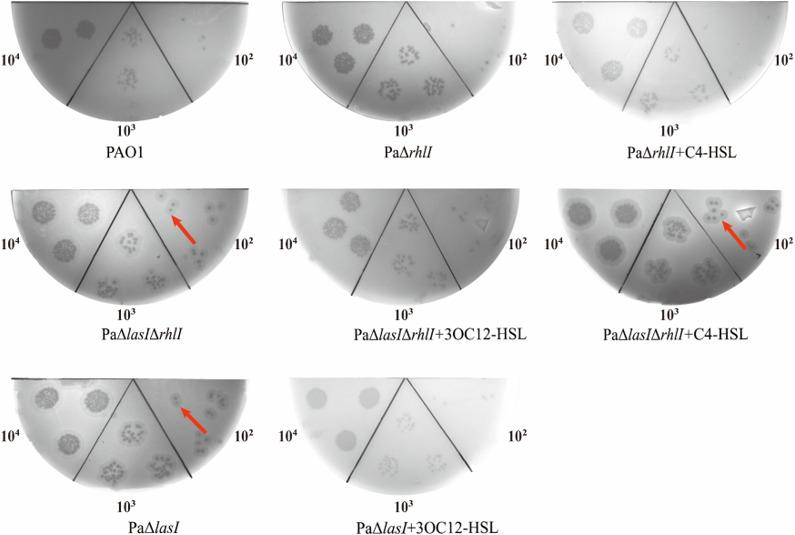
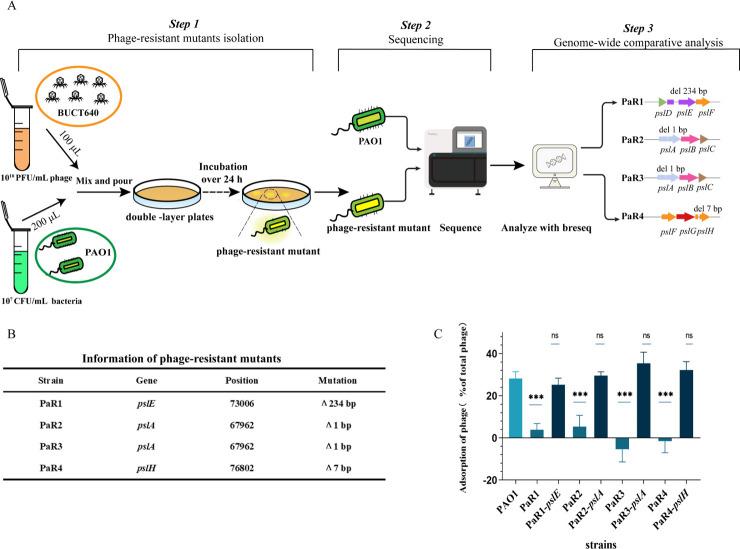
Quorum sensing (QS) can regulate diverse critical phenotypic responses in (), enabling bacterial adaptation to external environmental fluctuations and optimizing population advantages. While there is emerging evidence of QS's involvement in influencing phage infections, our current understanding remains limited, necessitating further investigation. In this study, we isolated and characterized a novel phage designated as BUCT640 that infected PAO1. This phage belonged to class , genus , with a podovirus morphology, and its adsorption was dependent on Psl polysaccharides, a repeating pentamer used to support biofilm structure. Leveraging phage BUCT640 as a model, we analyzed the role of both QS and QS in bacteria-phage interactions. Based on its distinctive plaque formation performances on different QS-related mutants, we investigated the variations of phage sensitivity to these strains and ultimately elucidated the mechanism underlying how QS inhibited phage infection to PAO1. Specifically, we unveiled that the QS could inhibit phage adsorption, which is related to the thickness change caused by biofilm differentiation. Our findings suggest that the inhibition of QS may enhance phage infectivity, potentially facilitating advanced phage therapy combined with QS interference.
IMPORTANCE
Phage therapy is a powerful solution to combat drug-resistant pathogenic bacterial infections and has earned remarkable success in clinical treatment. However, recent insights underscore the potential impact of bacterial QS on phage infection dynamics. Here, we reported a unique phenomenon wherein QS, particularly in the QS pathway, showed distinctive plaque formation behaviors by enlarging halos around plaques in mutant strains. In addition to this, we first elucidated the correlation between biofilm formation and phage infection. Notably, the QS could inhibit phage adsorption, an effect closely related to biofilm thickness. Such research could be the evidence to steer bacterial QS toward favorable therapeutical outcomes. Therefore, our work can extend the comprehension of the interactions between bacteria and phages influenced by QS, thereby providing new perspectives on leveraging QS interference to enhance the efficacy of phage therapy for clinical applications.
未标记
群体感应(QS)可调节()中的多种关键表型反应,使细菌能够适应外部环境波动并优化群体优势。虽然越来越多的证据表明QS参与影响噬菌体感染,但我们目前的了解仍然有限,需要进一步研究。在本研究中,我们分离并鉴定了一种新型噬菌体,命名为BUCT640,它感染了铜绿假单胞菌PAO1。这种噬菌体属于 科、 属,具有肌尾噬菌体形态,其吸附依赖于Psl多糖,这是一种用于支持生物膜结构的重复五聚体。以噬菌体BUCT640为模型,我们分析了细菌QS和 QS在细菌 - 噬菌体相互作用中的作用。基于其在不同QS相关突变体上独特的噬菌斑形成表现,我们研究了噬菌体对这些菌株的敏感性变化,并最终阐明了QS抑制噬菌体感染PAO1的潜在机制。具体而言,我们发现 QS可以抑制噬菌体吸附,这与生物膜分化引起的厚度变化有关。我们的研究结果表明,抑制QS可能会增强噬菌体的感染性,这可能有助于结合QS干扰的先进噬菌体疗法。
重要性
噬菌体疗法是对抗耐药病原菌感染的有力解决方案,在临床治疗中取得了显著成功。然而,最近的研究强调了细菌QS对噬菌体感染动态的潜在影响。在这里,我们报道了一种独特的现象,即QS,特别是在 QS途径中,通过扩大突变菌株中噬菌斑周围的晕圈表现出独特的噬菌斑形成行为。除此之外,我们首次阐明了生物膜形成与噬菌体感染之间的相关性。值得注意的是, QS可以抑制噬菌体吸附,这种效应与生物膜厚度密切相关。此类研究可为引导细菌QS实现良好治疗效果提供证据。因此,我们的工作可以扩展对受QS影响的细菌与噬菌体之间相互作用的理解,从而为利用QS干扰提高噬菌体疗法临床应用疗效提供新的视角。




 Zotero 插件