
一项应用于小学的综合神经肌肉训练干预对疾病相关基因产生表观遗传修饰:一项全基因组DNA甲基化研究。
An Integrated Neuromuscular Training Intervention Applied in Primary School Induces Epigenetic Modifications in Disease-Related Genes: A Genome-Wide DNA Methylation Study.
作者信息
Vasileva Fidanka, Font-Lladó Raquel, López-Ros Víctor, Barretina Jordi, Noguera-Castells Aleix, Esteller Manel, López-Bermejo Abel, Prats-Puig Anna
机构信息
Pediatric Endocrinology Research Group, Biomedical Research Institute of Girona, Girona, Spain.
University School of Health and Sport, University of Girona, Girona, Spain.
出版信息
Scand J Med Sci Sports. 2025 Jan;35(1):e70012. doi: 10.1111/sms.70012.
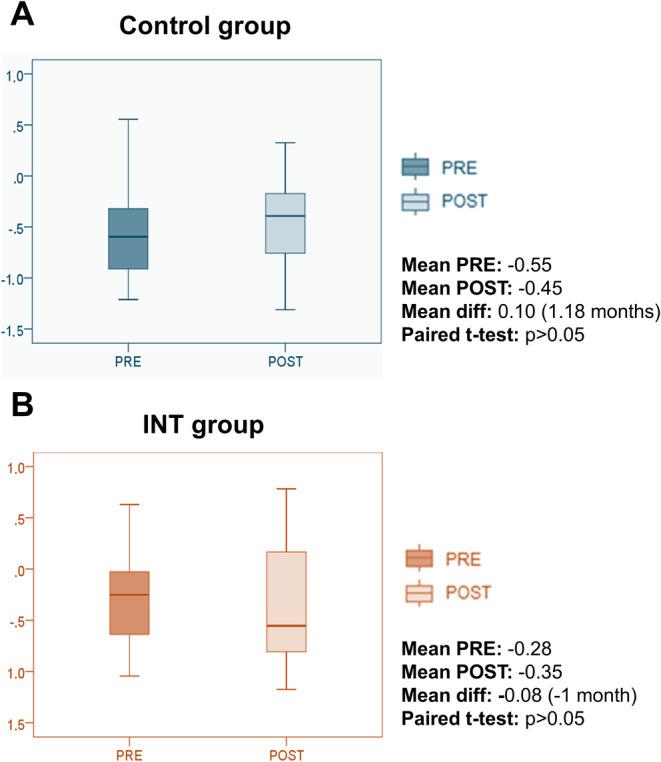
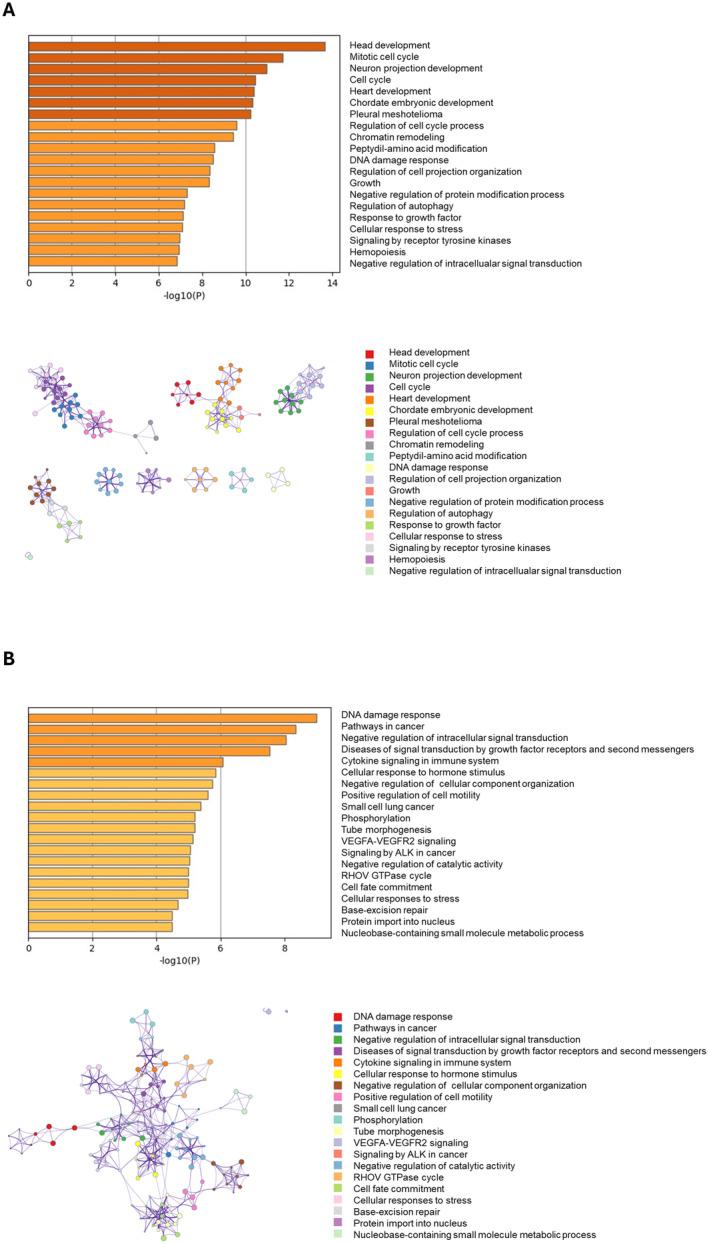
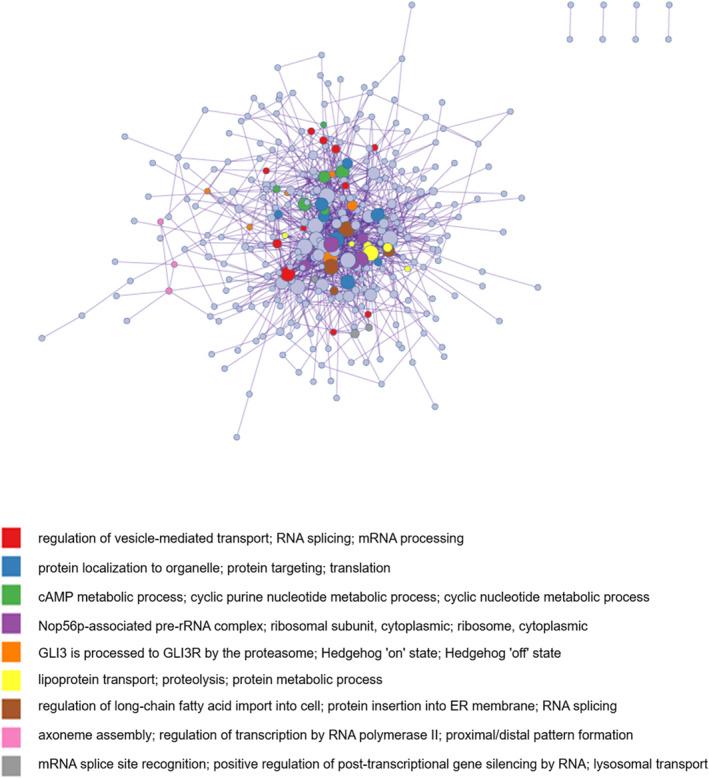
Physical exercise has been shown to induce epigenetic modifications with various health implications, directly affect DNA methylation (DNAm), as well as reverse the epigenetic age. Hence, we aimed to identify differential methylation changes and assess the epigenetic age in the saliva of 7-9-year-old school children following a 3-month integrated neuromuscular training (INT), as well as to explore if any of the methylation changes are in core genes. Core genes are defined as genes of high relevance and essential importance within the human genome. Forty children (17 boys and 23 girls) were recruited from schools in Girona, Spain, and allocated into control (N = 20) or INT (N = 20) group. The INT group performed a 3-month INT as a warm-up during the physical education (PE) classes, encompassing strength, coordination, dynamic stabilization, plyometrics, speed, and agility exercises, whereas the control group performed traditional warm-up activities, encompassing aerobic exercises that will prepare the cardiovascular system and increase the joint mobility for the upcoming effort during the class. Genome-wide DNAm analysis was performed with the Illumina 900 K microarray. Core genes were recognized based on the accomplishment of a rigorous and widely accepted 3-point criteria: participation in the enriched pathways, high connectivity (≥ 10), and target genes of key transcription factors. There were 1200 differentially methylated positions (DMPs) in the control group and 414 DMPs in the INT group (FDR < 0.05, p < 0.05, Aβ < |0.1|), suggesting a non-significant trend of epigenetic age acceleration in the control group (1.18 months, p > 0.05) and a non-significant 1-month decrease of the epigenetic age in the INT group (p > 0.05). The genes with DMPs in the control group showed low similarity between enriched pathways and low interconnectivity, encompassing distinct pathways, mostly development and growth-related. Additionally, no core genes were identified in the control group. Interestingly, the genes with DMPs in the INT group showed high similarity between enriched pathways and high interconnectivity, encompassing related pathways involving signaling mechanisms, as well as hormone and protein metabolism pathways. Moreover, 17 DMPs in the children from the INT group were in core genes. The main findings of the present study are suggesting an integrated response to the training stimulus in 7-9-year-old school children that performed a 3-month INT, including epigenetic modifications in 17 genes considered as core genes. Trial Registration: The study protocol was registered in the ISRCTN registry (ISRCTN16744821).
体育锻炼已被证明可诱导具有各种健康影响的表观遗传修饰,直接影响DNA甲基化(DNAm),并逆转表观遗传年龄。因此,我们旨在确定7至9岁学龄儿童在进行3个月综合神经肌肉训练(INT)后的唾液中甲基化变化差异,并评估表观遗传年龄,同时探索是否有任何甲基化变化发生在核心基因中。核心基因被定义为在人类基因组中具有高度相关性和至关重要性的基因。从西班牙赫罗纳的学校招募了40名儿童(17名男孩和23名女孩),并将其分为对照组(N = 20)或INT组(N = 20)。INT组在体育课期间进行为期3个月的INT作为热身运动,包括力量、协调、动态稳定、增强式训练、速度和敏捷性练习,而对照组进行传统的热身活动,包括有氧运动,为即将到来的课堂活动准备心血管系统并增加关节活动度。使用Illumina 900K微阵列进行全基因组DNAm分析。基于严格且广泛接受的三点标准来识别核心基因:参与富集途径、高连通性(≥ 10)以及关键转录因子的靶基因。对照组中有1200个差异甲基化位点(DMPs),INT组中有414个DMPs(FDR < 0.05,p < 0.05,Aβ < |0.1|),这表明对照组表观遗传年龄有加速的非显著趋势(1.18个月,p > 0.05),而INT组表观遗传年龄有非显著的1个月下降(p > 0.05)。对照组中具有DMPs的基因在富集途径之间显示出低相似性和低连通性,涵盖不同的途径,主要与发育和生长相关。此外,对照组中未鉴定出核心基因。有趣的是,INT组中具有DMPs的基因在富集途径之间显示出高相似性和高连通性,涵盖涉及信号机制以及激素和蛋白质代谢途径的相关途径。此外,INT组儿童中有17个DMPs位于核心基因中。本研究的主要发现表明,7至9岁进行了3个月INT的学龄儿童对训练刺激有综合反应,包括17个被视为核心基因的基因发生表观遗传修饰。试验注册:该研究方案已在ISRCTN注册中心(ISRCTN16744821)注册。

 Zotero 插件