
顺铂在调节肿瘤免疫微环境中的作用及其联合治疗策略:增强抗肿瘤疗效的新方法。
The role of cisplatin in modulating the tumor immune microenvironment and its combination therapy strategies: a new approach to enhance anti-tumor efficacy.
作者信息
Li Guandu, Che Xiangyu, Wang Shijin, Liu Dequan, Xie Deqian, Jiang Bowen, Zheng Zunwen, Zheng Xu, Wu Guangzhen
机构信息
Department of Urology, the First Affiliated Hospital of Dalian Medical University, Dalian, Liaoning, China.
Department of Cell Biology, College of Basic Medical Science, Dalian Medical University, Dalian, Liaoning, China.
出版信息
Ann Med. 2025 Dec;57(1):2447403. doi: 10.1080/07853890.2024.2447403. Epub 2025 Jan 6.
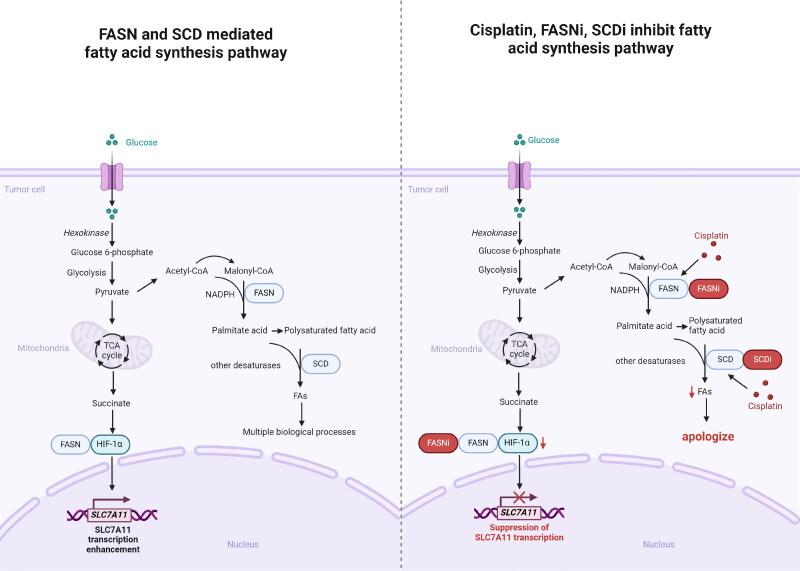
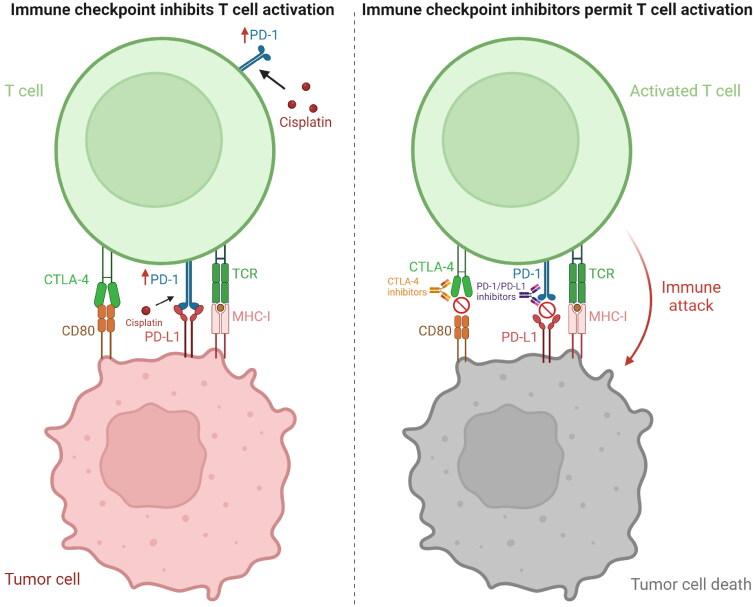
Cisplatin is a platinum-based drug that is frequently used to treat multiple tumors. The anti-tumor effect of cisplatin is closely related to the tumor immune microenvironment (TIME), which includes several immune cell types, such as the tumor-associated macrophages (TAMs), cytotoxic T-lymphocytes (CTLs), dendritic cells (DCs), myeloid-derived suppressor cells (MDSCs), regulatory T cells (Tregs), and natural killer (NK) cells. The interaction between these immune cells can promote tumor survival and chemoresistance, and decrease the efficacy of cisplatin monotherapy. Therefore, various combination treatment strategies have been devised to enhance patient responsiveness to cisplatin therapy. Cisplatin can augment anti-tumor immune responses in combination with immune checkpoint blockers (such as PD-1/PD-L1 or CTLA4 inhibitors), lipid metabolism disruptors (like FASN inhibitors and SCD inhibitors) and nanoparticles (NPs), resulting in better outcomes. Exploring the interaction between cisplatin and the TIME will help identify potential therapeutic targets for improving the treatment outcomes in cancer patients.
顺铂是一种常用的铂类药物,用于治疗多种肿瘤。顺铂的抗肿瘤作用与肿瘤免疫微环境(TIME)密切相关,肿瘤免疫微环境包括多种免疫细胞类型,如肿瘤相关巨噬细胞(TAM)、细胞毒性T淋巴细胞(CTL)、树突状细胞(DC)、髓源性抑制细胞(MDSC)、调节性T细胞(Treg)和自然杀伤(NK)细胞。这些免疫细胞之间的相互作用可促进肿瘤存活和化疗耐药,并降低顺铂单药治疗的疗效。因此,已设计出各种联合治疗策略,以提高患者对顺铂治疗的反应性。顺铂与免疫检查点阻断剂(如PD-1/PD-L1或CTLA4抑制剂)、脂质代谢破坏剂(如FASN抑制剂和SCD抑制剂)和纳米颗粒(NP)联合使用时,可增强抗肿瘤免疫反应,从而产生更好的治疗效果。探索顺铂与肿瘤免疫微环境之间的相互作用,将有助于确定改善癌症患者治疗效果的潜在治疗靶点。


 Zotero 插件