
用于药物检测的基于碳点的荧光传感器:当前创新、挑战及未来前景
Carbon dot-based fluorescent sensors for pharmaceutical detection: Current innovations, challenges, and future prospects.
作者信息
Lodha Sandesh R, Merchant Jesika G, Pillai Arya J, Gore Anil H, Patil Pravin O, Nangare Sopan N, Kalyankar Gajanan G, Shah Shailesh A, Shah Dinesh R, Patole Shashikant P
机构信息
Maliba Pharmacy College, Uka Tarsadia University, Maliba Campus, Gopal Vidyanagar, Bardoli, 394350, Gujarat, India.
Tarsadia Institute of Chemical Science, Uka Tarsadia University, Bardoli, 394350, Gujarat, India.
出版信息
Heliyon. 2024 Dec 6;10(24):e41020. doi: 10.1016/j.heliyon.2024.e41020. eCollection 2024 Dec 30.
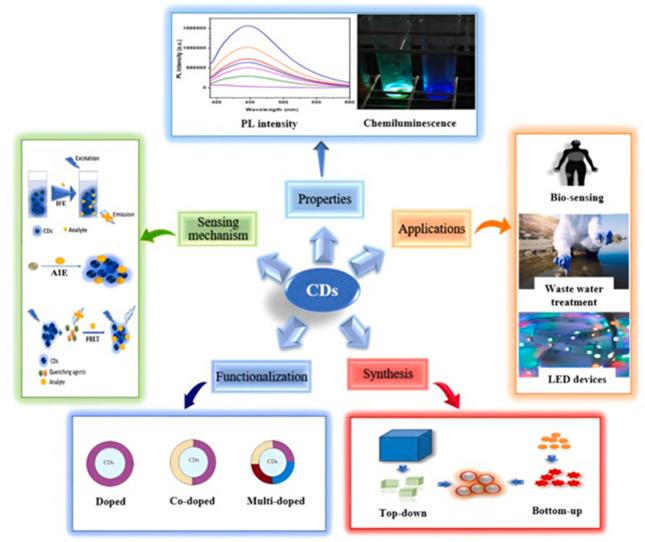
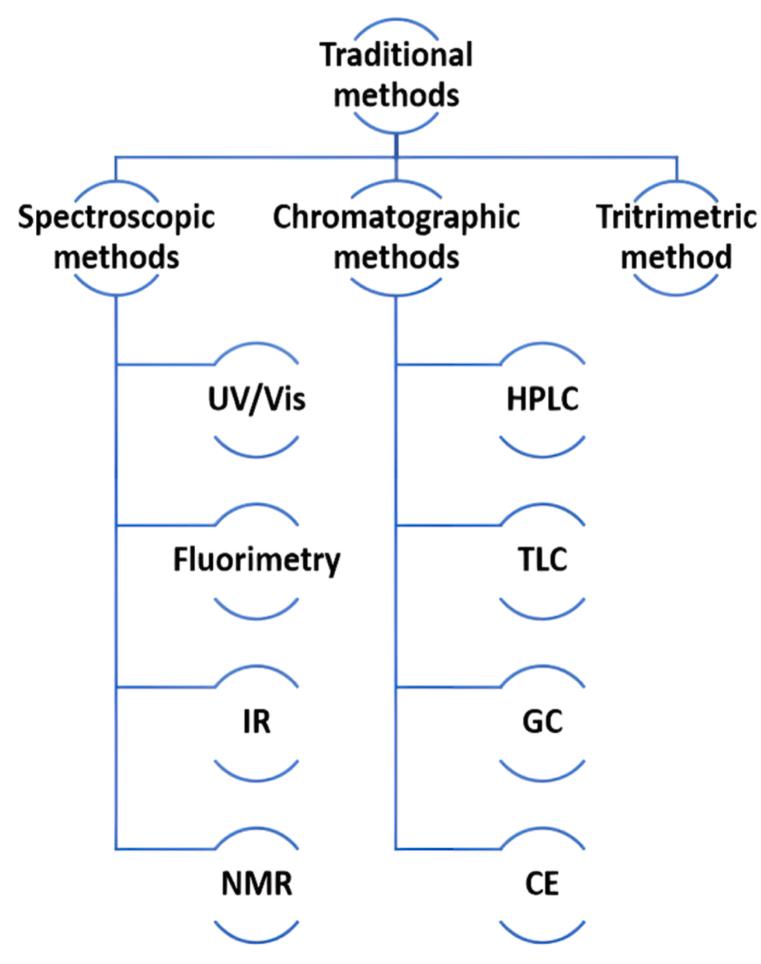
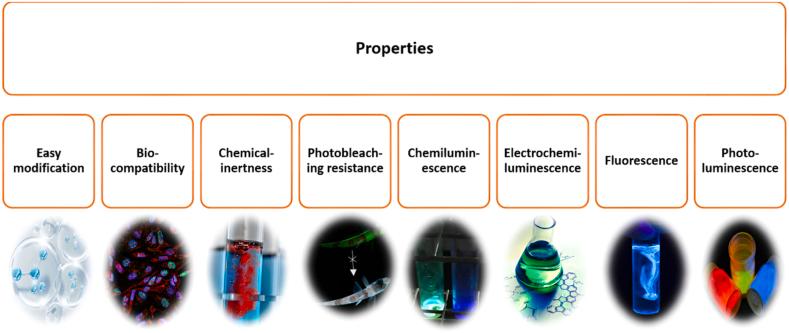
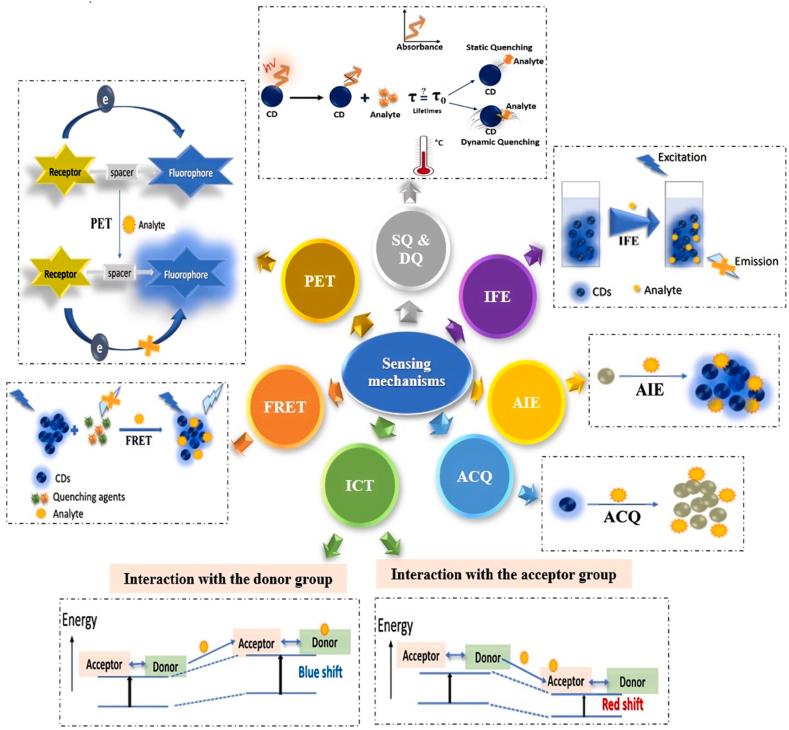
Environmental contamination by pharmaceuticals has become a matter of concern as they are released in sewage systems at trace levels, thus impacting biological systems. Increasing concerns about the low-level occurrence of pharmaceuticals in the environment demands sensitive and selective monitoring. Owing to their high sensitivity and specificity carbon dots (CDs) have emerged as suitable fluorescent sensors. This review discusses the current scenario of the status of pharmaceuticals in the environment, limitations associated with traditional techniques employed for their detection, and benefits offered by CDs like easy surface modification and tunable optical properties for sensing applications. Several representative means by which CDs interact with other molecules such as inner filter effect (IFE), dynamic quenching (DQ), static quenching (SQ), Förster resonance energy transfer (FRET), among others, are also discussed along with co-referencing fluorophores to design sensors. Based on developments described herein, CDs-based sensors can be expected to sense pharmaceuticals ranging from nanogram to picogram, target real-time industrial and spiked sample analysis, etc., which provides direction for future research.
药物对环境的污染已成为一个备受关注的问题,因为它们以痕量水平排放到污水系统中,从而影响生物系统。对环境中低水平药物的日益关注需要灵敏且具选择性的监测。由于具有高灵敏度和特异性,碳点已成为合适的荧光传感器。本综述讨论了环境中药物的现状、用于其检测的传统技术的局限性,以及碳点所具有的如易于表面修饰和可调节光学性质以用于传感应用等优点。还讨论了碳点与其他分子相互作用的几种代表性方式,如内滤效应(IFE)、动态猝灭(DQ)、静态猝灭(SQ)、福斯特共振能量转移(FRET)等,以及共同引用荧光团来设计传感器。基于本文所述的进展,预计基于碳点的传感器能够检测纳克至皮克级别的药物,针对实时工业和加标样品分析等,这为未来的研究提供了方向。




 Zotero 插件