
视网膜炎症与反应性米勒细胞:神经营养因子的释放及神经保护策略
Retinal Inflammation and Reactive Müller Cells: Neurotrophins' Release and Neuroprotective Strategies.
作者信息
Balzamino Bijorn Omar, Cacciamani Andrea, Dinice Lucia, Cecere Michela, Pesci Francesca Romana, Ripandelli Guido, Micera Alessandra
机构信息
Research and Development Laboratory for Biochemical, Molecular and Cellular Applications in Ophthalmological Science, IRCCS-Fondazione Bietti, via di Santo Stefano Rotondo 6, 00184 Rome, Italy.
Surgical Retina Research Unit, IRCCS-Fondazione Bietti, via di Santo Stefano Rotondo 6, 00184 Rome, Italy.
出版信息
Biology (Basel). 2024 Dec 9;13(12):1030. doi: 10.3390/biology13121030.
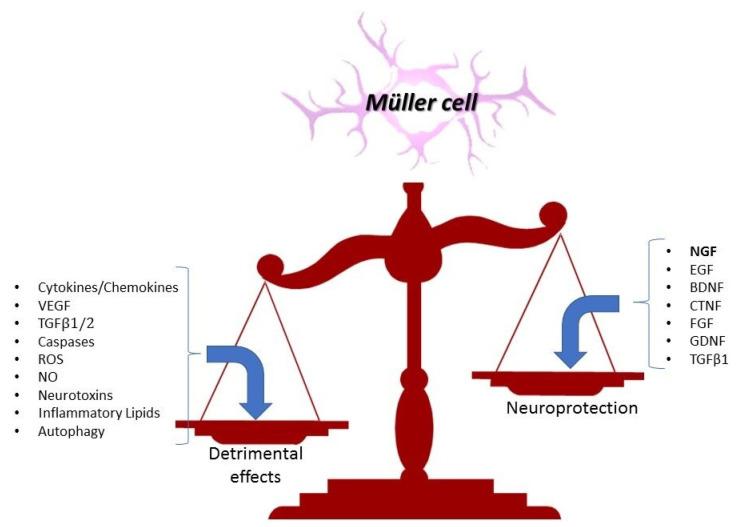
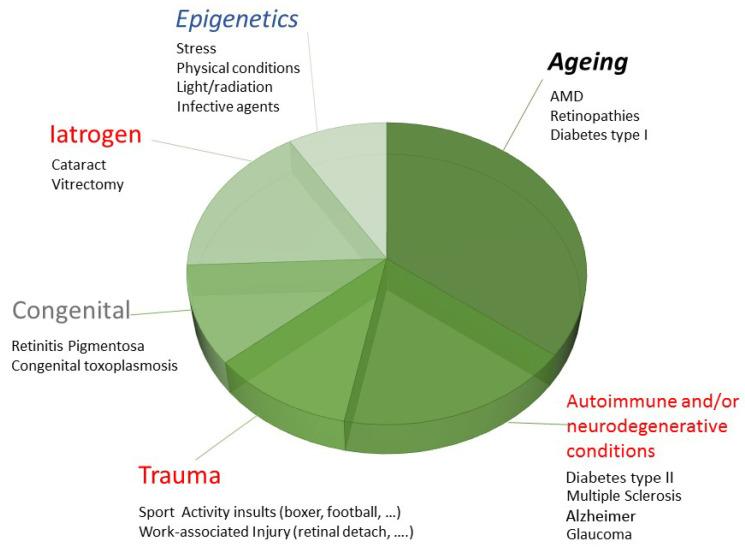
Millions of people worldwide suffer from retinal disorders. Retinal diseases require prompt attention to restore function or reduce progressive impairments. Genetics, epigenetics, life-styling/quality and external environmental factors may contribute to developing retinal diseases. In the physiological retina, some glial cell types sustain neuron activities by guaranteeing ion homeostasis and allowing effective interaction in synaptic transmission. Upon insults, glial cells interact with neuronal and the other non-neuronal retinal cells, at least in part counteracting the biomolecular changes that may trigger retinal complications and vision loss. Several epigenetic and oxidative stress mechanisms are quickly activated to release factors that in concert with growth, fibrogenic and angiogenic factors can influence the overall microenvironment and cell-to-cell response. Reactive Müller cells participate by secreting neurotrophic/growth/angiogenic factors, cytokines/chemokines, cytotoxic/stress molecules and neurogenic inflammation peptides. Any attempt to maintain/restore the physiological condition can be interrupted by perpetuating insults, vascular dysfunction and neurodegeneration. Herein, we critically revise the current knowledge on the cell-to-cell and cell-to-mediator interplay between Müller cells, astrocytes and microglia, with respect to pro-con modulators and neuroprotective/detrimental activities, as observed by using experimental models or analyzing ocular fluids, altogether contributing a new point of view to the field of research on precision medicine.
全球数以百万计的人患有视网膜疾病。视网膜疾病需要及时关注以恢复功能或减少进行性损伤。遗传、表观遗传、生活方式/质量和外部环境因素可能导致视网膜疾病的发生。在生理状态下的视网膜中,一些胶质细胞类型通过保证离子稳态并允许突触传递中的有效相互作用来维持神经元活动。受到损伤时,胶质细胞与神经元及其他非神经元视网膜细胞相互作用,至少部分抵消可能引发视网膜并发症和视力丧失的生物分子变化。几种表观遗传和氧化应激机制会迅速被激活,以释放与生长、纤维化和血管生成因子协同作用的因子,这些因子可影响整体微环境和细胞间反应。反应性米勒细胞通过分泌神经营养/生长/血管生成因子、细胞因子/趋化因子、细胞毒性/应激分子和神经源性炎症肽来参与其中。任何维持/恢复生理状态的尝试都可能因持续的损伤、血管功能障碍和神经退行性变而中断。在此,我们批判性地回顾了目前关于米勒细胞、星形胶质细胞和小胶质细胞之间细胞间及细胞与介质相互作用的知识,涉及促调节和神经保护/有害活动,这些是通过使用实验模型或分析眼内液观察到的,共同为精准医学研究领域提供了一个新的视角。

 Zotero 插件