
靶向非经典人类白细胞抗原作为癌症的新型治疗策略
Targeting of Non-Classical Human Leukocyte Antigens as Novel Therapeutic Strategies in Cancer.
作者信息
Benitez Fuentes Javier David, Bartolome Arcilla Jorge, Mohamed Mohamed Kauzar, Lopez de Sa Alfonso, de Luna Aguilar Alicia, Guevara-Hoyer Kissy, Ballestin Martinez Pablo, Lazaro Sanchez Antonio David, Carosella Edgardo D, Ocaña Alberto, Sánchez-Ramon Silvia
机构信息
Department of Medical Oncology, Elche General University Hospital, 03203 Elche, Spain.
Department of Medical Oncology, Hospital Clinico San Carlos, Instituto de Investigación Sanitaria San Carlos (IdISSC), 28040 Madrid, Spain.
出版信息
Cancers (Basel). 2024 Dec 22;16(24):4266. doi: 10.3390/cancers16244266.
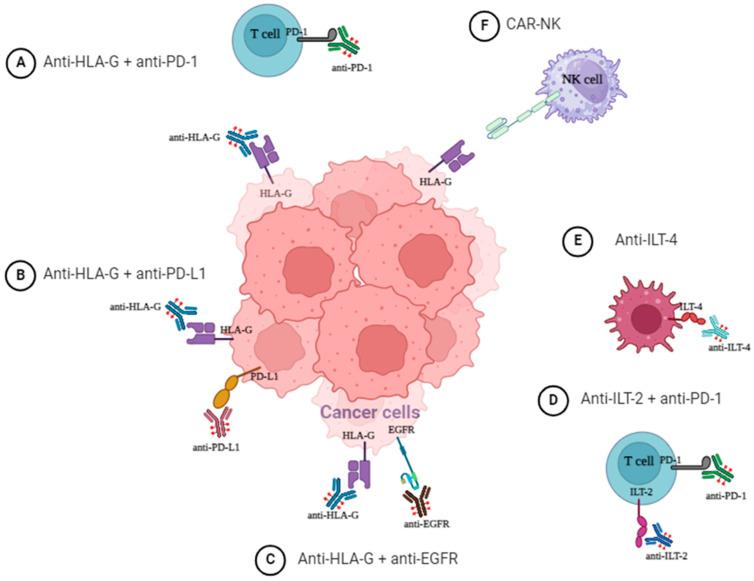
Human leukocyte antigens (HLAs) are essential regulators of immune responses against cancer, with classical HLAs well-documented for their role in tumor recognition and immune surveillance. In recent years, non-classical HLAs-including HLA-E, HLA-F, HLA-G, and HLA-H-have emerged as critical players in the immune landscape of cancer due to their diverse and less conventional functions in immune modulation. These molecules exhibit unique mechanisms that enable tumors to escape immune detection, promote tumor progression, and contribute to therapeutic resistance. This review provides a comprehensive examination of the current understanding of non-classical HLAs in solid cancers, focusing on their specific roles in shaping the tumor microenvironment and influencing immune responses. By analyzing how HLA-E, HLA-F, HLA-G, and HLA-H modulate interactions with immune cells, such as T cells, natural killer cells, and antigen-presenting cells, we highlight key pathways through which these molecules contribute to immune evasion and metastasis. Additionally, we review promising therapeutic strategies aimed at targeting non-classical HLAs, including emerging immunotherapies that could potentially enhance cancer treatment outcomes by reversing immune suppression within tumors. Understanding the influence of these non-classical HLAs in solid cancers may offer new insights into cancer immunology and may lead to the development of innovative and more effective immunotherapeutic approaches. This review underscores the importance of non-classical HLAs as potential therapeutic targets, providing a necessary foundation for future studies in the evolving field of cancer immunotherapy.
人类白细胞抗原(HLAs)是针对癌症的免疫反应的重要调节因子,经典的HLAs在肿瘤识别和免疫监视中的作用已有充分记载。近年来,非经典的HLAs——包括HLA-E、HLA-F、HLA-G和HLA-H——由于其在免疫调节中具有多样且不太传统的功能,已成为癌症免疫格局中的关键角色。这些分子展现出独特的机制,使肿瘤能够逃避免疫检测、促进肿瘤进展并导致治疗抗性。本综述全面审视了目前对实体癌中非经典HLAs的理解,重点关注它们在塑造肿瘤微环境和影响免疫反应方面的具体作用。通过分析HLA-E、HLA-F、HLA-G和HLA-H如何调节与免疫细胞(如T细胞、自然杀伤细胞和抗原呈递细胞)的相互作用,我们突出了这些分子促成免疫逃逸和转移的关键途径。此外,我们回顾了旨在靶向非经典HLAs的有前景的治疗策略,包括新兴的免疫疗法,这些疗法可能通过逆转肿瘤内的免疫抑制来潜在地提高癌症治疗效果。了解这些非经典HLAs在实体癌中的影响可能为癌症免疫学提供新的见解,并可能导致创新且更有效的免疫治疗方法的开发。本综述强调了非经典HLAs作为潜在治疗靶点的重要性,为癌症免疫治疗这一不断发展的领域中的未来研究提供了必要的基础。
 Zotero 插件