
感知到的不平等是否以及如何妨碍自评健康和心理健康方面的性别差异:来自中国综合社会调查和中国一项随机实验的证据
Gender Differences in Whether and How Perceived Inequality Hampers Self-Rated Health and Mental Health: Evidence from the Chinese General Social Survey and a Randomized Experiment in China.
作者信息
Chen Jacqueline Chen, Yu Chenling, Zhu Jianhua
机构信息
School of Public Administration, Zhejing University of Technology, Hangzhou 310023, China.
出版信息
Int J Environ Res Public Health. 2024 Dec 10;21(12):1640. doi: 10.3390/ijerph21121640.
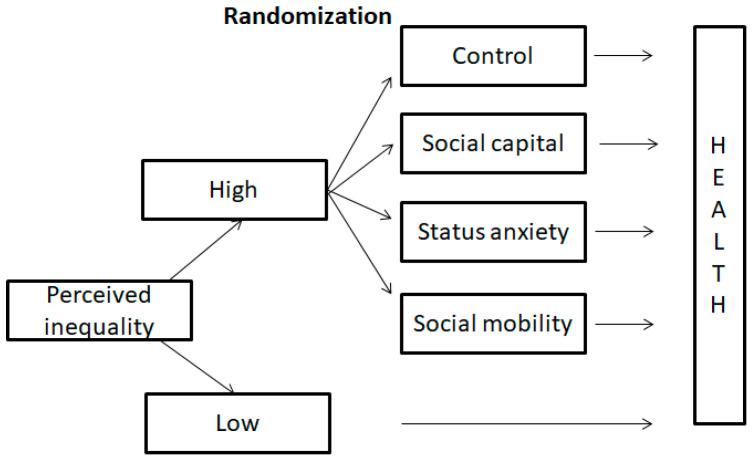
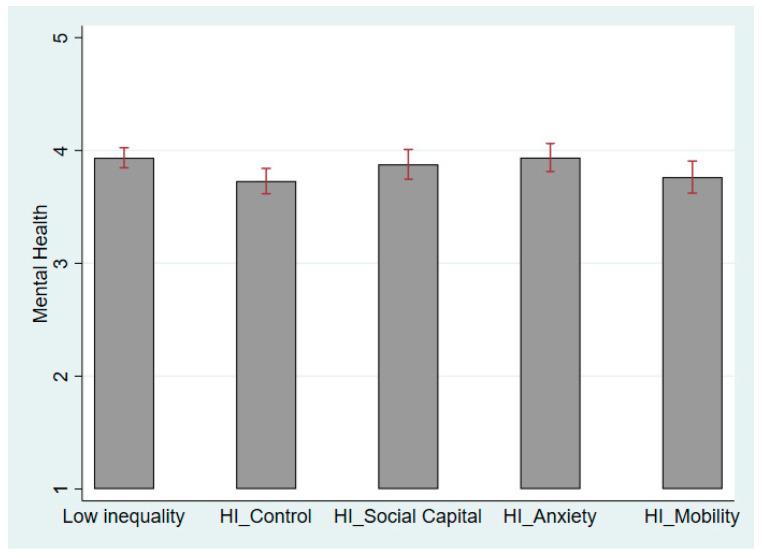
A substantial body of research has explored the relationship between inequality and health, yet little is known about the gender-specific effects and pathways through which inequality affects health outcomes. This study focuses on China, a country characterized by high income inequality and uneven health distribution across social groups. In Study 1, repeated nationally representative cross-sectional data from the Chinese General Social Survey is utilized (N = 3798 for 2017, N = 1578 for 2015, and N = 2827 for 2008), revealing that perceived inequality negatively affects self-rated health, particularly among women. The high level of perceived economic inequality substantially contributes to the gender health gap in China. Study 2 employs a randomized experiment (N = 3568) to show that perceived inequality affects the health of women and men differently, that is, social mobility framing accounts for the negative effect on women's mental well-being, whereas reducing status anxiety mainly benefits men's mental health. To advance research on economic inequality and health, this study investigates gender differences in whether and how perceived inequality affects health.
大量研究探讨了不平等与健康之间的关系,但对于不平等影响健康结果的性别特定效应和途径却知之甚少。本研究聚焦于中国,该国存在高收入不平等以及社会群体间健康分布不均的特点。在研究1中,使用了来自中国综合社会调查的具有全国代表性的重复横断面数据(2017年N = 3798,2015年N = 1578,2008年N = 2827),结果显示感知到的不平等对自评健康有负面影响,尤其是对女性而言。在中国,高水平的感知经济不平等在很大程度上导致了性别健康差距。研究2采用随机实验(N = 3568)表明,感知到的不平等对女性和男性健康的影响不同,也就是说,社会流动性框架解释了对女性心理健康的负面影响,而降低地位焦虑主要有益于男性的心理健康。为推进关于经济不平等与健康的研究,本研究调查了感知到的不平等是否以及如何影响健康方面的性别差异。


 Zotero 插件