
探索氧化石墨烯及氧化石墨烯-聚乙烯亚胺对人羊水来源干细胞生物学行为的潜在影响。
Exploring Potential Impact of Graphene Oxide and Graphene Oxide-Polyethylenimine on Biological Behavior of Human Amniotic Fluid-Derived Stem Cells.
作者信息
Di Credico Andrea, Gaggi Giulia, Bibbò Sandra, Pilato Serena, Moffa Samanta, Di Giacomo Stefano, Siani Gabriella, Fontana Antonella, Konstantinidou Fani, Donato Marisa, Stuppia Liborio, Gatta Valentina, Di Baldassarre Angela, Ghinassi Barbara
机构信息
Department of Medicine and Aging Sciences, "G. d'Annunzio" University of Chieti-Pescara, 66100 Chieti, Italy.
Cell Reprogramming and Differentiation Lab, "G. d'Annunzio University" of Chieti-Pescara, 66100 Chieti, Italy.
出版信息
Int J Mol Sci. 2024 Dec 19;25(24):13598. doi: 10.3390/ijms252413598.
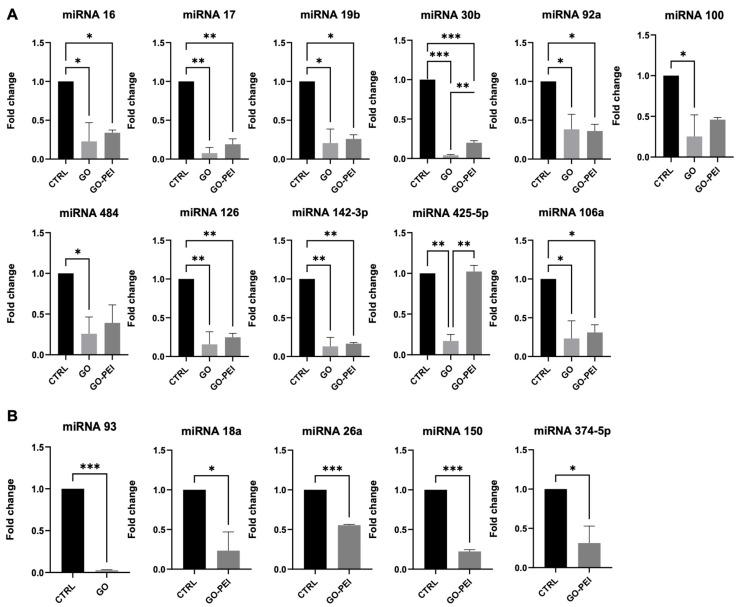
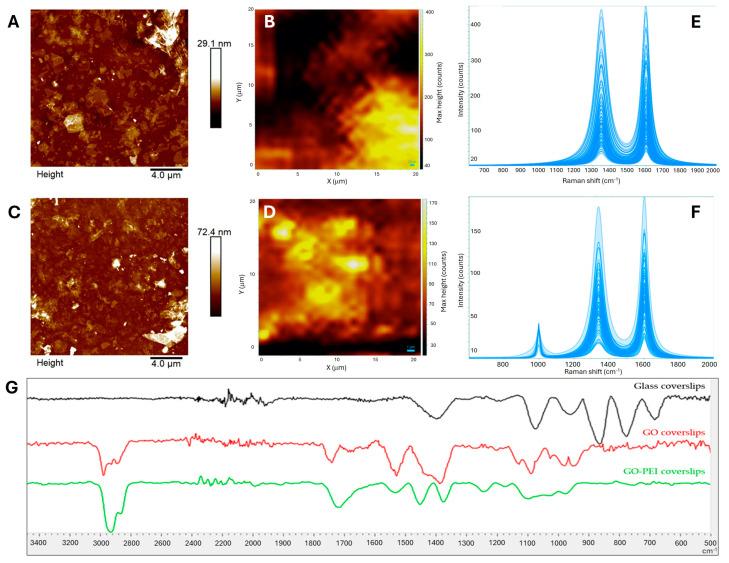
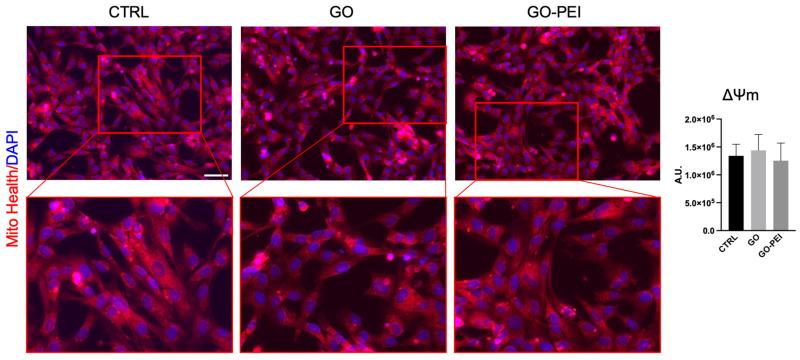
Regenerative medicine and tissue engineering aim to restore or replace impaired organs and tissues using cell transplantation supported by scaffolds. Recently scientists are focusing on developing new biomaterials that optimize cellular attachment, migration, proliferation, and differentiation. Nanoparticles, such as graphene oxide (GO), have emerged as versatile materials due to their high surface-to-volume ratio and unique chemical properties, such as electrical conductivity and flexibility. However, GO faces challenges such as cytotoxicity at high concentrations, a negative surface charge, and potential inflammatory responses; for these reasons, variations in synthesis have been studied. A GO derivative, Graphene Oxide-Polyethylenimine (GO-PEI), shows controlled porosity and structural definition, potentially offering better support for cell growth. Human amniotic fluid stem cells (hAFSCs) are a promising candidate for regenerative medicine due to their ability to differentiate into mesodermic and ectodermic lineages, their non-immunogenic nature, and ease of isolation. This study investigates the effects of GO and GO-PEI on hAFSCs, focusing on the effects on adhesion, proliferation, and metabolic features. Results indicate that GO-PEI restores cell proliferation and mitochondrial activity to control levels, with respect to GO that appeared less biocompatible. Both materials also influence the miRNA cargo of hAFSC-derived microvesicles, potentially influencing also cell-to-cell communication.
再生医学和组织工程旨在利用支架支持的细胞移植来修复或替换受损的器官和组织。最近,科学家们专注于开发新型生物材料,以优化细胞的附着、迁移、增殖和分化。纳米颗粒,如氧化石墨烯(GO),因其高比表面积和独特的化学性质(如导电性和柔韧性)而成为多功能材料。然而,GO面临着高浓度下的细胞毒性、负表面电荷和潜在的炎症反应等挑战;由于这些原因,人们对其合成方法的变化进行了研究。一种GO衍生物,氧化石墨烯-聚乙烯亚胺(GO-PEI),显示出可控的孔隙率和结构清晰度,可能为细胞生长提供更好的支持。人羊水干细胞(hAFSCs)因其能够分化为中胚层和外胚层谱系、非免疫原性以及易于分离等特性,成为再生医学中有前景的候选细胞。本研究调查了GO和GO-PEI对hAFSCs的影响,重点关注对细胞黏附、增殖和代谢特征的影响。结果表明,与生物相容性较差的GO相比,GO-PEI能将细胞增殖和线粒体活性恢复到对照水平。两种材料还会影响hAFSC衍生微泡中的miRNA含量,这也可能影响细胞间通讯。



 Zotero 插件