
绝经后代谢综合征中的棕榈酰乙醇胺:当前证据与临床展望
Palmitoylethanolamide in Postmenopausal Metabolic Syndrome: Current Evidence and Clinical Perspectives.
作者信息
Medoro Alessandro, Davinelli Sergio, Fogacci Federica, Alfieri Stefania, Tiso Domenico, Cicero Arrigo F G, Scapagnini Giovanni
机构信息
Department of Medicine and Health Sciences "V.Tiberio", University of Molise, 86100 Campobasso, Italy.
Hypertension and Cardiovascular Risk Research Unit, Medical and Surgical Sciences Department, Alma Mater Studiorum University of Bologna, 40138 Bologna, Italy.
出版信息
Nutrients. 2024 Dec 13;16(24):4313. doi: 10.3390/nu16244313.
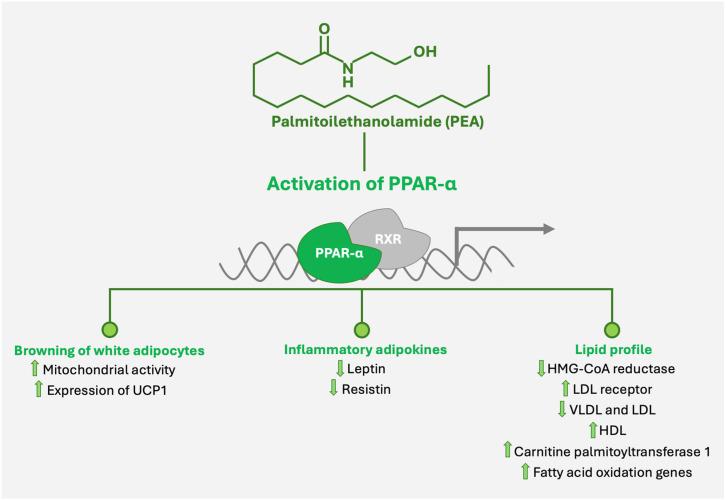
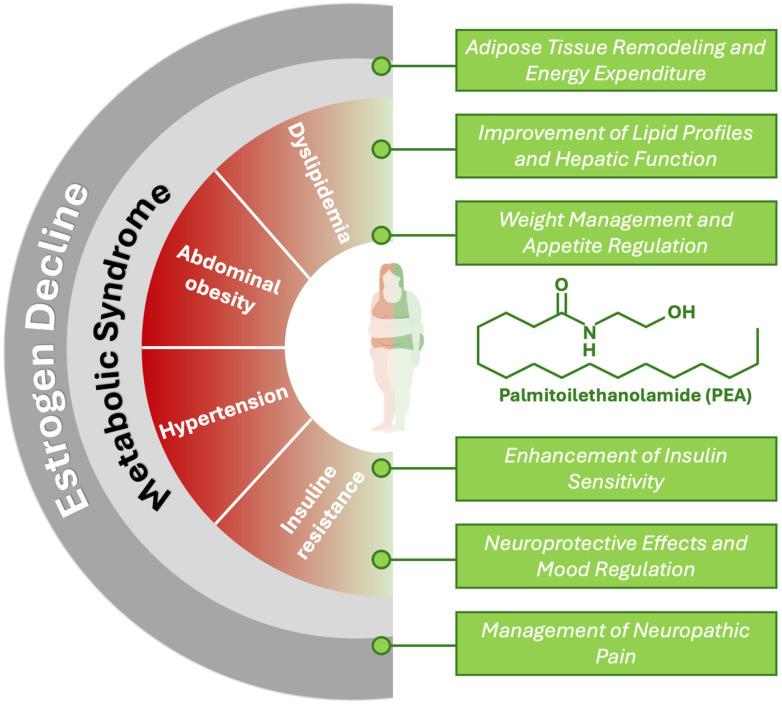
Menopause leads to a decline in estrogen levels, resulting in significant metabolic alterations that increase the risk of developing metabolic syndrome-a cluster of conditions including central obesity, insulin resistance, dyslipidemia, and hypertension. Traditional interventions such as hormone replacement therapy carry potential adverse effects, and lifestyle modifications alone may not suffice for all women. This review explores the potential role of palmitoylethanolamide (PEA), an endogenous fatty acid amide, in managing metabolic syndrome during the postmenopausal period. PEA primarily acts by activating peroxisome proliferator-activated receptor-alpha (PPAR-α), influencing lipid metabolism, energy homeostasis, and inflammation. Evidence indicates that PEA may promote the browning of white adipocytes, enhancing energy expenditure and reducing adiposity. It also improves lipid profiles by boosting fatty acid oxidation and decreasing lipid synthesis, potentially lowering low-density lipoprotein cholesterol and triglyceride levels while increasing high-density lipoprotein cholesterol. Additionally, the anti-inflammatory properties of PEA enhance insulin sensitivity by reducing pro-inflammatory cytokines that interfere with insulin signaling. PEA may aid in weight management by influencing appetite regulation and improving leptin sensitivity. Furthermore, its neuroprotective effects may address the mood disturbances and cognitive decline associated with menopause. Given these multifaceted biological activities and a favorable safety profile, PEA may represent a promising non-pharmacological supplement for managing metabolic syndrome in postmenopausal women. However, further large-scale clinical studies are necessary to establish its efficacy, optimal dosing, and long-term safety. If validated, PEA could become an integral part of strategies to improve metabolic and neuropsychological health outcomes in this population.
更年期会导致雌激素水平下降,从而引发显著的代谢改变,增加患代谢综合征的风险,代谢综合征是一组包括中心性肥胖、胰岛素抵抗、血脂异常和高血压的病症。传统干预措施如激素替代疗法存在潜在不良反应,仅靠生活方式改变对所有女性可能并不足够。本综述探讨了内源性脂肪酸酰胺棕榈酰乙醇胺(PEA)在绝经后时期管理代谢综合征方面的潜在作用。PEA主要通过激活过氧化物酶体增殖物激活受体α(PPAR-α)发挥作用,影响脂质代谢、能量平衡和炎症反应。有证据表明,PEA可能促进白色脂肪细胞棕色化,增加能量消耗并减少肥胖。它还通过促进脂肪酸氧化和减少脂质合成来改善血脂状况,可能降低低密度脂蛋白胆固醇和甘油三酯水平,同时提高高密度脂蛋白胆固醇水平。此外,PEA的抗炎特性通过减少干扰胰岛素信号传导的促炎细胞因子来增强胰岛素敏感性。PEA可能通过影响食欲调节和改善瘦素敏感性来辅助体重管理。此外,其神经保护作用可能解决与更年期相关的情绪障碍和认知衰退问题。鉴于这些多方面的生物学活性和良好的安全性,PEA可能是一种有前景的非药物补充剂,用于管理绝经后女性的代谢综合征。然而,需要进一步的大规模临床研究来确定其疗效、最佳剂量和长期安全性。如果得到验证,PEA可能成为改善该人群代谢和神经心理健康结果策略的一个组成部分。
 Zotero 插件