
在胎儿脐带血、胎盘和胎粪中检测到微塑料颗粒:中国南方九对母婴的初步研究
Microplastic Particles Detected in Fetal Cord Blood, Placenta, and Meconium: A Pilot Study of Nine Mother-Infant Pairs in South China.
作者信息
Zhu Minting, Li Xiaotian, Lin Wei, Zeng Dan, Yang Pan, Ni Weigui, Chen Zhijian, Lin Bingyi, Lai Lijuan, Ouyang Zhongai, Fan Jingjie
机构信息
School of Public Health, Southern Medical University, No. 1023-1063, Shatai South Road, Baiyun District, Guangzhou 510515, China.
Department of Preventive Healthcare, Shenzhen Maternity and Child Healthcare Hospital, Southern Medical University, No. 2004 Hongli Road, Futian District, Shenzhen 518028, China.
出版信息
Toxics. 2024 Nov 26;12(12):850. doi: 10.3390/toxics12120850.
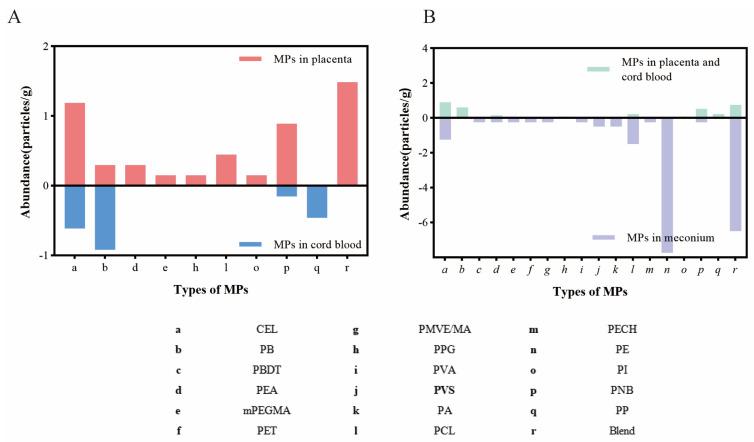
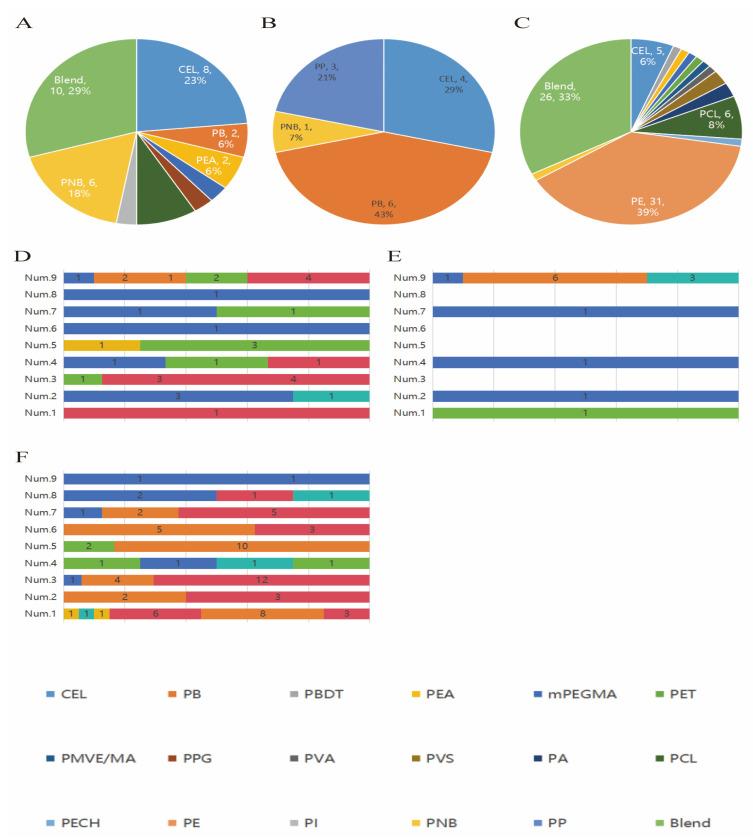
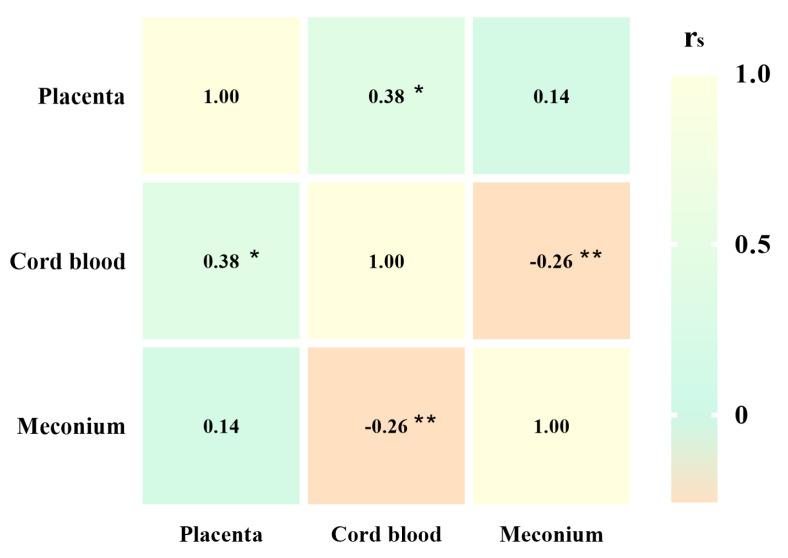
Microplastics (MPs) are emerging environmental pollutants. Pregnancy and infancy are sensitive windows for environmental exposure. However, few studies have investigated the presence of MPs in mother-infant pairs, or the exposure source. In this study, nine mother-infant pairs were recruited, and samples of placenta, cord blood, and meconium were collected. Information about the living environment and dietary habits were collected to determine the source of exposure during pregnancy. Micro-Raman spectroscopy was applied to identify MPs. In total, 9, 4, and 14 types of MPs were identified in the placenta, cord blood, and meconium samples, with particle counts of 34, 14, and 80, respectively. More than 80.47% of MPs detected in samples had a size of 100-400 μm. The abundance of MPs exhibited the order of meconium > placenta > cord blood (Hc = 14.959, < 0.01). We found that the abundance of MPs in meconium from women who drank tea ≥ 3 times/week during pregnancy was lower than in those who drank less ( = 0.048). Our study presents evidence of MPs transfer via the placenta-cord blood-meconium pathway. We also found that the habit of drinking tea among pregnant women might be related to the abundance of MPs in meconium.
微塑料(MPs)是新出现的环境污染物。孕期和婴儿期是环境暴露的敏感时期。然而,很少有研究调查母婴对中微塑料的存在情况或暴露源。在本研究中,招募了9对母婴对,并采集了胎盘、脐带血和胎粪样本。收集了有关生活环境和饮食习惯的信息,以确定孕期的暴露源。应用显微拉曼光谱法识别微塑料。在胎盘、脐带血和胎粪样本中分别总共识别出9种、4种和14种微塑料类型,颗粒计数分别为34、14和80。样本中检测到的微塑料超过80.47%的尺寸为100 - 400μm。微塑料的丰度呈现胎粪>胎盘>脐带血的顺序(Hc = 14.959,P < 0.01)。我们发现孕期每周喝茶≥3次的女性胎粪中微塑料的丰度低于喝茶较少的女性(P = 0.048)。我们的研究提供了微塑料通过胎盘 - 脐带血 - 胎粪途径转移的证据。我们还发现孕妇喝茶的习惯可能与胎粪中微塑料的丰度有关。

 Zotero 插件