
严重急性呼吸综合征冠状病毒2(SARS-CoV-2)变体刺突蛋白N端结构域(NTD)脂质筏界面处伊维菌素结合位点的表征与波动
Characterization and Fluctuations of an Ivermectin Binding Site at the Lipid Raft Interface of the N-Terminal Domain (NTD) of the Spike Protein of SARS-CoV-2 Variants.
作者信息
Lefebvre Marine, Chahinian Henri, La Scola Bernard, Fantini Jacques
机构信息
IHU Méditerranée Infection, 19-21 Boulevard Jean Moulin, 13005 Marseille, France.
Microbes Evolution Phylogeny and Infections (MEPHI), Aix-Marseille Université, 27 Boulevard Jean Moulin, 13005 Marseille, France.
出版信息
Viruses. 2024 Nov 27;16(12):1836. doi: 10.3390/v16121836.
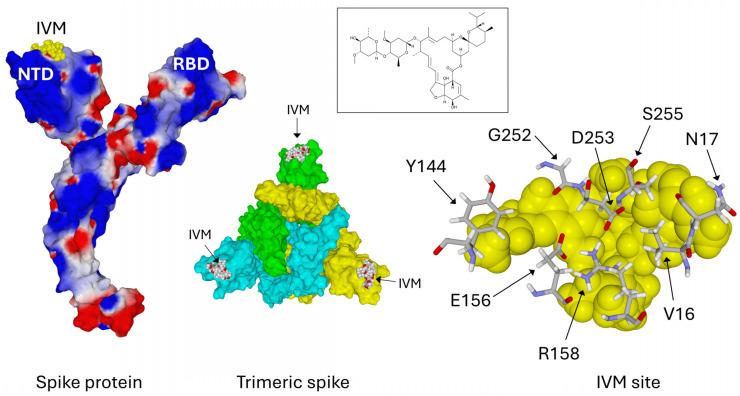
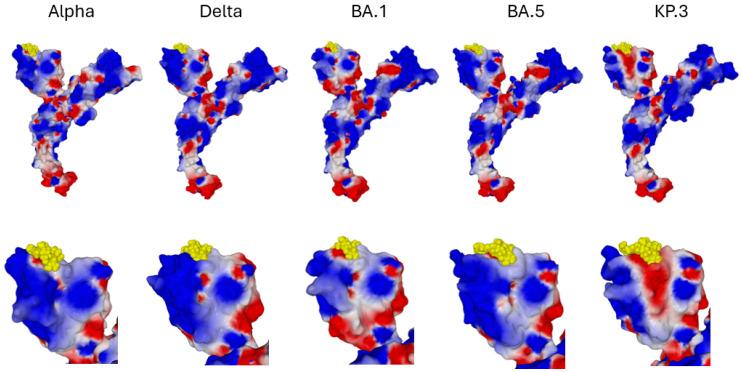
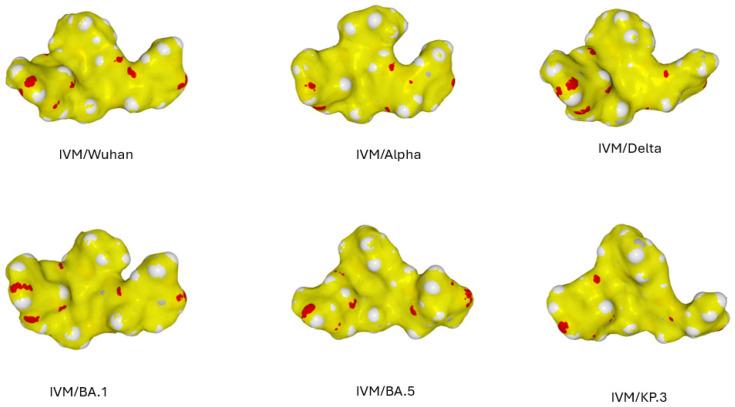
Most studies on the docking of ivermectin on the spike protein of SARS-CoV-2 concern the receptor binding domain (RBD) and, more precisely, the RBD interface recognized by the ACE2 receptor. The N-terminal domain (NTD), which controls the initial attachment of the virus to lipid raft gangliosides, has not received the attention it deserves. In this study, we combined molecular modeling and physicochemical approaches to analyze the mode of interaction of ivermectin with the interface of the NTD-facing lipid rafts of the host cell membrane. We characterize a binding area that presents point mutations and deletions in successive SARS-CoV-2 variants from the initial strain to omicron KP.3 circulating in many countries in 2024. We show that ivermectin has exceptional flexibility, allowing the drug to bind to the spike protein of all variants tested. The energy of interaction is specific to each variant, allowing a classification according to their affinity for ivermectin in the following ascending order: Omicron KP.3 < Delta < Omicron BA.5 < Alpha < Wuhan (B.1) < Omicron BA.1. The binding site of ivermectin is subject to important variations of the NTD, including the Y144 deletion. It overlaps with the ganglioside binding domain of the NTD, as demonstrated by docking and physicochemical studies. These results suggest a new mechanism of antiviral action for ivermectin based on competitive inhibition for initial virus attachment to lipid rafts. The current KP.3 variant is still recognized by ivermectin, although with an affinity slightly lower than the Wuhan strain.
大多数关于伊维菌素与严重急性呼吸综合征冠状病毒2(SARS-CoV-2)刺突蛋白对接的研究都集中在受体结合域(RBD),更确切地说,是血管紧张素转换酶2(ACE2)受体识别的RBD界面。控制病毒与脂筏神经节苷脂初始附着的N端结构域(NTD)尚未得到应有的关注。在本研究中,我们结合分子建模和物理化学方法,分析了伊维菌素与宿主细胞膜面向脂筏的NTD界面的相互作用模式。我们鉴定出一个结合区域,在2024年在许多国家传播的从初始毒株到奥密克戎KP.3的连续SARS-CoV-2变体中存在点突变和缺失。我们表明伊维菌素有非凡的灵活性,使该药物能够与所有测试变体的刺突蛋白结合。相互作用能对每个变体是特异性的,从而能够按照它们对伊维菌素的亲和力以以下升序进行分类:奥密克戎KP.3 < 德尔塔 < 奥密克戎BA.5 < 阿尔法 < 武汉(B.1)< 奥密克戎BA.1。伊维菌素的结合位点会受到NTD的重要变异影响,包括Y144缺失。如对接和物理化学研究所示,它与NTD的神经节苷脂结合域重叠。这些结果提示了伊维菌素基于对病毒初始附着于脂筏的竞争性抑制的一种新的抗病毒作用机制。当前的KP.3变体仍能被伊维菌素识别,尽管其亲和力略低于武汉毒株。




 Zotero 插件