
宿主细胞凝集素ASGR1和DC-SIGN与TMEM106B共同赋予携带刺突突变E484D的SARS-CoV-2假病毒对ACE2的独立性和对imdevimab的抗性。
Host cell lectins ASGR1 and DC-SIGN jointly with TMEM106B confer ACE2 independence and imdevimab resistance to SARS-CoV-2 pseudovirus with spike mutation E484D.
作者信息
Arora Prerna, Zhang Lu, Nehlmeier Inga, Kempf Amy, Graichen Luise, Kreitz Eike, Sidarovich Anzhalika, Rocha Cheila, Gärtner Sabine, Winkler Michael, Schulz Sebastian, Jäck Hans-Martin, Hoffmann Markus, Pöhlmann Stefan
机构信息
Infection Biology Unit, German Primate Centre - Leibniz Institute for Primate Research, Göttingen, Germany.
Faculty of Biology and Psychology, Georg-August-University Göttingen, Göttingen, Germany.
出版信息
J Virol. 2025 Feb 25;99(2):e0123024. doi: 10.1128/jvi.01230-24. Epub 2025 Jan 10.
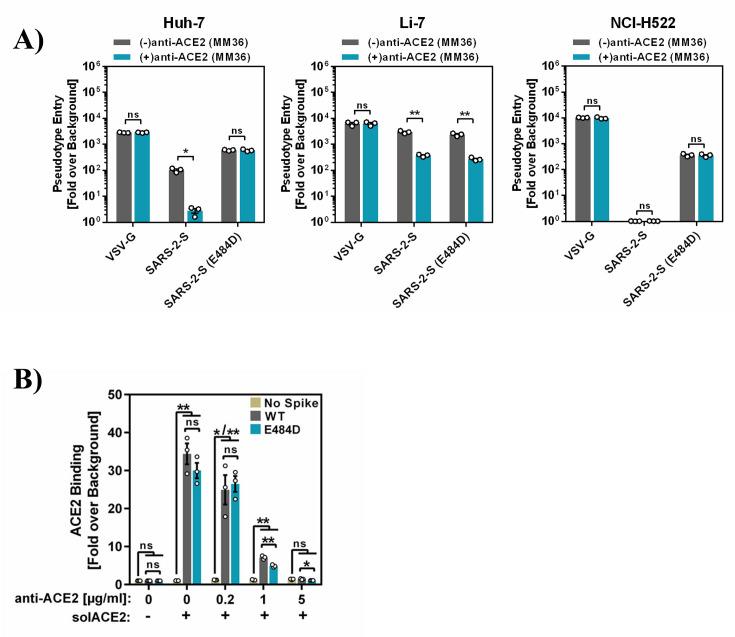
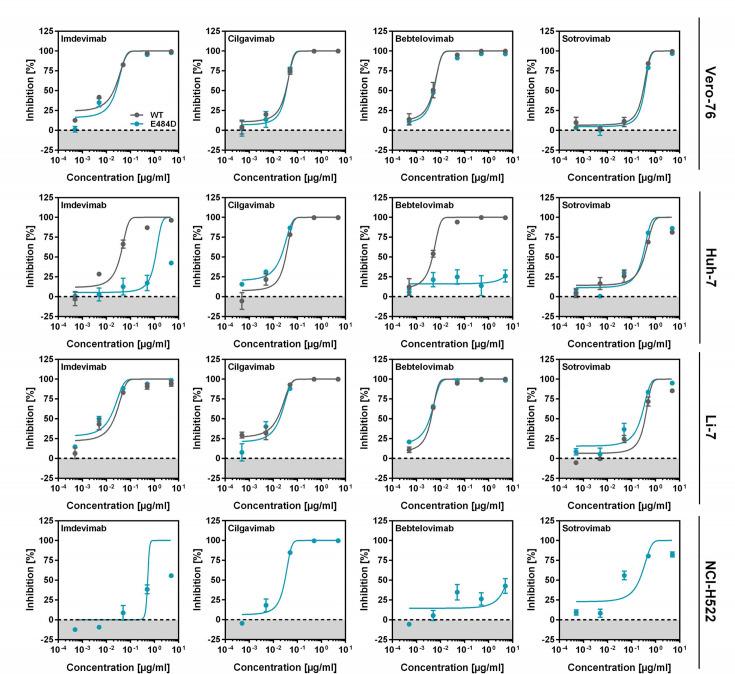
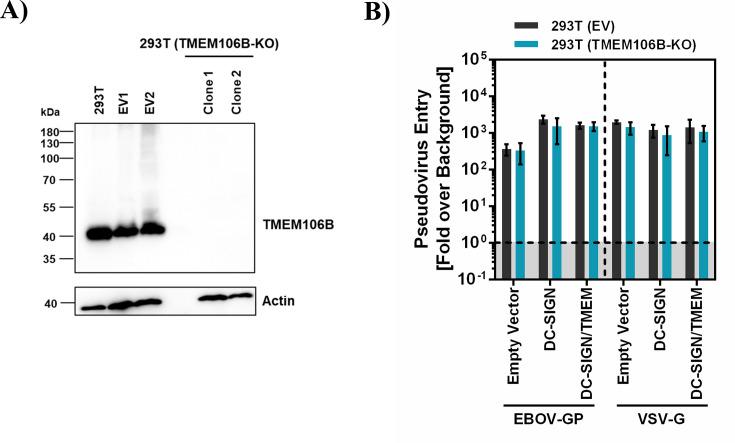
The naturally occurring mutation E484D in the spike (S) protein of severe acute respiratory syndrome coronavirus 2 (SARS-CoV-2) can render viral entry ACE2 independent and imdevimab resistant. Here, we investigated whether the cellular proteins ASGR1, DC-SIGN, and TMEM106B, which interact with the viral S protein, can contribute to these processes. Employing S protein-pseudotyped particles, we found that expression of ASGR1 or DC-SIGN jointly with TMEM106B allowed for robust entry of mutant E484D into otherwise non-susceptible cells, while this effect was not observed upon separate expression of the single proteins and upon infection with SARS-CoV-2 wild type (WT). Furthermore, expression of ASGR1 or DC-SIGN conferred ACE2 independence and imdevimab resistance to entry of mutant E484D but not WT, and entry under those conditions was dependent on endogenous TMEM106B. These results suggest that engagement of certain cellular lectins can direct SARS-CoV-2 mutant E484D to an ACE2-independent, TMEM106B-dependent entry pathway that is not inhibited by imdevimab.IMPORTANCEThe interaction of severe acute respiratory syndrome coronavirus 2 (SARS-CoV-2) spike protein with the ACE2 receptor determines the viral cell tropism and is the key target of the neutralizing antibody response. Here, we show that SARS-CoV-2 with a single, naturally occurring mutation in the spike protein, E484D, can use the cellular lectins ASGR1 and DC-SIGN in conjunction with TMEM106B for ACE2-independent entry and evasion of therapeutic antibodies. These results suggest that engagement of cellular lectins might modulate target cell choice of SARS-CoV-2 and might allow evasion of certain neutralizing antibodies.
严重急性呼吸综合征冠状病毒2(SARS-CoV-2)刺突(S)蛋白中自然发生的E484D突变可使病毒进入不依赖血管紧张素转换酶2(ACE2)且对依美维单抗耐药。在此,我们研究了与病毒S蛋白相互作用的细胞蛋白去唾液酸糖蛋白受体1(ASGR1)、树突状细胞特异性细胞间黏附分子3抓取非整合素(DC-SIGN)和跨膜蛋白106B(TMEM106B)是否参与这些过程。利用S蛋白假型颗粒,我们发现ASGR1或DC-SIGN与TMEM106B共同表达时,可使突变型E484D高效进入原本不易感的细胞,而单独表达单个蛋白以及感染SARS-CoV-2野生型(WT)时未观察到这种效应。此外,ASGR1或DC-SIGN的表达赋予了突变型E而不是WT的484D进入细胞不依赖ACE2以及对依美维单抗耐药的特性,且在这些条件下的进入依赖内源性TMEM106B。这些结果表明,某些细胞凝集素的参与可将SARS-CoV-2突变型E484D导向一条不依赖ACE2、依赖TMEM106B且不受依美维单抗抑制的进入途径。
重要性
严重急性呼吸综合征冠状病毒2(SARS-CoV-2)刺突蛋白与ACE2受体的相互作用决定了病毒细胞嗜性,并且是中和抗体反应的关键靶点。在此,我们表明,刺突蛋白中具有单个自然发生突变E484D的SARS-CoV-2可利用细胞凝集素ASGR1和DC-SIGN结合TMEM106B进行不依赖ACE2的进入并逃避治疗性抗体。这些结果表明,细胞凝集素的参与可能会调节SARS-CoV-2的靶细胞选择,并可能使其逃避某些中和抗体。




 Zotero 插件