
美国呼吸道合胞病毒感染(RSV)确诊婴儿的住院服务利用情况。
Inpatient service utilization amongst infants diagnosed with Respiratory Syncytial Virus infection (RSV) in the United States.
作者信息
Gantenberg Jason R, Thompson Kathryn D, van Aalst Robertus, Smith David M, Richards Megan, Nelson Christopher B, La Via William V, Chaves Sandra S, Bengtson Angela M, Savitz David A, Zullo Andrew R
机构信息
Department of Health Services, Policy and Practice, Brown University School of Public Health, Providence, RI, United States of America.
Department of Epidemiology, Brown University School of Public Health, Providence, RI, United States of America.
出版信息
PLoS One. 2025 Jan 13;20(1):e0317367. doi: 10.1371/journal.pone.0317367. eCollection 2025.
INTRODUCTION
Respiratory syncytial virus (RSV) is the leading cause of hospitalization among US infants. Characterizing service utilization during infant RSV hospitalizations may provide important information for prioritizing resources and interventions.
OBJECTIVE
The objective of this study was to describe the procedures and services received by infants hospitalized during their first RSV episode in their first RSV season, in addition to what proportion of infants died during this hospitalization.
METHODS
In this retrospective observational study, we analyzed three different administrative claims datasets to examine healthcare service utilization during RSV hospitalizations among infants. The study population included infants born between July 2016 and February 2020 who experienced an RSV episode during their first RSV season and had an associated inpatient hospitalization. We stratified infants into three comorbidity groups: healthy term, palivizumab-eligible, and other comorbidities. Outcomes included extracorporeal membrane oxygenation, supplemental oxygen use (in-hospital and post-discharge), mechanical ventilation (invasive and non-invasive), chest imaging, infant mortality, length of inpatient stay, intensive care unit (ICU) admission, and number of days in the ICU.
RESULTS
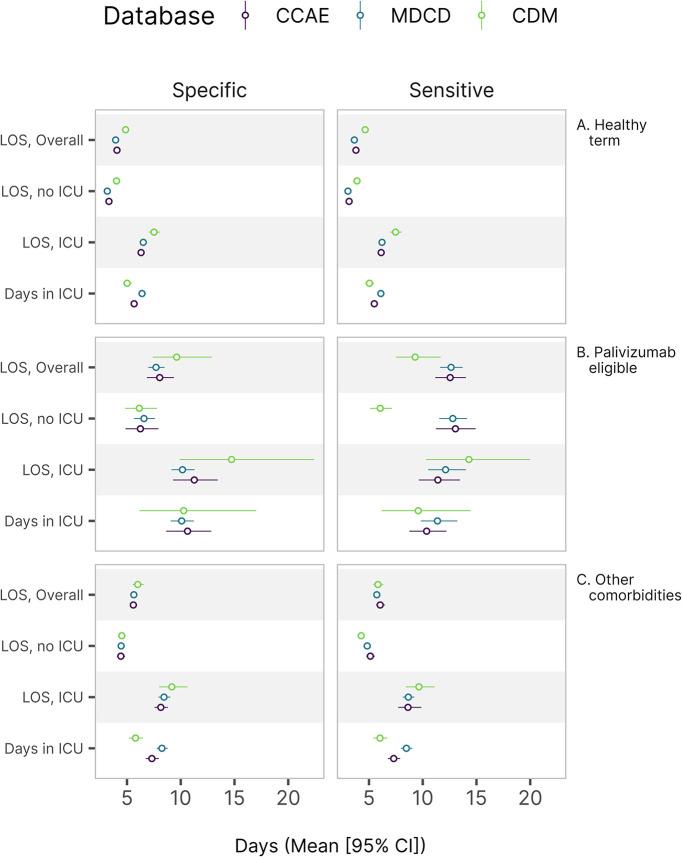
Chest imaging was the most frequently administered procedure during RSV-associated hospitalizations, with approximately 34-38% of infants receiving it. Around one-quarter of infants were admitted to the ICU during their first RSV hospitalization. Median lengths of stay in the hospital were 3-4 days, extending to 4-6 days in the presence of ICU admission. Palivizumab-eligible infants had higher utilization of healthcare services and spent more time in the hospital or ICU compared to healthy infants or those with other comorbidities.
CONCLUSIONS
This study provides insights into the utilization of healthcare services during RSV hospitalizations among infants. Understanding service utilization patterns can aid in improved management and resource allocation for infants in the United States, ultimately contributing to better outcomes and reduced healthcare costs overall. However, likely under-ascertainment of ventilation and oxygen-related services in insurance claims remains an impediment to studying these outcomes.
引言
呼吸道合胞病毒(RSV)是美国婴儿住院治疗的主要原因。了解婴儿RSV住院期间的服务利用情况可为资源和干预措施的优先排序提供重要信息。
目的
本研究的目的是描述婴儿在首个RSV季节首次RSV发作住院期间接受的程序和服务,以及在此住院期间死亡的婴儿比例。
方法
在这项回顾性观察研究中,我们分析了三个不同的行政索赔数据集,以检查婴儿RSV住院期间的医疗服务利用情况。研究人群包括2016年7月至2020年2月出生、在首个RSV季节经历过RSV发作并伴有住院治疗的婴儿。我们将婴儿分为三个合并症组:健康足月儿、符合帕利珠单抗治疗条件者和其他合并症患者。结局指标包括体外膜肺氧合、补充氧气使用(住院期间和出院后)、机械通气(有创和无创)、胸部成像、婴儿死亡率、住院时间、重症监护病房(ICU)入住情况以及在ICU的天数。
结果
胸部成像是RSV相关住院期间最常实施的程序,约34%-38%的婴儿接受了该检查。约四分之一的婴儿在首次RSV住院期间入住了ICU。住院时间中位数为3-4天,若入住ICU则延长至4-6天。与健康婴儿或有其他合并症的婴儿相比,符合帕利珠单抗治疗条件的婴儿医疗服务利用率更高,在医院或ICU的停留时间更长。
结论
本研究深入了解了婴儿RSV住院期间的医疗服务利用情况。了解服务利用模式有助于改善美国婴儿的管理和资源分配,最终带来更好的结局并降低总体医疗成本。然而,保险索赔中通气和氧气相关服务可能存在报告不足的情况,这仍然是研究这些结局的一个障碍。

 Zotero 插件