
生物金属离子及其衍生物:癌症免疫治疗的新方向。
Biometallic ions and derivatives: a new direction for cancer immunotherapy.
作者信息
Zhao Lin, Gui Yajun, Cai Jing, Deng Xiangying
机构信息
Department of Pathology, The Second Xiangya Hospital, Central South University, Changsha, Hunan, 41001l, China.
Hunan Clinical Medical Research Center for Cancer Pathogenic Genes Testing and Diagnosis, Changsha, Human, 410011, China.
出版信息
Mol Cancer. 2025 Jan 15;24(1):17. doi: 10.1186/s12943-025-02225-w.
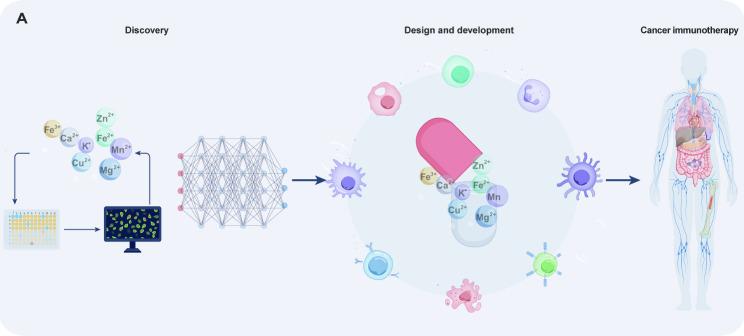
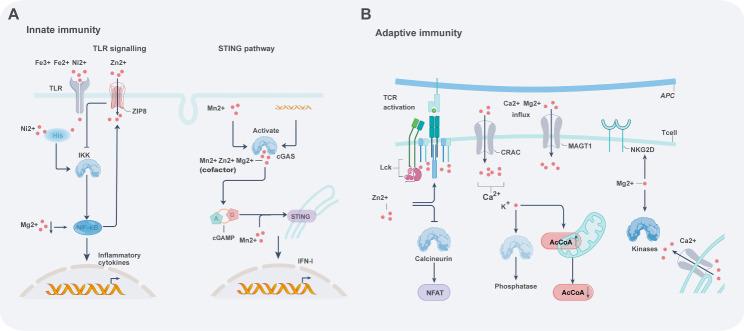
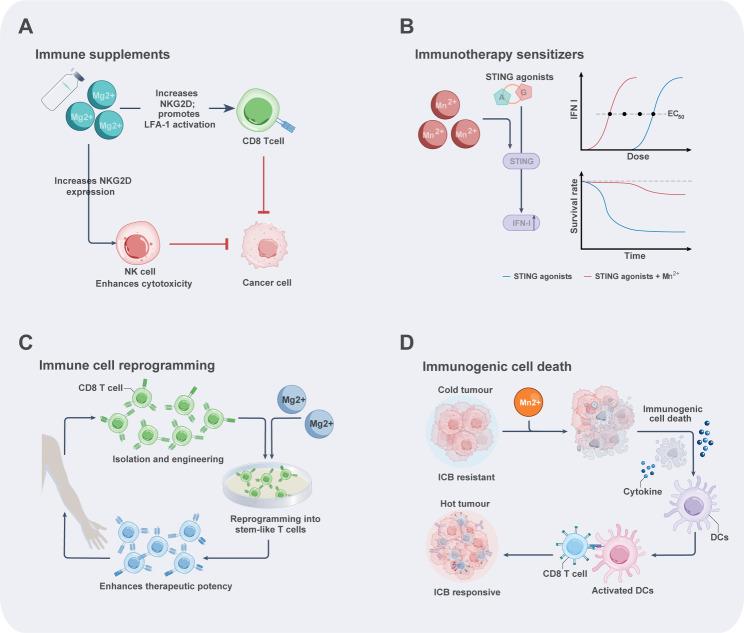
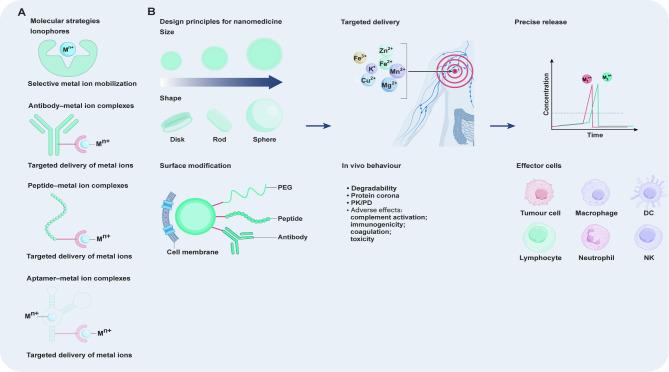
Biometallic ions play a crucial role in regulating the immune system. In recent years, cancer immunotherapy has become a breakthrough in cancer treatment, achieving good efficacy in a wide range of cancers with its specificity and durability advantages. However, existing therapies still face challenges, such as immune tolerance and immune escape. Biometallic ions (e.g. zinc, copper, magnesium, manganese, etc.) can assist in enhancing the efficacy of immunotherapy through the activation of immune cells, enhancement of tumor antigen presentation, and improvement of the tumor microenvironment. In addition, biometallic ions and derivatives can directly inhibit tumor cell progression and offer the possibility of effectively overcoming the limitations of current cancer immunotherapy by promoting immune responses and reducing immunosuppressive signals. This review explores the role and potential application prospects of biometallic ions in cancer immunotherapy, providing new ideas for future clinical application of metal ions as part of cancer immunotherapy and helping to guide the development of more effective and safe therapeutic regimens.
生物金属离子在调节免疫系统中起着至关重要的作用。近年来,癌症免疫疗法已成为癌症治疗的一项突破,凭借其特异性和持久性优势在多种癌症中取得了良好疗效。然而,现有疗法仍面临挑战,如免疫耐受和免疫逃逸。生物金属离子(如锌、铜、镁、锰等)可通过激活免疫细胞、增强肿瘤抗原呈递以及改善肿瘤微环境来协助提高免疫疗法的疗效。此外,生物金属离子及其衍生物可直接抑制肿瘤细胞进展,并通过促进免疫反应和减少免疫抑制信号为有效克服当前癌症免疫疗法的局限性提供可能性。本综述探讨了生物金属离子在癌症免疫疗法中的作用和潜在应用前景,为金属离子作为癌症免疫疗法的一部分在未来临床应用中提供新思路,并有助于指导开发更有效、更安全的治疗方案。
 Zotero 插件