
免疫检查点抑制剂的耐药机制:最新见解
Resistance mechanisms to immune checkpoint inhibitors: updated insights.
作者信息
Alsaafeen Besan H, Ali Bassam R, Elkord Eyad
机构信息
Department of Genetics and Genomics, College of Medicine and Health Sciences, United Arab Emirates University, P.O. Box: 15551, Al-Ain, United Arab Emirates.
ASPIRE Precision Medicine Research Institute Abu Dhabi, United Arab Emirates University, Al Ain, United Arab Emirates.
出版信息
Mol Cancer. 2025 Jan 15;24(1):20. doi: 10.1186/s12943-024-02212-7.
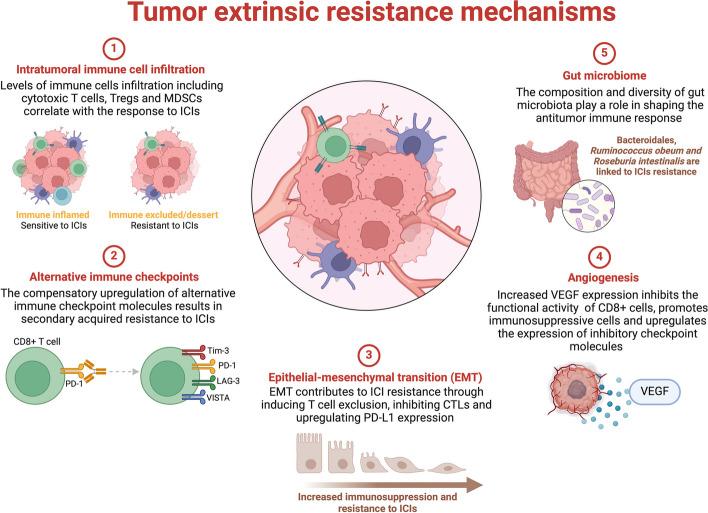
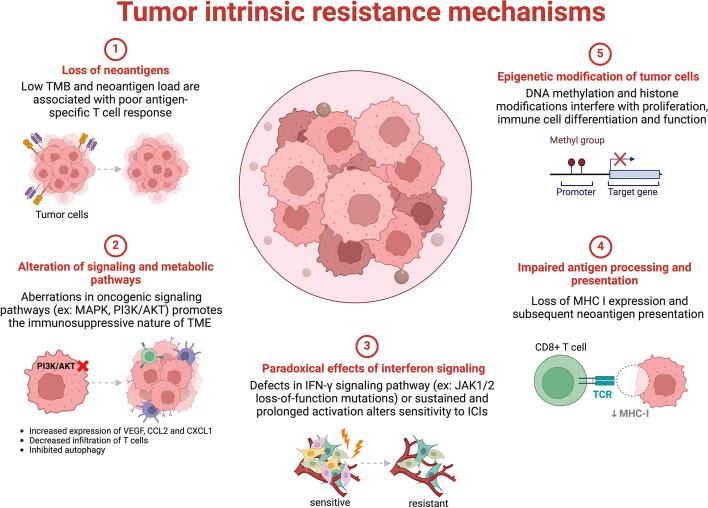
The last decade has witnessed unprecedented succusses with the use of immune checkpoint inhibitors in treating cancer. Nevertheless, the proportion of patients who respond favorably to the treatment remained rather modest, partially due to treatment resistance. This has fueled a wave of research into potential mechanisms of resistance to immune checkpoint inhibitors which can be classified into primary resistance or acquired resistance after an initial response. In the current review, we summarize what is known so far about the mechanisms of resistance in terms of being tumor-intrinsic or tumor-extrinsic taking into account the multimodal crosstalk between the tumor, immune system compartment and other host-related factors.
在过去十年中,免疫检查点抑制剂在癌症治疗中的应用取得了前所未有的成功。然而,对该治疗反应良好的患者比例仍然相当低,部分原因是治疗耐药性。这引发了一波对免疫检查点抑制剂耐药潜在机制的研究热潮,这些机制可分为原发性耐药或初始反应后的获得性耐药。在本综述中,我们考虑到肿瘤、免疫系统区室和其他宿主相关因素之间的多模式相互作用,总结了目前已知的关于肿瘤内在或外在耐药机制的情况。
 Zotero 插件