
一项采用供体肝移植来源的富含自然杀伤(NK)细胞的免疫细胞进行过继性免疫治疗以预防肝移植后严重感染的I/II期研究。
A phase I/II study of adoptive immunotherapy using donor liver graft-derived NK cell-enriched immune cells to prevent severe infection after liver transplantation.
作者信息
Ohira Masahiro, Imaoka Yuki, Sato Koki, Imaoka Koki, Bekki Tomoaki, Yano Takuya, Nakano Ryosuke, Sakai Hiroshi, Kuroda Shintaro, Tahara Hiroyuki, Ide Kentaro, Kobayashi Tsuyoshi, Tanaka Yuka, Tanaka Junko, Ohdan Hideki
机构信息
Department of Gastroenterological and Transplant Surgery, Graduate School of Biomedical and Health Sciences, Hiroshima University, Hiroshima, Japan.
Medical Center for Translational and Clinical Research, Hiroshima University Hospital, Hiroshima, Japan.
出版信息
PLoS One. 2025 Jan 16;20(1):e0313102. doi: 10.1371/journal.pone.0313102. eCollection 2025.
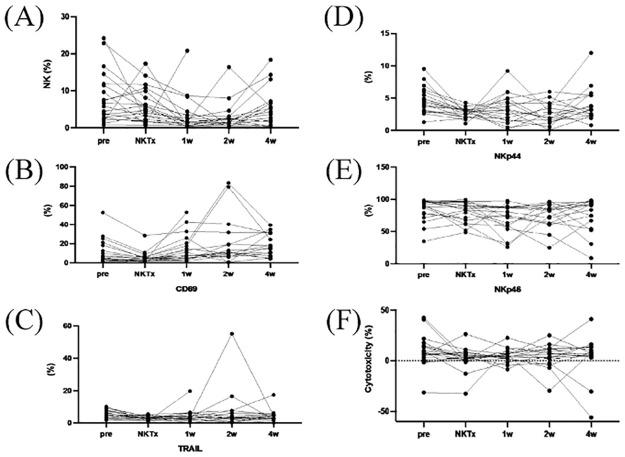
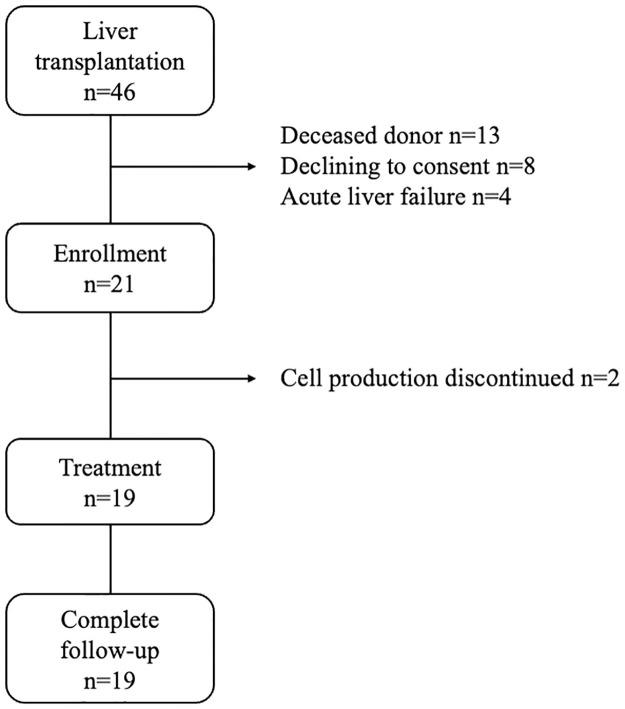
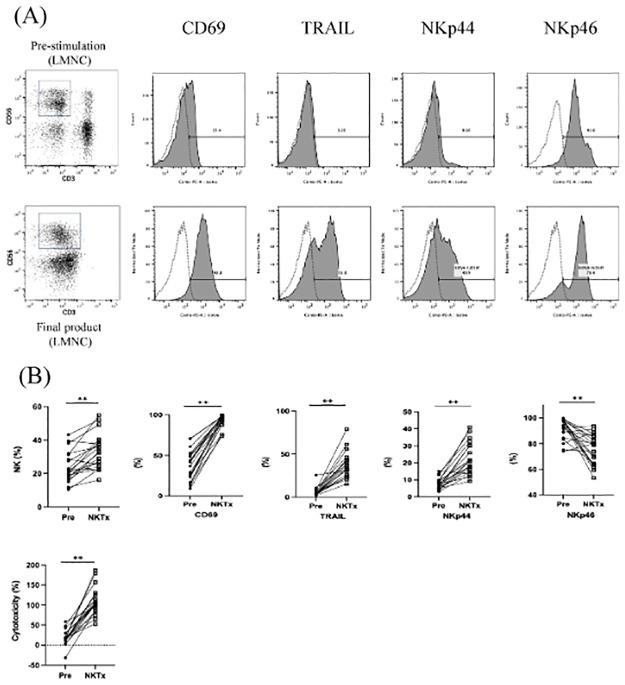
Bloodstream infections (BSIs) are significant postoperative complications associated with high mortality rates after liver transplantation (LT). Natural killer (NK) cells, which are key components of the innate immune system, have demonstrated potential to combat both infections and cancer. The use of activated NK cells to mitigate post-LT infections, particularly BSIs, has attracted considerable interest. We conducted a single-arm Phase I/II clinical trial to evaluate the safety and efficacy of transfusing donor liver-derived NK cells into LT recipients. Patients were administered a single infusion of these NK cells three days post-LT. The primary endpoint was BSI incidence. This study was terminated in 19 patients because of the high incidence of BSIs. Of the 19 patients receiving immunotherapy, six (31.5%) developed BSIs within one month of LT. No adverse events were directly related to NK cell infusion. Acute rejection was noted in seven patients (36.8%). After infusion, NK cell activity in the recipient's peripheral blood remained stable. In conclusion, this clinical trial did not reach the primary endpoint. This could be attributed to a significant percentage of patients presenting with high immunological risk. Nonetheless, the infusion procedure demonstrated a favorable safety profile without serious adverse events.
血流感染(BSIs)是肝移植(LT)术后的严重并发症,与高死亡率相关。自然杀伤(NK)细胞是先天免疫系统的关键组成部分,已显示出对抗感染和癌症的潜力。使用活化的NK细胞减轻LT术后感染,尤其是BSIs,已引起了相当大的关注。我们进行了一项单臂I/II期临床试验,以评估将供体肝脏来源的NK细胞输注到LT受者体内的安全性和有效性。患者在LT术后三天接受一次这些NK细胞的输注。主要终点是BSI发生率。由于BSIs的高发生率,这项研究在19名患者中终止。在接受免疫治疗的19名患者中,有6名(31.5%)在LT后一个月内发生了BSIs。没有不良事件与NK细胞输注直接相关。7名患者(36.8%)出现了急性排斥反应。输注后,受者外周血中的NK细胞活性保持稳定。总之,这项临床试验未达到主要终点。这可能归因于相当比例的患者具有高免疫风险。尽管如此,输注程序显示出良好的安全性,没有严重不良事件。
 Zotero 插件