
特应性皮炎中的生物标志物:白细胞介素-13的作用及曲罗芦单抗治疗影响的综述
Biomarkers in Atopic Dermatitis: A Review of the Role of IL-13 and the Impact of Tralokinumab Treatment.
作者信息
Gorelick Joe, Nguyen Andrea, Schneider Shannon K R, Martel Britta C, Madsen Daniel E, Armstrong April W
机构信息
California Skin Institute, San Jose-Los Gatos, CA, USA.
First OC Dermatology, Irvine, CA, USA.
出版信息
Am J Clin Dermatol. 2025 Mar;26(2):199-211. doi: 10.1007/s40257-024-00913-9. Epub 2025 Jan 16.
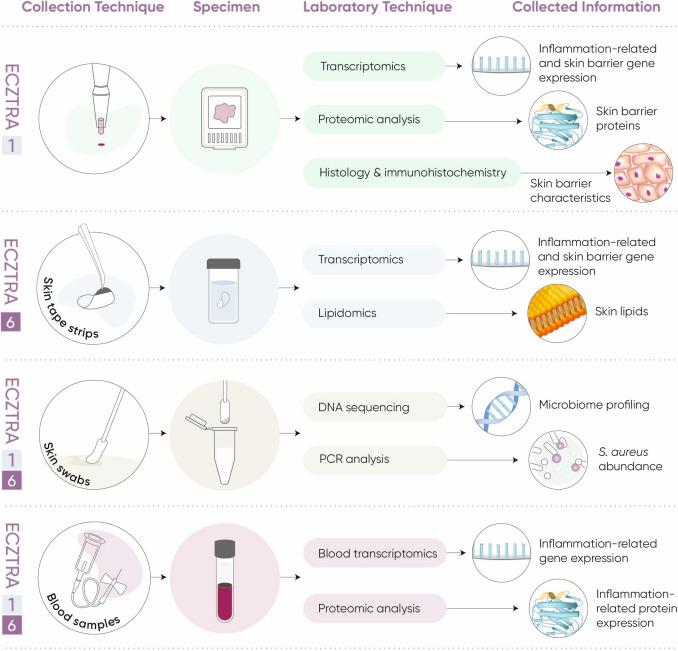
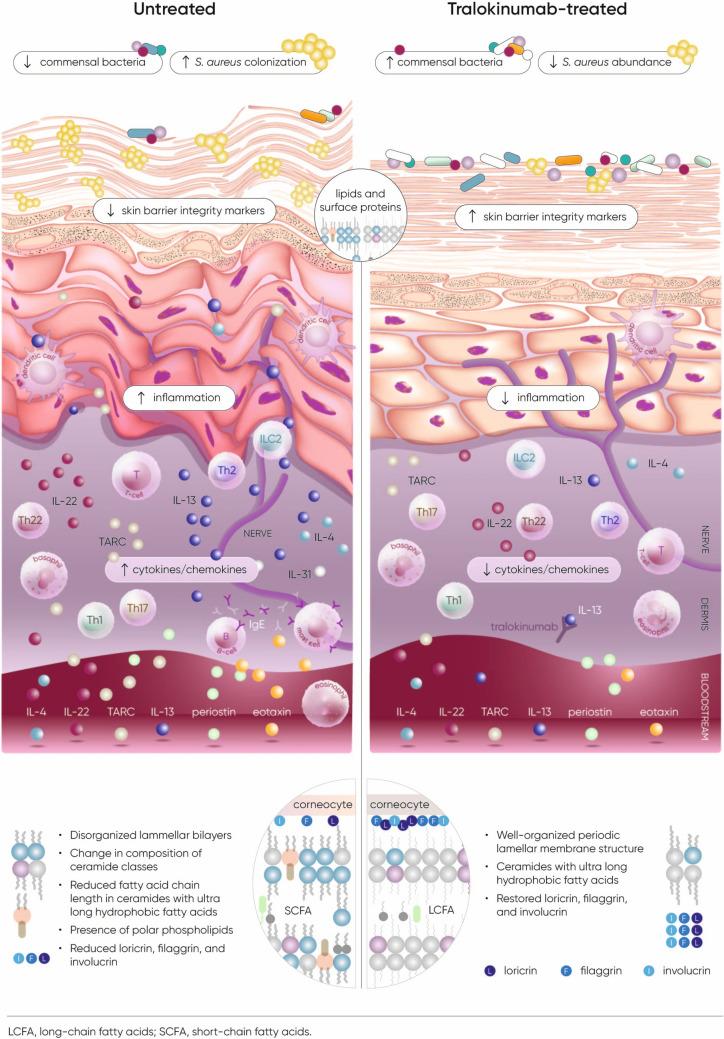
Atopic dermatitis (AD) is a chronic, inflammatory skin disease that can significantly affect quality of life. Presence, severity, and therapeutic response of AD are traditionally reported through clinical assessments including the Eczema Area and Severity Index or Investigator's Global Assessment. These clinical rating scales are visual assessments used in clinical trials to denotate AD severity. Alternatively, biomarkers open the potential to further enhance diagnosis of AD, assess disease status and severity, and potentially enable tailored treatment options for patients. Biomarkers can be classified according to their clinical use, clinical presentation, and underlying/endogenous molecular mechanisms. Specifically, interleukin (IL)-13, which has been shown to be a key biomarker in AD pathogenesis, can be used for prediction of AD development and to monitor clinical severity/response to treatment. Treatment with tralokinumab, a human monoclonal antibody that binds directly to-and subsequently blocks signaling of-IL-13, has been shown to reduce inflammation, re-balance the skin microbiome, and improve the skin barrier in patients with AD. In this review, key AD-related biomarkers, the role of IL-13 in driving AD pathogenesis, and the impact of IL-13 inhibition by tralokinumab on other AD-related biomarkers are discussed.
特应性皮炎(AD)是一种慢性炎症性皮肤病,会显著影响生活质量。传统上,AD的存在、严重程度和治疗反应是通过临床评估来报告的,包括湿疹面积和严重程度指数或研究者整体评估。这些临床评分量表是临床试验中用于表示AD严重程度的视觉评估方法。此外,生物标志物为进一步加强AD的诊断、评估疾病状态和严重程度以及为患者提供个性化治疗方案提供了可能。生物标志物可根据其临床用途、临床表现以及潜在的/内源性分子机制进行分类。具体而言,白细胞介素(IL)-13已被证明是AD发病机制中的关键生物标志物,可用于预测AD的发展并监测临床严重程度/对治疗的反应。曲罗芦单抗是一种直接结合并随后阻断IL-13信号传导的人源单克隆抗体,已证明用其治疗可减轻炎症、重新平衡皮肤微生物群并改善AD患者的皮肤屏障。在本综述中,将讨论关键的AD相关生物标志物、IL-13在驱动AD发病机制中的作用以及曲罗芦单抗抑制IL-13对其他AD相关生物标志物的影响。
 Zotero 插件