
缺氧会损害地西他滨诱导急性髓系白血病细胞系中HLA-DR的表达。
Hypoxia impairs decitabine-induced expression of HLA-DR in acute myeloid leukaemia cell lines.
作者信息
Humphries Sam, Burnard Sean M, Eggins Courtney D, Keely Simon, Bond Danielle R, Lee Heather J
机构信息
School of Biomedical Sciences and Pharmacy, The University of Newcastle, Callaghan, NSW, 2308, Australia.
Precision Medicine Research Program, Hunter Medical Research Institute, New Lambton Heights, NSW, 2305, Australia.
出版信息
Clin Epigenetics. 2025 Jan 17;17(1):8. doi: 10.1186/s13148-025-01812-4.
BACKGROUND
Hypomethylating agents (HMA), such as azacytidine (AZA) and decitabine (DAC), are epigenetic therapies used to treat some patients with acute myeloid leukaemia (AML) and myelodysplastic syndrome. HMAs act in a replication-dependent manner to remove DNA methylation from the genome. However, AML cells targeted by HMA therapy are often quiescent within the bone marrow, where oxygen levels are low. In this study, we investigate the effects of hypoxia on HMA responses in AML cells.
RESULTS
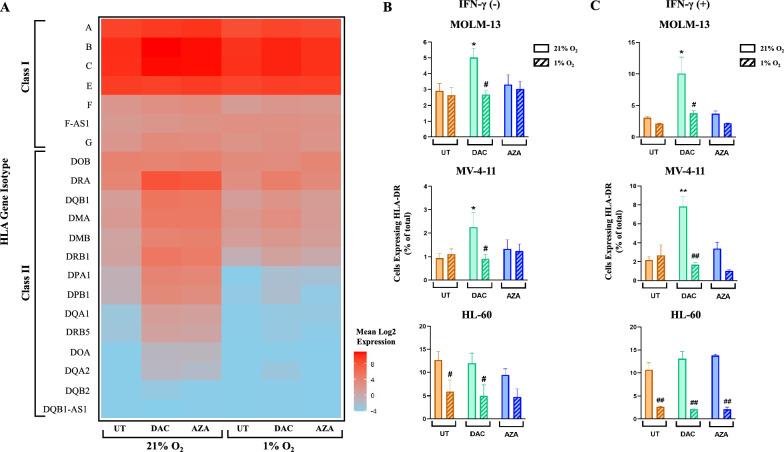
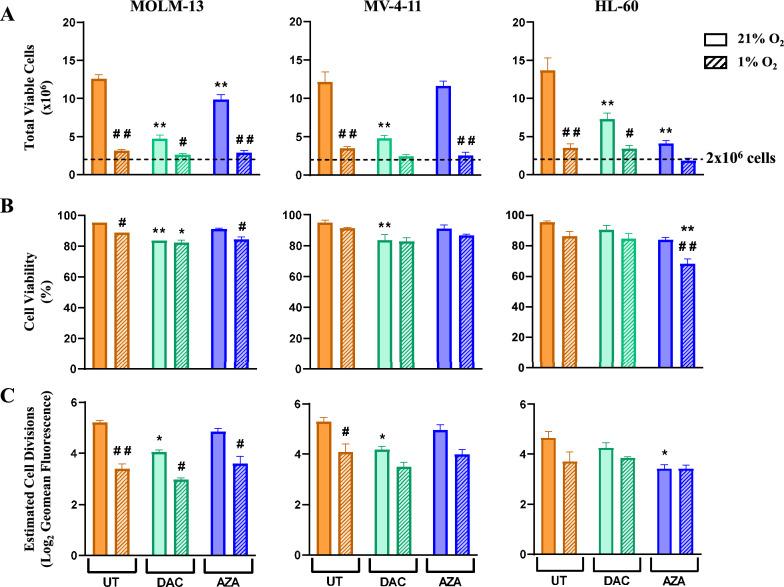
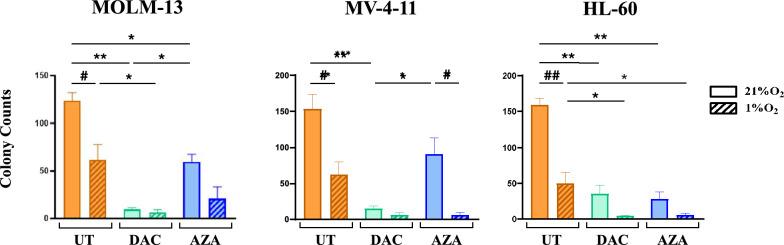
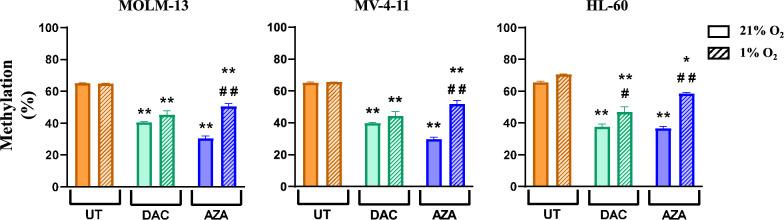
AML cell lines (MOLM-13, MV-4-11, HL-60) were treated with DAC (100 nM) or AZA (500-2000 nM) in normoxic (21% O) and hypoxic (1% O) conditions. Hypoxia significantly reduced AML cell growth across all cell lines, with no additional effects observed upon HMA treatment. Hypoxia had no impact on the extent of DNA hypomethylation induced by DAC treatment, but limited AZA-induced loss of methylation from the genome. Transcriptional responses to HMA treatment were also altered, with HMAs failing to up-regulate antigen presentation pathways in hypoxia. In particular, cell surface expression of the MHC class II receptor, HLA-DR, was increased by DAC treatment in normoxia, but not hypoxia.
CONCLUSION
Our results suggest that HMA-induced antigen presentation may be impaired by hypoxia. This study highlights the need to consider microenvironmental factors when designing co-treatment strategies to improve HMA therapeutic efficacy.
背景
低甲基化药物(HMA),如阿扎胞苷(AZA)和地西他滨(DAC),是用于治疗一些急性髓系白血病(AML)和骨髓增生异常综合征患者的表观遗传疗法。HMA以复制依赖的方式作用于基因组,去除DNA甲基化。然而,接受HMA治疗的AML细胞通常在骨髓中处于静止状态,而骨髓中的氧含量较低。在本研究中,我们调查了缺氧对AML细胞中HMA反应的影响。
结果
AML细胞系(MOLM-13、MV-4-11、HL-60)在常氧(21% O₂)和缺氧(1% O₂)条件下用DAC(100 nM)或AZA(500 - 2000 nM)处理。缺氧显著降低了所有细胞系中AML细胞的生长,HMA处理后未观察到额外影响。缺氧对DAC处理诱导的DNA低甲基化程度没有影响,但限制了AZA诱导的基因组甲基化丢失。对HMA处理的转录反应也发生了改变,在缺氧条件下HMA未能上调抗原呈递途径。特别是,MHC II类受体HLA-DR的细胞表面表达在常氧下经DAC处理会增加,但在缺氧条件下不会。
结论
我们的结果表明,缺氧可能会损害HMA诱导的抗原呈递。本研究强调在设计联合治疗策略以提高HMA治疗效果时需要考虑微环境因素。

 Zotero 插件