
具有增强光热效应的钯钌双金属纳米合金用于放大活性氧介导的肿瘤治疗。
PdRu bimetallic nanoalloys with improved photothermal effect for amplified ROS-mediated tumor therapy.
作者信息
Liang Yujia, Ning Shufang, Kurboniyon Mekhrdod S, Rahmonov Khaiyom, Cai Zhengmin, Li Shirong, Mai Jinling, He Xiaojing, Liu Lijuan, Tang Liping, Zhang Litu, Wang Chen
机构信息
Department of Experimental Research and Guangxi Cancer Molecular Medicine Engineering Research Center and Guangxi Key Laboratory of Basic and Translational Research for Colorectal Cancer, Guangxi Medical University Cancer Hospital, Nanning, China.
National Academy of Sciences of Tajikistan, Dushanbe, Tajikistan.
出版信息
Front Bioeng Biotechnol. 2025 Jan 3;12:1523599. doi: 10.3389/fbioe.2024.1523599. eCollection 2024.
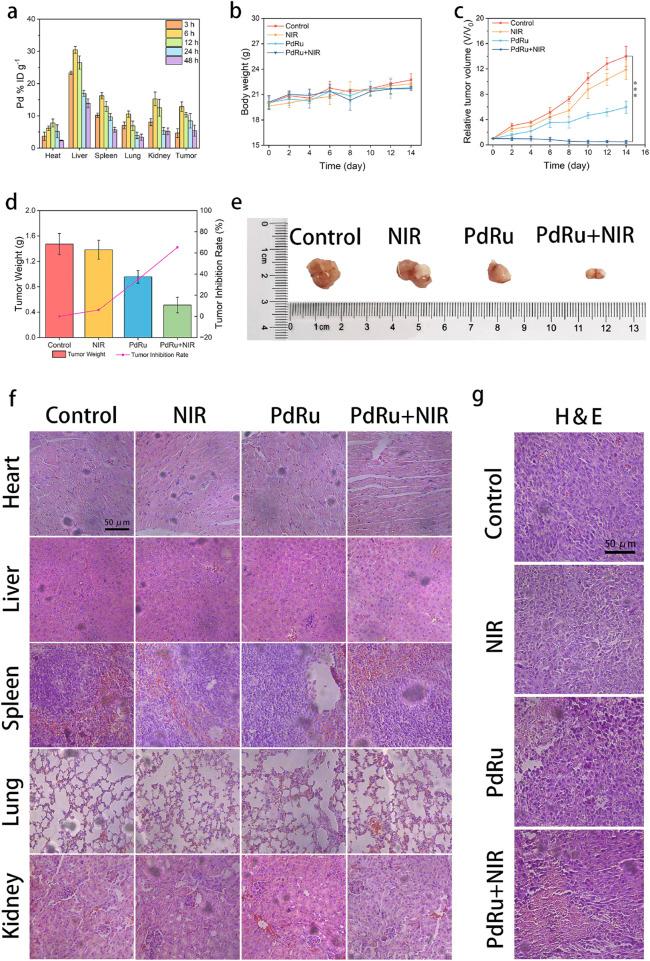
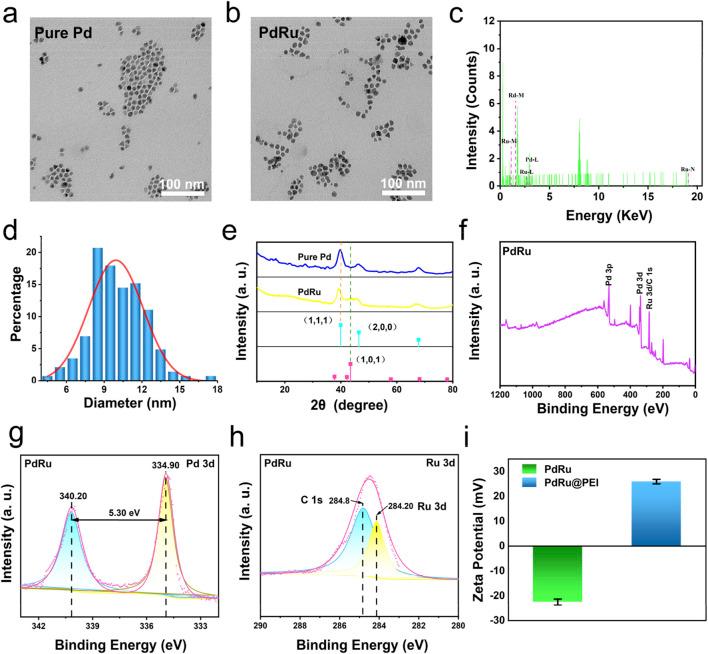
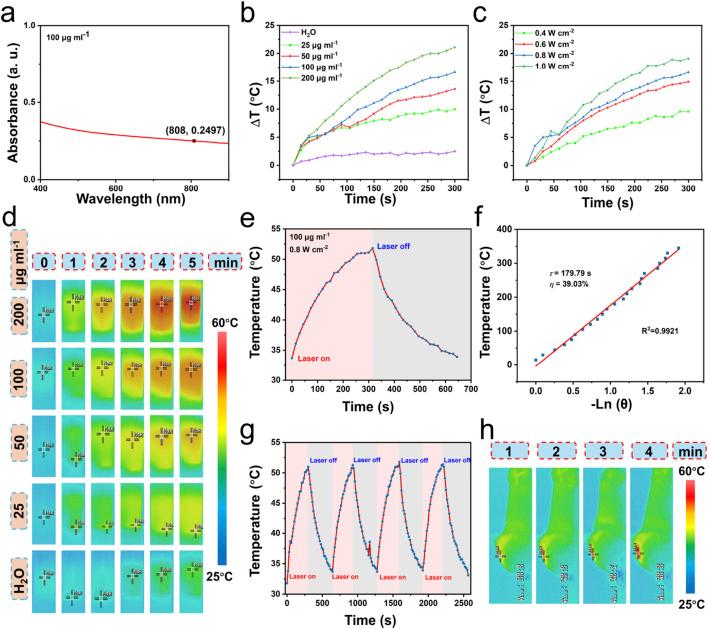
An emerging strategy in cancer therapy involves inducing reactive oxygen species (ROS), specifically within tumors using nanozymes. However, existing nanozymes suffer from limitations such as low reactivity, poor biocompatibility, and limited targeting capabilities, hindering their therapeutic efficacy. In response, the PdRu@PEI bimetallic nanoalloys were constructed with well-catalytic activities and effective separation of charges, which can catalyze hydrogen peroxide (HO) to toxic hydroxyl radical (·OH) under near-infrared laser stimulation. Through facilitating electron transfer and enhancing active sites, the enhanced peroxidase-like (POD-like) enzymatic activity and glutathione (GSH) depletion abilities of nanozymes are boosted through a simple co-reduction process, leading to promising anti-tumor activity. The electron transfer between Pd and Ru of PdRu@PEI nanoalloys contributes to POD-like activity. Then, by oxidizing endogenous overexpressed GSH, enzymatic cycling prevents GSH from consuming ROS. Furthermore, the surface plasmon resonance effect of near-infrared laser on bimetallic nanoalloys ensures its photothermal performance and its local heating, further promoting POD-like activity. The integrated multi-modal therapeutic approach of PdRu@PEI has demonstrated significant anti-cancer effects studies. The nanozymes exhibit high catalytic efficiency and excellent biocompatibility, offering valuable insights for the development of nano-catalysts/enzymes for biomedical applications.
癌症治疗中的一种新兴策略是利用纳米酶在肿瘤内部诱导产生活性氧(ROS)。然而,现有的纳米酶存在诸如反应活性低、生物相容性差和靶向能力有限等局限性,这阻碍了它们的治疗效果。作为回应,构建了具有良好催化活性和有效电荷分离的PdRu@PEI双金属纳米合金,其在近红外激光刺激下可将过氧化氢(HO)催化为有毒的羟基自由基(·OH)。通过促进电子转移和增加活性位点,纳米酶的类过氧化物酶(POD样)活性和谷胱甘肽(GSH)消耗能力通过简单的共还原过程得到增强,从而产生了有前景的抗肿瘤活性。PdRu@PEI纳米合金中Pd和Ru之间的电子转移有助于POD样活性。然后,通过氧化内源性过表达的GSH,酶循环可防止GSH消耗ROS。此外,近红外激光对双金属纳米合金的表面等离子体共振效应确保了其光热性能及其局部加热,进一步促进了POD样活性。PdRu@PEI的综合多模态治疗方法在研究中已显示出显著的抗癌效果。这些纳米酶表现出高催化效率和优异的生物相容性,为生物医学应用的纳米催化剂/酶的开发提供了有价值的见解。


 Zotero 插件