
全球白血病负担与趋势:利用全球疾病负担(GBD)数据对1990年至2021年的时空变化进行的综合分析。
Global leukemia burden and trends: a comprehensive analysis of temporal and spatial variations from 1990-2021 using GBD (Global Burden of Disease) data.
作者信息
Huang Pengyu, Zhang Jie
机构信息
Fujian University of Traditional Chinese Medicine, Fuzhou, Fujian, People's Republic of China.
出版信息
BMC Public Health. 2025 Jan 22;25(1):262. doi: 10.1186/s12889-025-21428-w.
BACKGROUND
Leukemia, a group of malignant tumors, has been a significant public health concern due to its high incidence and mortality rates. This study aimed to provide an in-depth analysis of the global leukemia burden from 1990 to 2021 using the Global Burden of Disease (GBD) database, focusing on trends in incidence, mortality, and Disability-Adjusted Life Years (DALYs) across different regions, genders, and age groups including forecasting future trends.
METHODS
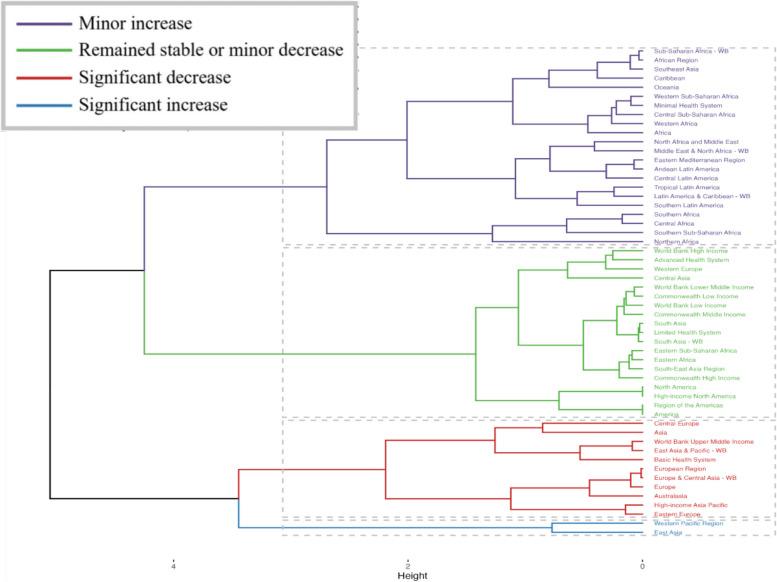
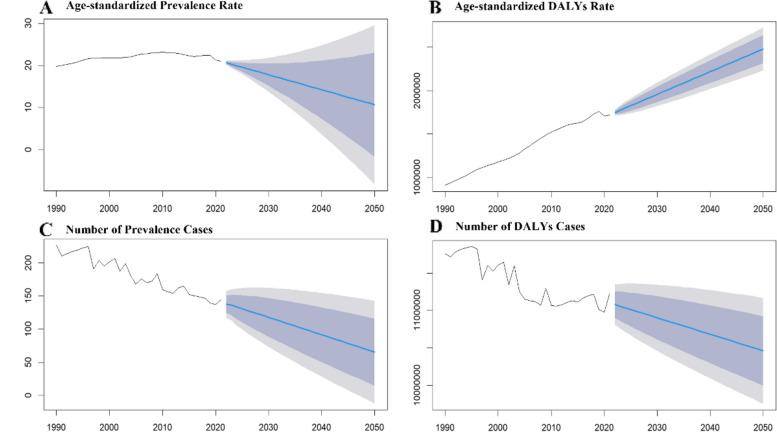
Data were sourced from the GBD study, utilizing the Global Health Data Exchange (GHDx) query tool. We employed descriptive, trend, cluster, and forecasting analyses using age-standardized rates (ASRs) and the Estimated Annual Percentage Change (EAPC) to quantify changes over time. Hierarchical clustering and forecasting models, including ARIMA and Exponential Smoothing (ES), were utilized to predict future trends. Notably, ARIMA and ES smoothing parameters were meticulously identified and estimated.
RESULTS
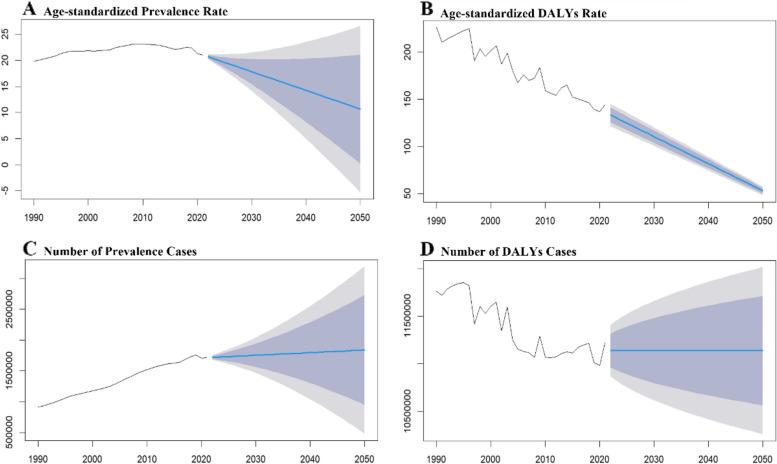
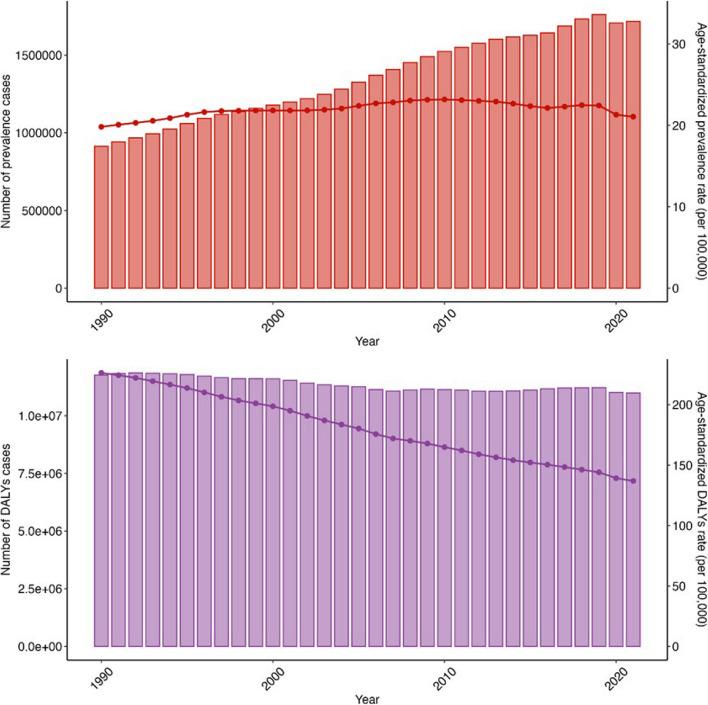
The analysis of global leukemia burden from 1990 to 2021, as reflected by DALYs, indicates a downward trend, with the number of DALYs estimated to have decreased from 578,020 (401,241-797,570) in 1990 to 302,902 (206,475-421,952) in 2021, corresponding to an EAPC of -0.94 (-1.01--0.88). Notably, it is important to highlight that there is variability in these estimates across different regions and demographic groups, which should be interpreted with caution due to potential data limitations. High-income regions generally showed a decreased leukemia burden, while some middle- and low-income countries exhibited an opposite trend. Males displayed higher leukemia incidence, mortality, and DALY rates compared to females. The oldest age groups, mainly those aged 95 and above, experienced the most significant changes, with the highest EAPC observed in this demographic. Geographical and Socio-demographic Index (SDI)-based analyses further highlighted the heterogeneity in leukemia burden. Additionally, forecasting models project a continued decrease in leukemia burden, emphasizing the importance of ongoing public health strategies.
CONCLUSION
The study indicates overall progress in reducing the leukemia burden at a global level due to medical advancements. However, specific regions and demographic groups, particularly males and the elderly, continue to face challenges. Socioeconomic status significantly impacts healthcare outcomes, with a need for resource distribution and healthcare system strengthening in low-income areas. The findings call for nuanced public health strategies tailored to socioeconomic contexts and sustained research and healthcare infrastructure efforts.
背景
白血病是一组恶性肿瘤,因其高发病率和死亡率一直是重大的公共卫生问题。本研究旨在利用全球疾病负担(GBD)数据库对1990年至2021年全球白血病负担进行深入分析,重点关注不同地区、性别和年龄组的发病率、死亡率及伤残调整生命年(DALY)趋势,包括预测未来趋势。
方法
数据来源于GBD研究,使用全球卫生数据交换(GHDx)查询工具。我们采用年龄标准化率(ASR)和估计年百分比变化(EAPC)进行描述性、趋势、聚类和预测分析,以量化随时间的变化。利用分层聚类和预测模型,包括自回归积分移动平均(ARIMA)和指数平滑(ES),来预测未来趋势。值得注意的是,对ARIMA和ES平滑参数进行了精心识别和估计。
结果
从DALY反映的1990年至2021年全球白血病负担分析表明呈下降趋势,DALY数量估计从1990年的578,020(401,241 - 797,570)降至2021年的302,902(206,475 - 421,952),对应的EAPC为 - 0.94(-1.01 - - 0.88)。值得注意的是,重要的是要强调这些估计在不同地区和人口群体中存在差异,由于潜在的数据限制,应谨慎解释。高收入地区白血病负担总体呈下降趋势,而一些中低收入国家则呈现相反趋势。男性白血病发病率、死亡率和DALY率高于女性。年龄最大的年龄组,主要是95岁及以上的人群,变化最为显著,该人群的EAPC最高。基于地理和社会人口指数(SDI)的分析进一步突出了白血病负担的异质性。此外,预测模型预计白血病负担将持续下降,强调了持续实施公共卫生策略的重要性。
结论
该研究表明,由于医学进步,全球在降低白血病负担方面总体取得了进展。然而,特定地区和人口群体,特别是男性和老年人,仍然面临挑战。社会经济地位对医疗保健结果有重大影响,低收入地区需要资源分配和加强医疗保健系统。研究结果呼吁制定针对社会经济背景的细致入微的公共卫生策略,并持续开展研究和加强医疗保健基础设施建设。



 Zotero 插件