
社交网络对农村居民参与生活环境改善的影响:基于社交网络理论和计划行为理论的综合分析
The impact of social networks on rural residents' engagement in living environment upgrade: An integrated analysis drawing on social network theory and the theory of planned behavior.
作者信息
Amat Gulsanam, Wang Jing
机构信息
School of Public Administration, Hebei University of Economics and Business, Shijiazhuang, China.
出版信息
PLoS One. 2025 Jan 22;20(1):e0312779. doi: 10.1371/journal.pone.0312779. eCollection 2025.
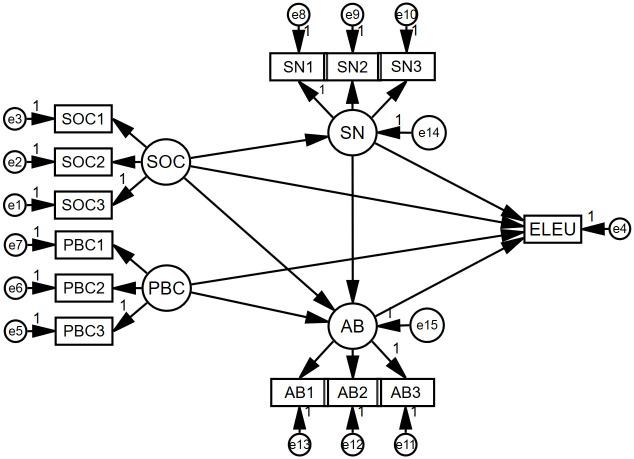
The issue of rural living environment is a critical concern for China and the global community, intricately intertwined with regional economic development. The proactive involvement of rural residents, who are both beneficiaries and influencers of the environment, constitutes a cornerstone in improving environmental standards. Therefore, the factors that shape rural residents' participation in living environment upgrade must be explored. Drawing upon the theory of planned behavior and social capital theory, this study employs a structural equation model (SEM) to comprehensively examine the determinants of rural residents' engagement in living environment upgrade, utilizing data from 334 households in Hebei Province, China. The findings can be summarized as follows: (1) Social networks, subjective norms, perceived behavioral control, and attitudes towards behavior significantly and positively impact rural residents' engagement in upgrading the living environment, (2) Attitudes towards behavior act as mediators between perceived behavioral control and rural residents' engagement in living environment upgrade, as well as between subjective norms and rural residents' engagement in living environmental upgrade. (3) Social networks could indirectly influence rural residents' engagement in living environment upgrade through the independent mediating effect of subjective norms and attitudes towards behavior, as well as through the chain mediating effect of the two. In conclusion, several managerial recommendations are proposed to stimulate rural residents' active participation in living environment upgrade.
农村生活环境问题是中国乃至全球社会极为关注的问题,与区域经济发展紧密相连。农村居民既是环境的受益者,也是环境的影响者,他们的积极参与是提高环境标准的基石。因此,必须探究影响农村居民参与生活环境改善的因素。本研究借鉴计划行为理论和社会资本理论,运用结构方程模型(SEM),利用中国河北省334户家庭的数据,全面考察农村居民参与生活环境改善的决定因素。研究结果如下:(1)社会网络、主观规范、感知行为控制和行为态度对农村居民参与生活环境改善有显著的正向影响;(2)行为态度在感知行为控制与农村居民参与生活环境改善之间以及主观规范与农村居民参与生活环境改善之间起中介作用;(3)社会网络可通过主观规范和行为态度的独立中介效应以及两者的链式中介效应间接影响农村居民参与生活环境改善。最后提出了若干管理建议,以激励农村居民积极参与生活环境改善。

 Zotero 插件