
利用人类诱导多能干细胞、功能测定和机器学习在神经发育障碍方面的潜力。
Harnessing the potential of human induced pluripotent stem cells, functional assays and machine learning for neurodevelopmental disorders.
作者信息
Yang Ziqin, Teaney Nicole A, Buttermore Elizabeth D, Sahin Mustafa, Afshar-Saber Wardiya
机构信息
Rosamund Stone Zander Translational Neuroscience Center, Boston Children's Hospital, Harvard Medical School, Boston, MA, United States.
FM Kirby Neurobiology Center, Department of Neurology, Boston Children's Hospital, Harvard Medical School, Boston, MA, United States.
出版信息
Front Neurosci. 2025 Jan 8;18:1524577. doi: 10.3389/fnins.2024.1524577. eCollection 2024.
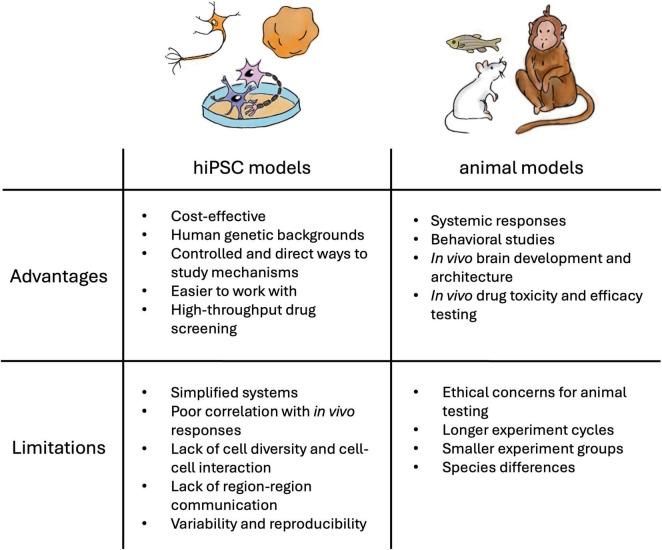
Neurodevelopmental disorders (NDDs) affect 4.7% of the global population and are associated with delays in brain development and a spectrum of impairments that can lead to lifelong disability and even mortality. Identification of biomarkers for accurate diagnosis and medications for effective treatment are lacking, in part due to the historical use of preclinical model systems that do not translate well to the clinic for neurological disorders, such as rodents and heterologous cell lines. Human-induced pluripotent stem cells (hiPSCs) are a promising system for modeling NDDs, providing opportunities to understand mechanisms driving NDDs in human neurons. Functional assays, including patch clamping, multielectrode array, and imaging-based assays, are popular tools employed with hiPSC disease models for disease investigation. Recent progress in machine learning (ML) algorithms also presents unprecedented opportunities to advance the NDD research process. In this review, we compare two-dimensional and three-dimensional hiPSC formats for disease modeling, discuss the applications of functional assays, and offer insights on incorporating ML into hiPSC-based NDD research and drug screening.
神经发育障碍(NDDs)影响着全球4.7%的人口,与大脑发育迟缓以及一系列可能导致终身残疾甚至死亡的损伤有关。目前缺乏用于准确诊断的生物标志物和有效治疗的药物,部分原因是以往临床前模型系统(如啮齿动物和异源细胞系)在神经系统疾病方面难以很好地转化到临床应用。人诱导多能干细胞(hiPSCs)是一种很有前景的NDDs建模系统,为了解人类神经元中驱动NDDs的机制提供了机会。功能分析方法,包括膜片钳、多电极阵列和基于成像的分析方法,是用于hiPSC疾病模型进行疾病研究的常用工具。机器学习(ML)算法的最新进展也为推进NDD研究进程带来了前所未有的机遇。在这篇综述中,我们比较了用于疾病建模的二维和三维hiPSC形式,讨论了功能分析方法的应用,并就将ML纳入基于hiPSC的NDD研究和药物筛选提供见解。


 Zotero 插件