
挖掘[具体药物或治疗手段等,原文此处缺失关键信息]在治疗糖尿病神经病变和肾病方面的潜在作用机制。
Unlocking the mechanistic potential of for managing diabetic neuropathy and nephropathy.
作者信息
Singh Shareen, Singh Thakur Gurjeet
机构信息
Chitkara College of Pharmacy, Chitkara University, Rajpura, 140401, Punjab, India.
出版信息
J Tradit Complement Med. 2024 Apr 24;14(6):581-597. doi: 10.1016/j.jtcme.2024.04.009. eCollection 2024 Nov.
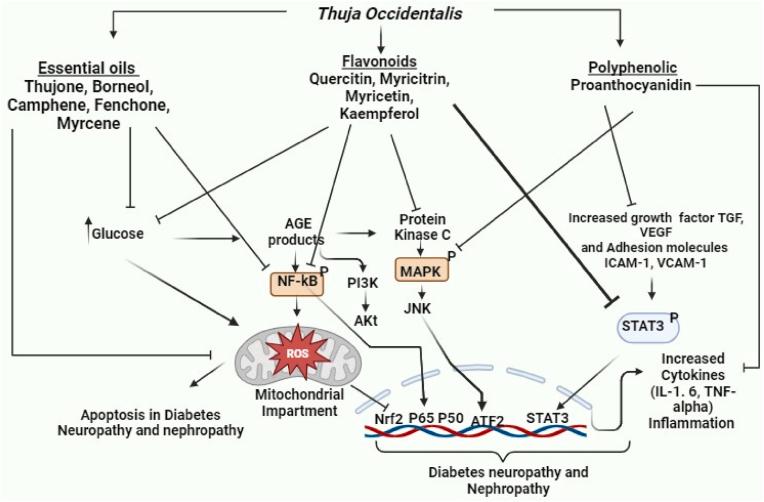
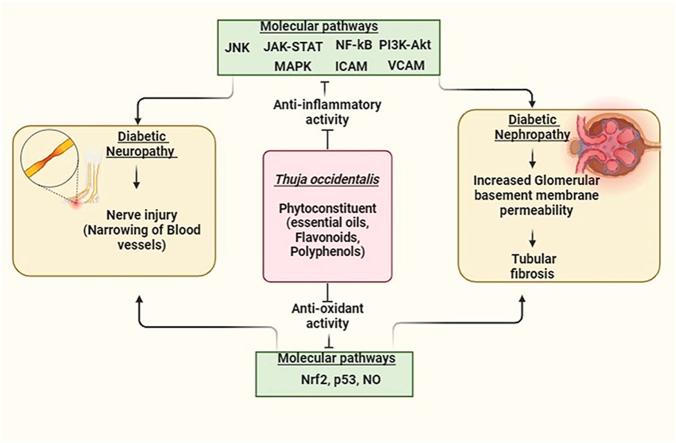
Diabetes mellitus and its debilitating microvascular complications, including diabetic neuropathy and nephropathy, represent a growing global health burden. Despite advances in conventional therapies, their suboptimal efficacy and adverse effects necessitate exploring complementary and alternative medicine approaches. , a coniferous tree species native to eastern North America, has gained significant attention for its potential therapeutic applications in various disorders, attributed to its rich phytochemical composition. The present comprehensive review evaluates the therapeutic potential of in managing diabetic neuropathy and nephropathy, with a particular emphasis on elucidating the underlying cellular and molecular mechanisms. The review delves into the active constituents of , such as essential oils, flavonoids, tannins, and proanthocyanidin compounds, which have demonstrated antioxidant, anti-inflammatory, and other beneficial properties in preclinical studies. Importantly, the review provides an in-depth analysis of the intricate signaling pathways modulated by including NF-κB, PI3K-Akt, JAK-STAT, JNK, MAPK/ERK, and Nrf2 cascades. These pathways are intricately linked to oxidative stress, inflammation, and apoptosis processes, which play pivotal roles in the pathogenesis of diabetic neuropathy and nephropathy. Furthermore, the review critically evaluates the evidence-based toxicological data of as a more effective and comprehensive therapeutic strategy in diabetes complications. Therefore, the current review aims to provide a comprehensive understanding of the therapeutic potential of as an adjunctive treatment strategy for diabetic neuropathy and nephropathy while highlighting the need for further research to optimize its clinical translation.
糖尿病及其使人衰弱的微血管并发症,包括糖尿病性神经病变和肾病,在全球范围内构成了日益沉重的健康负担。尽管传统疗法取得了进展,但其疗效欠佳和副作用促使人们探索补充和替代医学方法。[某种植物名称]是一种原产于北美东部的针叶树种,由于其丰富的植物化学成分,在各种疾病中的潜在治疗应用受到了广泛关注。本综述全面评估了[某种植物名称]在治疗糖尿病性神经病变和肾病方面的潜力,特别强调阐明其潜在的细胞和分子机制。综述深入探讨了[某种植物名称]的活性成分,如精油、黄酮类化合物、单宁和原花青素化合物,这些成分在临床前研究中已显示出抗氧化、抗炎和其他有益特性。重要的是,综述对[某种植物名称]调节的复杂信号通路进行了深入分析,包括NF-κB、PI3K-Akt、JAK-STAT、JNK、MAPK/ERK和Nrf2级联反应。这些通路与氧化应激、炎症和细胞凋亡过程密切相关,而这些过程在糖尿病性神经病变和肾病的发病机制中起关键作用。此外,综述批判性地评估了[某种植物名称]作为糖尿病并发症更有效和全面治疗策略的循证毒理学数据。因此,本综述旨在全面了解[某种植物名称]作为糖尿病性神经病变和肾病辅助治疗策略的治疗潜力,同时强调需要进一步研究以优化其临床转化。

 Zotero 插件