
用于自身免疫性疾病靶向给药的可生物降解及刺激响应性纳米材料
Biodegradable and Stimuli-Responsive Nanomaterials for Targeted Drug Delivery in Autoimmune Diseases.
作者信息
Parvin Nargish, Joo Sang Woo, Mandal Tapas K
机构信息
School of Mechanical Engineering, School of Basic Science, Yeungnam University, Gyeongsan 38541, Republic of Korea.
出版信息
J Funct Biomater. 2025 Jan 14;16(1):24. doi: 10.3390/jfb16010024.
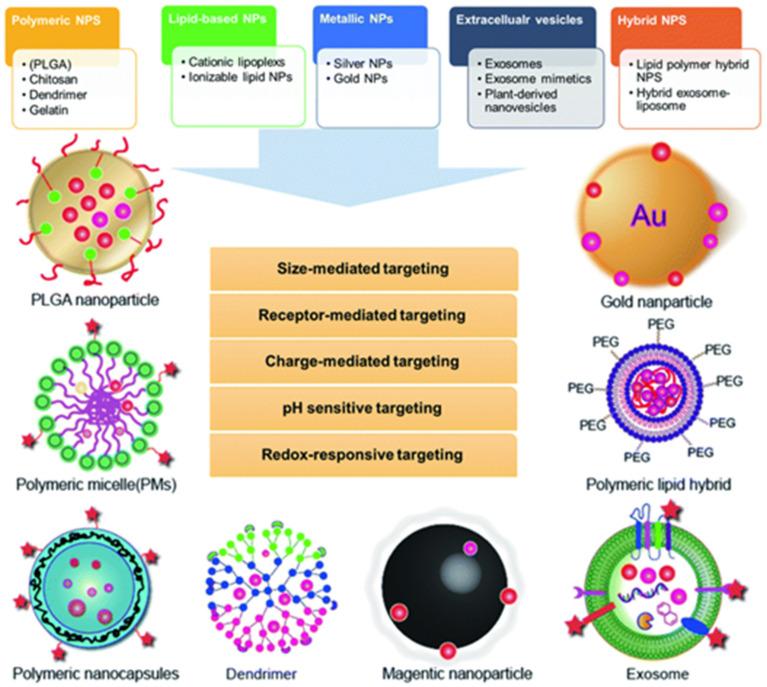
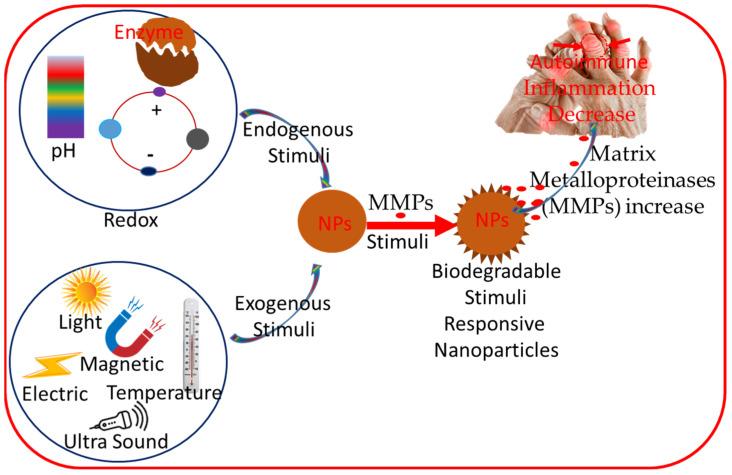
Autoimmune diseases present complex therapeutic challenges due to their chronic nature, systemic impact, and requirement for precise immunomodulation to avoid adverse side effects. Recent advancements in biodegradable and stimuli-responsive nanomaterials have opened new avenues for targeted drug delivery systems capable of addressing these challenges. This review provides a comprehensive analysis of state-of-the-art biodegradable nanocarriers such as polymeric nanoparticles, liposomes, and hydrogels engineered for targeted delivery in autoimmune therapies. These nanomaterials are designed to degrade safely in the body while releasing therapeutic agents in response to specific stimuli, including pH, temperature, redox conditions, and enzymatic activity. By achieving localized and controlled release of anti-inflammatory and immunosuppressive agents, these systems minimize systemic toxicity and enhance therapeutic efficacy. We discuss the underlying mechanisms of stimuli-responsive nanomaterials, recent applications in treating diseases such as rheumatoid arthritis, multiple sclerosis, and inflammatory bowel disease, and the design considerations essential for clinical translation. Additionally, we address current challenges, including biocompatibility, scalability, and regulatory hurdles, as well as future directions for integrating advanced nanotechnology with personalized medicine in autoimmune treatment. This review highlights the transformative potential of biodegradable and stimuli-responsive nanomaterials, presenting them as a promising strategy to advance precision medicine and improve patient outcomes in autoimmune disease management.
自身免疫性疾病因其慢性病程、全身影响以及需要精确的免疫调节以避免不良副作用而带来了复杂的治疗挑战。可生物降解和刺激响应性纳米材料的最新进展为能够应对这些挑战的靶向给药系统开辟了新途径。本综述对最先进的可生物降解纳米载体进行了全面分析,如用于自身免疫治疗中靶向递送的聚合物纳米颗粒、脂质体和水凝胶。这些纳米材料被设计为在体内安全降解,同时响应特定刺激(包括pH值、温度、氧化还原条件和酶活性)释放治疗剂。通过实现抗炎和免疫抑制剂的局部和控释,这些系统可将全身毒性降至最低并提高治疗效果。我们讨论了刺激响应性纳米材料的潜在机制、近期在治疗类风湿性关节炎、多发性硬化症和炎症性肠病等疾病中的应用,以及临床转化所需的设计考量。此外,我们还阐述了当前的挑战,包括生物相容性、可扩展性和监管障碍,以及在自身免疫治疗中将先进纳米技术与个性化医疗相结合的未来方向。本综述强调了可生物降解和刺激响应性纳米材料的变革潜力,将它们作为推进精准医学和改善自身免疫性疾病管理中患者治疗效果的一种有前景的策略。

 Zotero 插件