
基于不同碳源和溶剂的红色/近红外荧光碳点的研究:荧光机制及生物应用
Research on Red/Near-Infrared Fluorescent Carbon Dots Based on Different Carbon Sources and Solvents: Fluorescence Mechanism and Biological Applications.
作者信息
Song Jun, Kang Minghao, Ji Shujian, Ye Shuai, Guo Jiaqing
机构信息
State Key Laboratory of Radio Frequency Heterogeneous Integration, College of Physics and Optoelectronic Engineering, Key Laboratory of Optoelectronic Devices and Systems of Ministry of Education and Guangdong Province, Shenzhen University, Shenzhen 518060, China.
Medical Engineering and Technology College, Xinjiang Medical University, Urumqi 830011, China.
出版信息
Nanomaterials (Basel). 2025 Jan 7;15(2):81. doi: 10.3390/nano15020081.
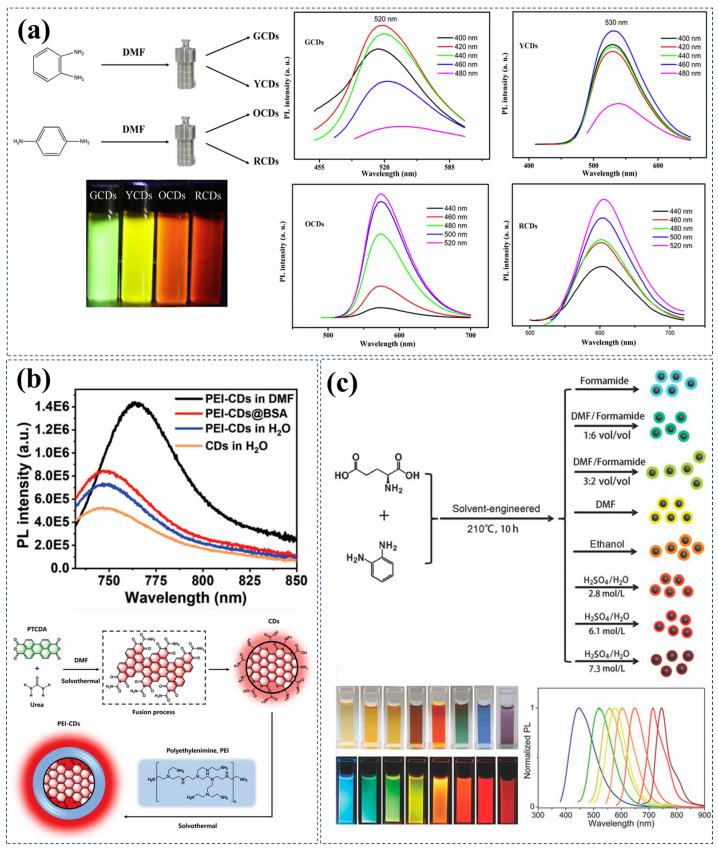
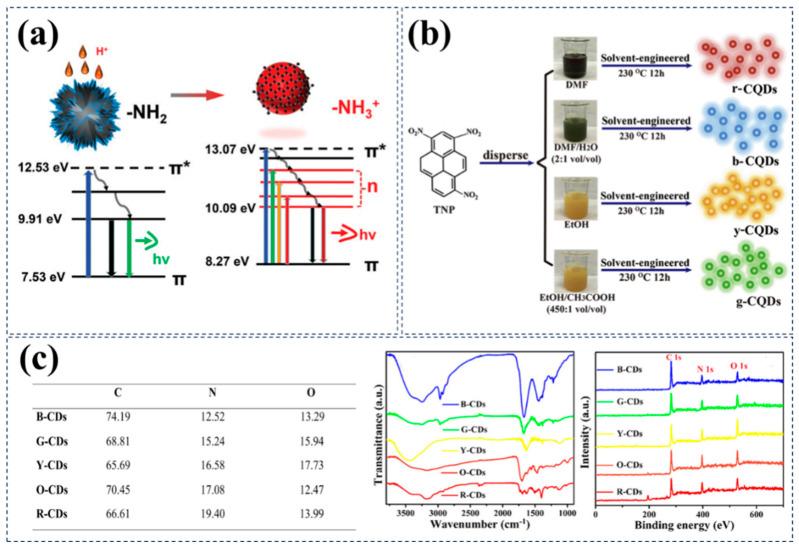
Fluorescent carbon dots, especially red/near-infrared-emitting CDs, are becoming increasingly important in the field of biomedicine. This article reviews the synthesis, fluorescence mechanisms, and biological applications of R/NIR-CDs, emphasizing the importance of carbon source and solvent selection in controlling their optical properties. The formation process of CDs is classified, and the fluorescence mechanisms of CDs are summarized, involving carbon core states, surface states, molecular states, and cross-linking enhanced emission effects. This article also highlights the applications of R/NIR-CDs in bioimaging, biosensing, phototherapy, and drug delivery. The final section discusses challenges and prospects.
荧光碳点,尤其是发射红光/近红外光的碳点,在生物医学领域正变得越来越重要。本文综述了发射红光/近红外光的碳点的合成、荧光机制及生物学应用,强调了碳源和溶剂选择在控制其光学性质方面的重要性。对碳点的形成过程进行了分类,并总结了碳点的荧光机制,涉及碳核态、表面态、分子态及交联增强发射效应。本文还重点介绍了发射红光/近红外光的碳点在生物成像、生物传感、光疗及药物递送方面的应用。最后一部分讨论了挑战与前景。




 Zotero 插件