
通过铁磁反点阵和点纳米结构从微流体流中可控捕获磁性纳米颗粒
Controlled Capture of Magnetic Nanoparticles from Microfluidic Flows by Ferromagnetic Antidot and Dot Nanostructures.
作者信息
Dowling Reyne, Kostylev Mikhail
机构信息
Department of Physics, The University of Western Australia, Perth, WA 6009, Australia.
出版信息
Nanomaterials (Basel). 2025 Jan 16;15(2):132. doi: 10.3390/nano15020132.
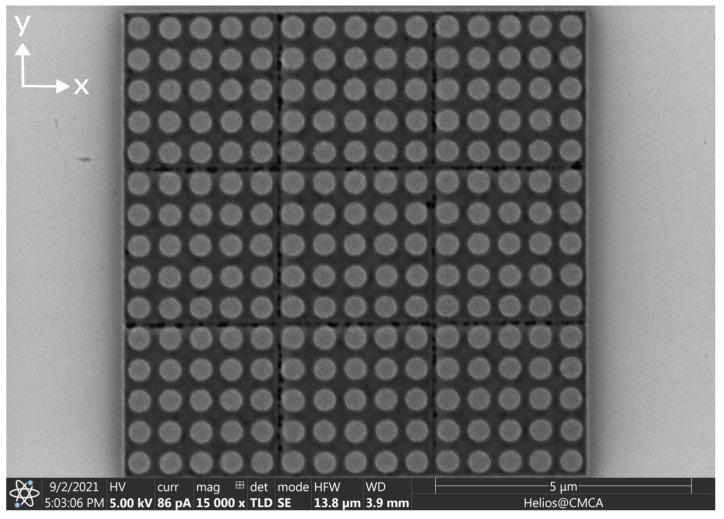
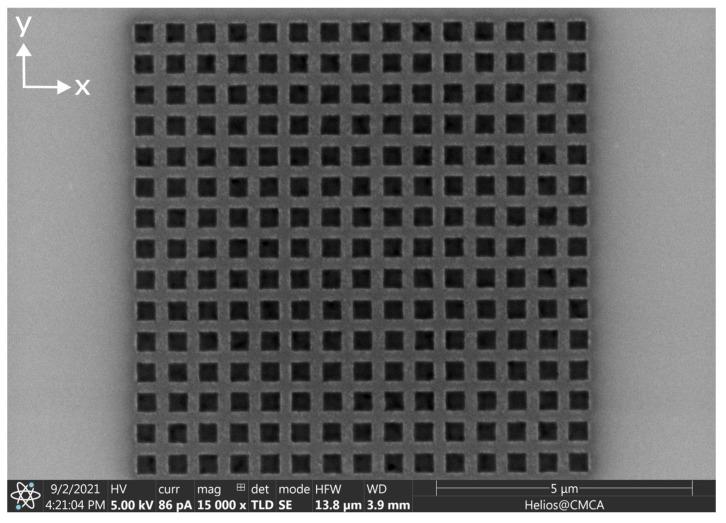
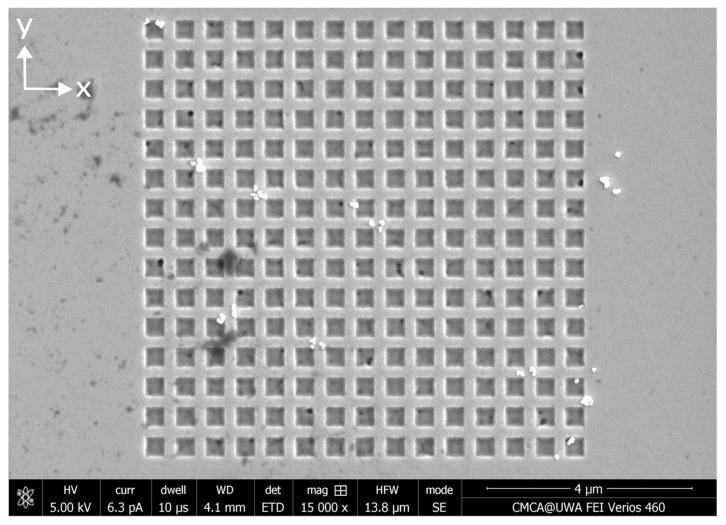
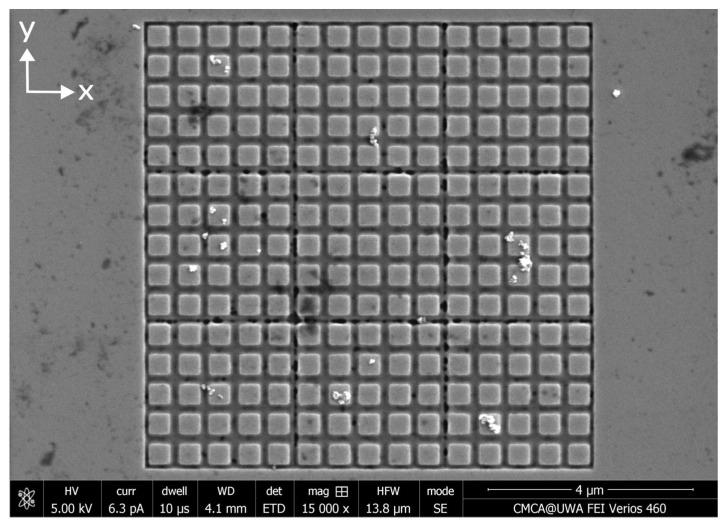
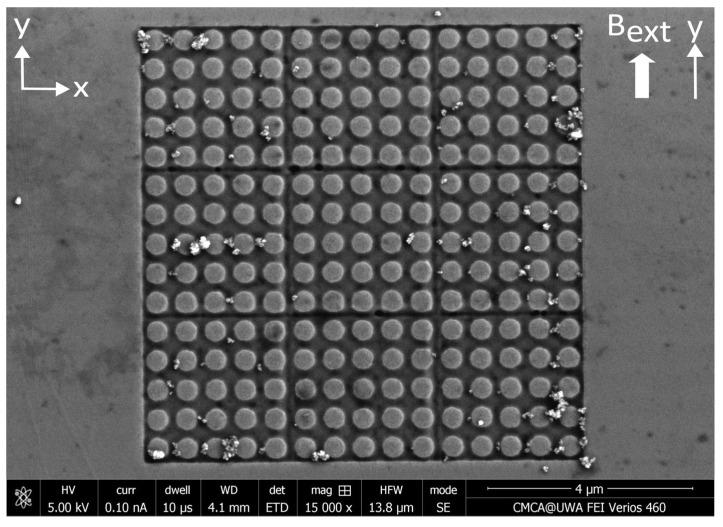
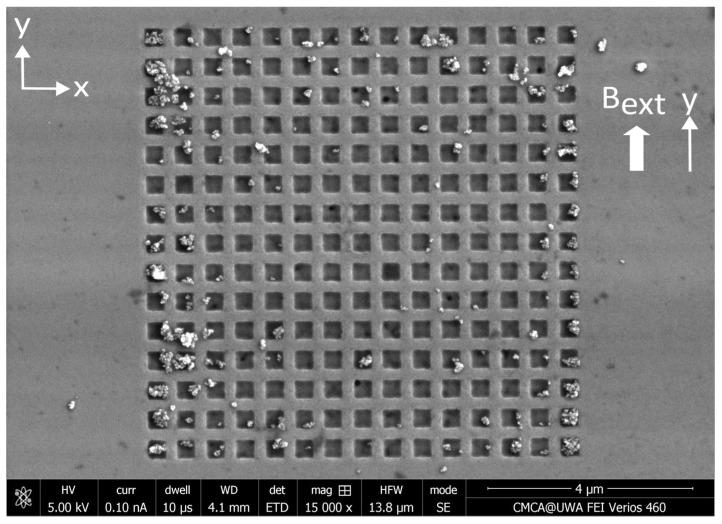
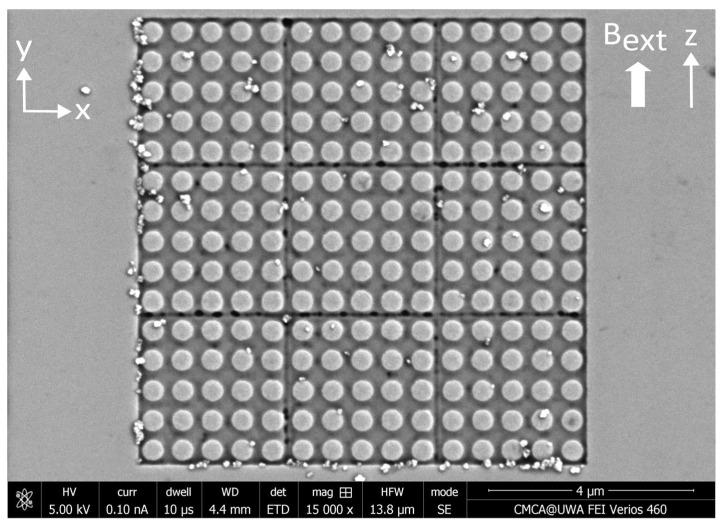
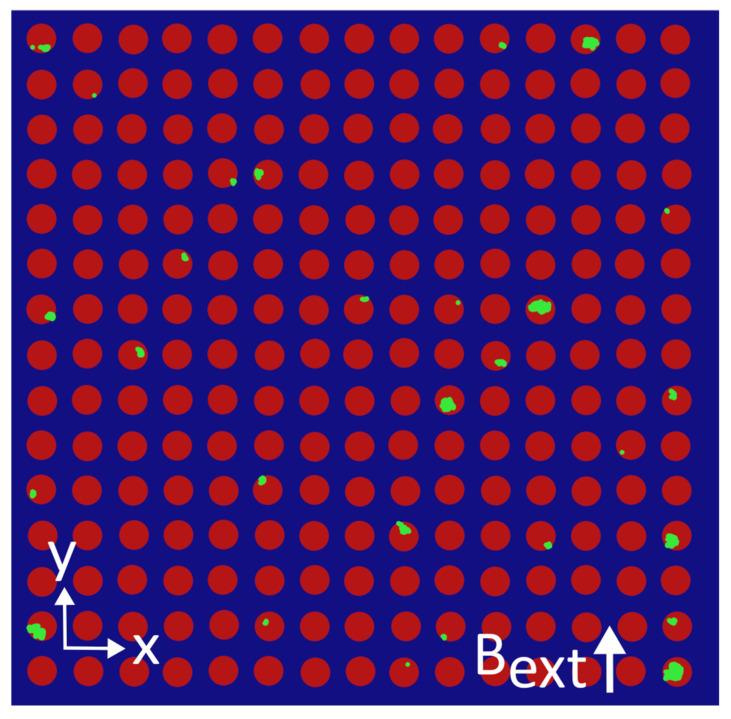
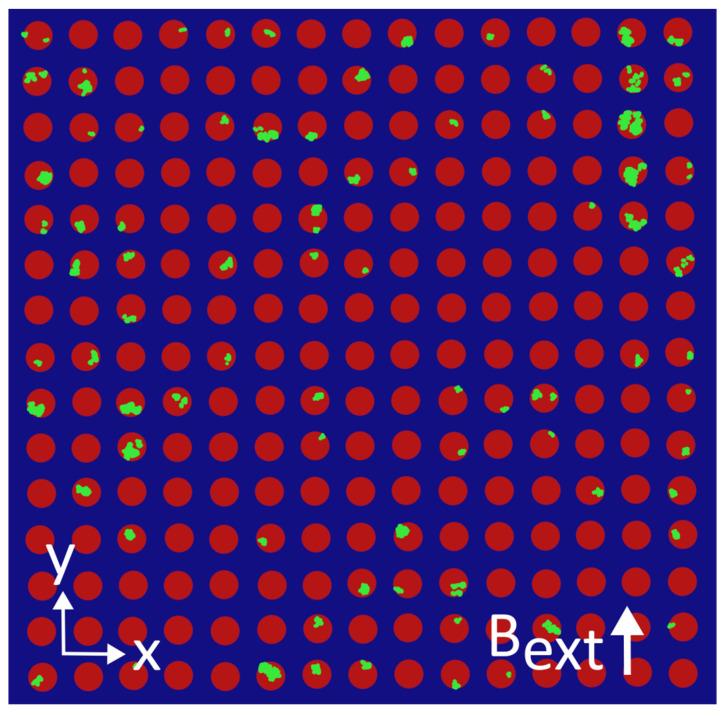
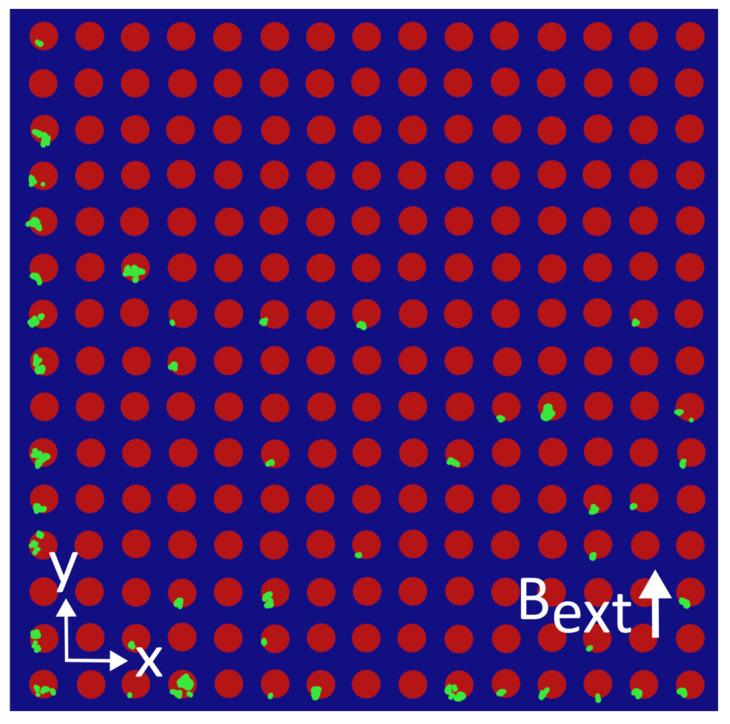
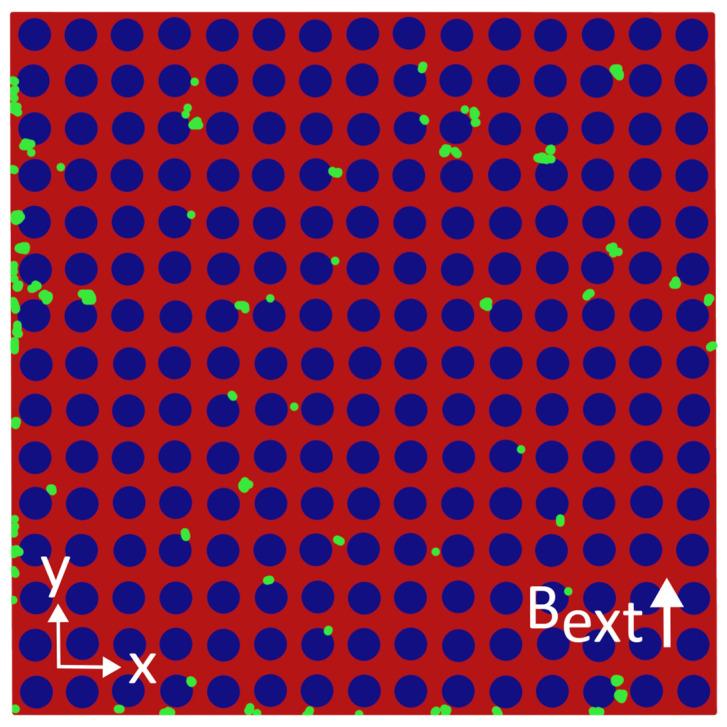
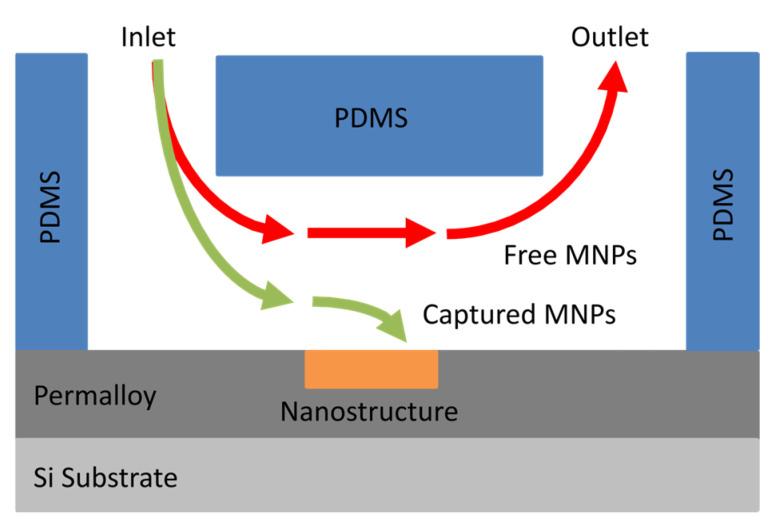
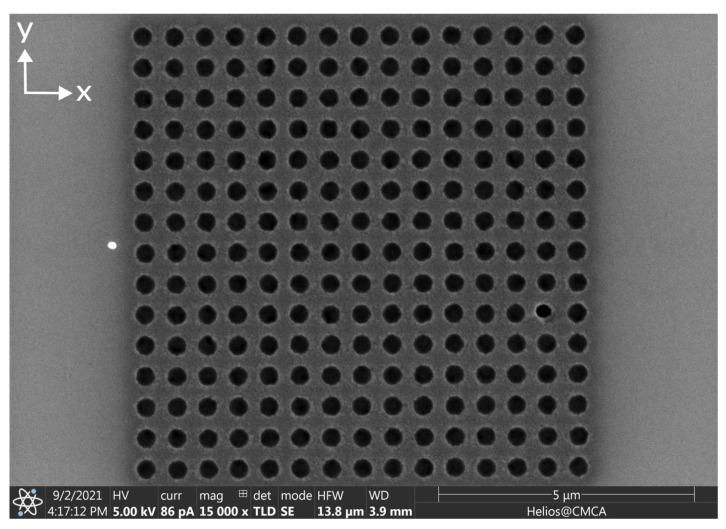
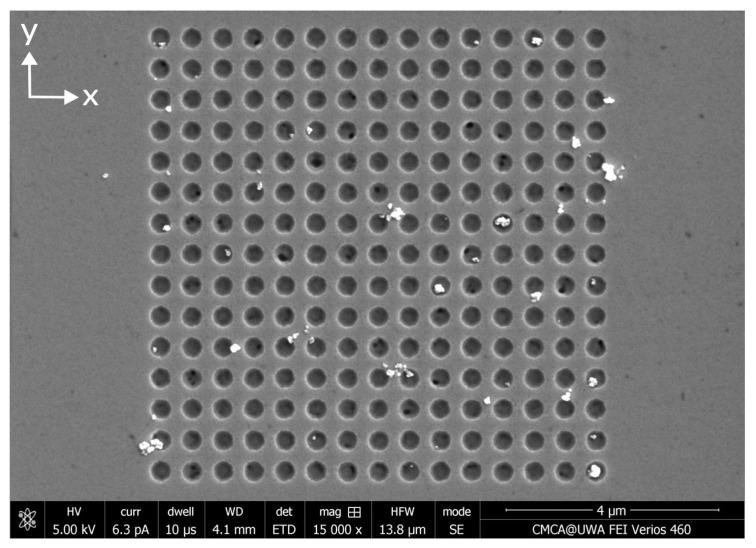
The capture of magnetic nanoparticles (MNPs) is essential in the separation and detection of MNPs for applications such as magnetic biosensing. The sensitivity of magnetic biosensors inherently depends upon the distribution of captured MNPs within the sensing area. We previously demonstrated that the distribution of MNPs captured from evaporating droplets by ferromagnetic antidot nanostructures can be controlled via an external magnetic field. In this paper, we demonstrate the capture of magnetic nanoparticles from a microfluidic flow by four variants of antidot array nanostructures etched into 30 nm thick Permalloy films. The nanostructures were exposed to 130 nm MNP clusters passing through microfluidic channels with square cross-sections of 400 μm × 400 μm. In the presence of a parallel magnetic field, up to 83.1% of nanoparticles were captured inside the antidot holes. Significantly higher proportions of nanoparticles were captured within the antidots from the flow than when applying the nanoparticles via droplets. In the parallel field configuration, MNPs can be focused into the regularly spaced antidot indents in the nanostructure, which may be useful when detecting or observing MNPs and their conjugates. Conversely, up to 84% of MNPs were caught outside of antidots under a perpendicular magnetic field. Antidot nanostructures under this perpendicular configuration show potential for MNP filtration applications.
在诸如磁生物传感等应用中,磁性纳米颗粒(MNPs)的捕获对于MNPs的分离和检测至关重要。磁生物传感器的灵敏度本质上取决于捕获的MNPs在传感区域内的分布。我们之前证明了通过铁磁反点阵纳米结构从蒸发液滴中捕获的MNPs的分布可以通过外部磁场进行控制。在本文中,我们展示了通过蚀刻在30nm厚坡莫合金薄膜中的四种反点阵阵列纳米结构变体从微流体流中捕获磁性纳米颗粒。这些纳米结构暴露于通过400μm×400μm方形横截面微流体通道的130nm MNP簇。在平行磁场存在的情况下,高达83.1%的纳米颗粒被捕获在反点阵孔内。与通过液滴施加纳米颗粒时相比,从流中捕获的纳米颗粒在反点阵内的比例明显更高。在平行场配置中,MNPs可以聚焦到纳米结构中规则间隔的反点阵凹痕中,这在检测或观察MNPs及其共轭物时可能会很有用。相反,在垂直磁场下,高达84%的MNPs被捕获在反点阵之外。这种垂直配置下的反点阵纳米结构在MNP过滤应用中显示出潜力。













 Zotero 插件